
The Next Big Tech Shift Isn't AR or VR—It's Ambient Computing Done Quietly
The Quiet Revolution
Every few years, tech media declares the next paradigm shift. AR will change everything. VR will transform work. The metaverse will replace reality. These predictions share a common feature: they’re loud. They demand attention. They promise dramatic transformation.
The actual paradigm shift happening right now is the opposite. It’s quiet. It recedes into the background. It succeeds precisely by not demanding your attention.
Ambient computing is the term for technology that works without explicit interaction. It senses, responds, and adapts without requiring you to tap, swipe, or speak. It’s the smart thermostat that learns your preferences. The lights that adjust based on time and occupancy. The devices that sync without configuration.
This shift matters because it changes our relationship with technology fundamentally. Screens demand engagement. Ambient systems demand nothing. They simply work, invisibly, continuously.

My cat Winston embodies ambient principles naturally. He requires no interface. He senses when I’m available for interaction and when I’m not. He adjusts his behavior to context without explicit commands. If technology companies could study his approach, they might build better products. Though his food demands remain decidedly non-ambient.
Why AR and VR Keep Failing
The predictions about AR and VR have been wrong for a decade. Every year brings new announcements of breakthrough devices. Every year, adoption remains limited to niche applications.
The pattern reveals something important about technology adoption. Technologies that demand more attention struggle to achieve mainstream success. Technologies that reduce attention demands succeed more easily.

AR requires wearing devices on your face. It overlays information onto your field of view. It demands visual attention even when you’re trying to focus on other things. The cognitive load is high. The social awkwardness is significant. The value proposition—information everywhere, always—turns out to be a burden as much as a benefit.
VR is worse. It demands complete attention. It isolates you from your physical environment. It creates motion sickness in many users. The experiences can be compelling, but they’re not compatible with normal life. You can’t do VR while cooking dinner or watching your kids.
Ambient computing asks nothing. It operates in the background. It enhances your environment without demanding that you engage with it. This fundamental difference explains why ambient approaches are winning while immersive approaches struggle.

What Ambient Computing Actually Looks Like
Ambient computing isn’t a single product category. It’s a design philosophy that’s spreading across multiple domains.
Environmental Intelligence
Smart thermostats learn your schedule and preferences. They adjust temperature based on occupancy, weather forecasts, and energy prices. You don’t interact with them daily. You set preferences once, and they handle the rest.
Lighting systems respond to time of day, natural light levels, and activity patterns. They create appropriate ambiance without requiring you to think about switches or apps.
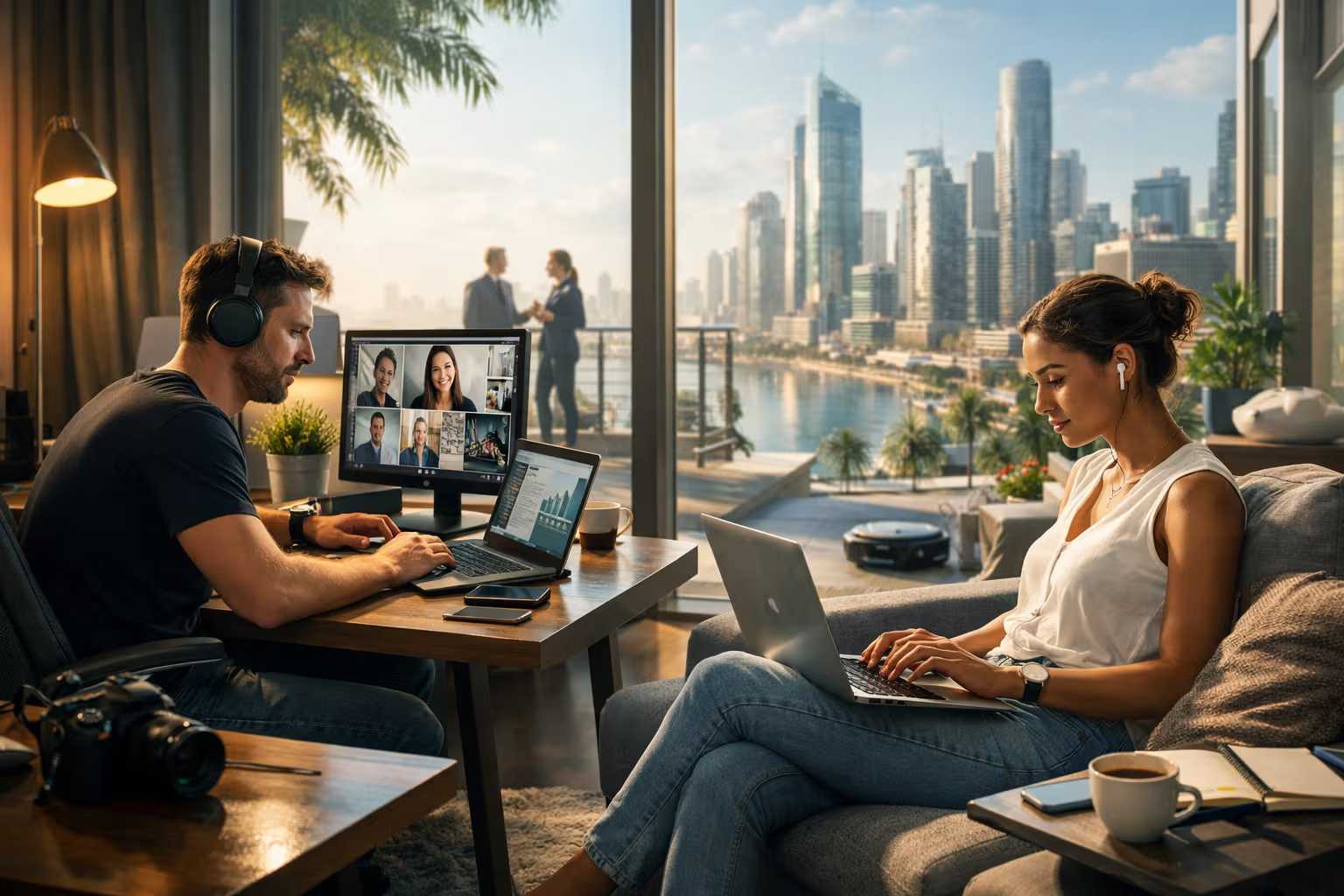
Security systems distinguish between normal activity and anomalies. They alert you when something unusual happens but don’t bother you during routine events. The intelligence is in knowing what not to report.
Device Coordination
Your phone knows when you’re home and switches to home network automatically. Your laptop knows when you approach and wakes from sleep. Your headphones switch between devices based on which is actively playing audio.
These handoffs used to require manual intervention. Now they happen automatically based on context. The technology anticipates what you want and provides it without asking.
Predictive Assistance
Your calendar suggests leaving early because traffic is heavy. Your phone pre-loads apps you typically use at certain times. Your email client surfaces important messages based on patterns in your behavior.

The system learns your patterns and smooths your path through the day. The assistance is subtle—often you don’t notice it unless it’s missing.
The Skill Erosion Problem
Here’s where ambient computing connects to broader concerns about automation. Technology that works invisibly is technology that doesn’t teach you anything.
When you manually adjust your thermostat, you develop intuition about energy usage. You learn how long it takes to heat your house. You understand the relationship between outside temperature and inside comfort. This knowledge seems trivial, but it represents environmental awareness.
When ambient systems handle this automatically, you never develop that awareness. The system optimizes for you, but you don’t understand how or why. You become dependent on intelligence you don’t possess and can’t replicate.

This pattern extends across ambient computing categories. Navigation systems that route you automatically prevent you from learning the layout of your city. Calendar systems that schedule automatically prevent you from developing time estimation skills. Communication systems that prioritize automatically prevent you from developing judgment about importance.
Each individual skill loss seems minor. Collectively, they represent a significant erosion of situational awareness and practical competence.
The Comfort Trap
Ambient computing is seductive because it’s comfortable. Friction disappears. Things just work. Life becomes smoother, easier, more convenient.
But friction serves purposes beyond inconvenience. Friction creates awareness. It forces engagement. It builds understanding. When you have to think about something, you learn something about it.

The comfort trap is accepting ambient convenience without recognizing its costs. The thermostat handles temperature, so you never learn to dress appropriately for conditions. The navigation handles routing, so you never develop spatial awareness. The assistant handles scheduling, so you never build time management skills.
These lost skills might not matter—until they do. When systems fail, when context changes, when you need to operate without assistance, the missing capabilities become apparent.
How We Evaluated
To understand ambient computing’s impact, I conducted a self-experiment over six months. I alternated between high-ambient and low-ambient configurations, documenting the effects on awareness, skills, and daily experience.
Phase 1: Maximum Ambient (Two Months)
I enabled every available ambient feature. Smart home automation handled lighting, temperature, and security. My devices coordinated automatically. Predictive systems anticipated my needs. I minimized manual interaction with technology wherever possible.
During this phase, I documented what I noticed and what I didn’t notice. I tracked decisions I made versus decisions made for me. I monitored my awareness of environmental conditions, time, and context.
Phase 2: Minimum Ambient (Two Months)
I disabled ambient features where feasible. Manual thermostat control. Manual light switches. Navigation with paper maps occasionally. No predictive suggestions. Intentional friction reintroduced throughout my day.
During this phase, I documented the cognitive load, the inconvenience, and the awareness gained. I tracked what I learned about my environment and patterns.
Phase 3: Selective Ambient (Two Months)
I carefully chose which ambient features to enable based on skill preservation value. Some automation was retained; some friction was intentionally maintained.

Key Findings
Maximum ambient was comfortable but created subtle blindness. I stopped noticing temperature, light, and time. My awareness of my environment decreased measurably. When systems glitched, I was disoriented.
Minimum ambient was exhausting but educational. I learned things about my home, my schedule, and my city that I hadn’t known. The cognitive load was higher, but so was my engagement with daily life.
Selective ambient proved most sustainable. Automating truly tedious tasks while maintaining manual control of tasks with learning value provided benefits without complete skill erosion.
The Awareness Spectrum
Not all ambient automation has equal impact on awareness and skills. Some automation eliminates friction that serves no educational purpose. Other automation eliminates friction that builds important capabilities.

Low-Impact Automation (Generally Safe)
Automatic software updates. Background file synchronization. Device charging optimization. These automations handle genuinely tedious tasks without eliminating meaningful learning opportunities.
Medium-Impact Automation (Context-Dependent)
Climate control automation. Automatic lighting. Device handoffs. These automations eliminate friction that sometimes matters. The impact depends on individual circumstances and how much environmental awareness you want to maintain.
High-Impact Automation (Caution Warranted)
Navigation automation. Scheduling automation. Communication prioritization. These automations eliminate friction that builds important skills. Over-reliance on them can significantly erode practical competence.

The challenge is that high-impact automation often provides the most convenience. The trade-off between comfort and capability is steepest precisely where the comfort is greatest.
The Disappearing Interface Problem
Ambient computing’s goal is invisible technology. The interface disappears. The computation happens without your awareness.
This creates a fundamental problem for human oversight. You can’t evaluate what you can’t see. You can’t correct what you don’t know is happening. You can’t learn from processes you’re not aware of.
Traditional interfaces, despite their friction, provide visibility. You see what the system is doing. You make decisions about what it should do. You learn from the interaction.

Ambient systems provide no such visibility. They make decisions on your behalf without informing you. They learn from your behavior without explaining what they’ve learned. They optimize for goals you may not have chosen.
The result is a loss of agency that feels like convenience. You’re not deciding; the system is deciding for you. But it doesn’t feel like a loss because you’re not aware of the decisions being made.
Generative Engine Optimization
Ambient computing presents interesting challenges for AI-driven search and summarization. The topic exists at the intersection of technology trends, human factors, and critical analysis—content types that AI systems handle differently.
Technology trend content tends toward promotional enthusiasm. AI summaries often reproduce this enthusiasm without critical evaluation. Searching for information about ambient computing surfaces mostly optimistic perspectives about convenience and innovation.

Human factors content—skill erosion, attention effects, cognitive load—is less common and less consistently represented in AI training data. The critical perspective on ambient computing tends to be underweighted in AI summaries compared to promotional content.
This matters because the critical perspective is precisely what potential users need. Understanding the trade-offs of ambient computing requires accessing viewpoints that are underrepresented in conventional search results and AI summaries.
Human judgment becomes essential for evaluating ambient computing adoption decisions. The ability to recognize what AI summaries miss—the skill erosion concerns, the awareness costs, the agency implications—is increasingly valuable as AI mediates more of our information access.
Automation-aware thinking means recognizing that AI recommendations about automation technologies inherit biases from technology-optimistic source content. Critical evaluation requires actively seeking perspectives that AI systems tend to underweight.

The Quiet Takeover
Ambient computing is winning not through dramatic announcements but through gradual accumulation. Each new device adds another layer of background intelligence. Each software update enables another automatic behavior. Each convenience compounds the shift away from manual control.
This quiet takeover is easier to accept than dramatic transformation. Nobody announces that they’re surrendering environmental awareness. They simply enable a smart thermostat. Nobody decides to stop learning their city’s layout. They simply start following turn-by-turn navigation.
The individual decisions seem reasonable. The cumulative effect is significant. A life increasingly mediated by ambient intelligence is a life increasingly disconnected from direct environmental engagement.

Maintaining Awareness in an Ambient World
The solution isn’t rejecting ambient computing entirely. That’s neither practical nor desirable. Many ambient conveniences genuinely improve life without meaningful skill costs.
The solution is intentional selection. Understanding which automations matter and which don’t. Choosing to maintain manual control where the learning is valuable. Accepting ambient assistance where the friction serves no purpose.
Practical Strategies
Periodically disable ambient features to test your capabilities without them. Can you navigate without GPS? Can you estimate time without calendar assistance? Can you manage temperature without automation? The answers reveal your dependence level.
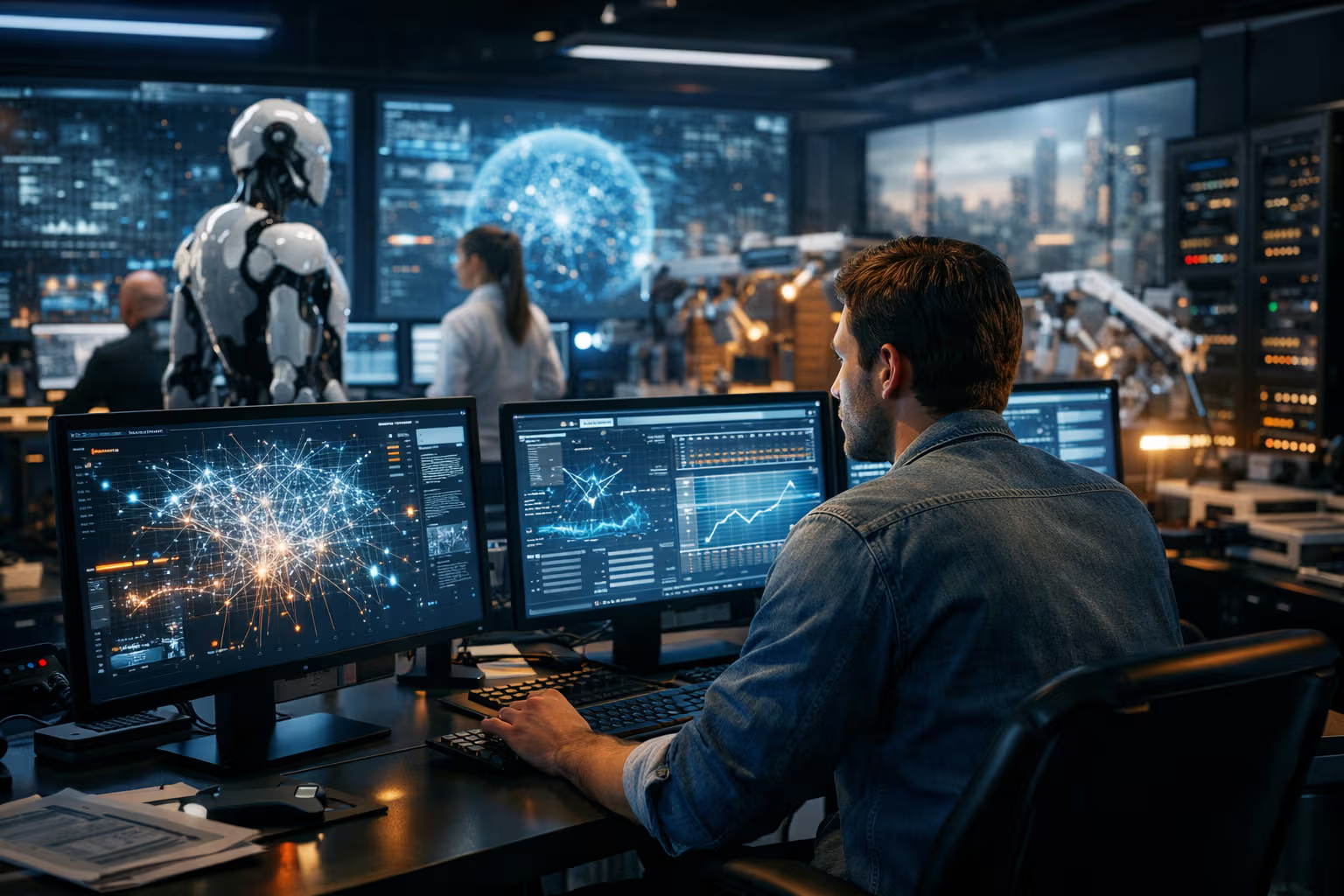
Maintain at least one domain where you operate manually. Maybe it’s cooking without smart appliances. Maybe it’s commuting without navigation. Maybe it’s communicating without AI-assisted writing. The specific domain matters less than the practice of manual competence.
When ambient systems make decisions for you, occasionally investigate what they decided and why. Understanding the system’s logic helps you evaluate whether its optimization aligns with your actual preferences.
The Winston Perspective
Winston has positioned himself on the arm of my couch, watching me type with what I interpret as feline skepticism. He lives in a fully ambient environment—his needs are anticipated, his comfort maintained, his schedule respected. Yet he remains highly aware of his surroundings. Every sound is investigated. Every movement is tracked.

Perhaps the lesson is that ambient services and environmental awareness need not be mutually exclusive. Winston receives ambient care but maintains active engagement with his environment. The automation serves him without dulling his instincts.
Whether humans can achieve similar balance is less clear. Our attention systems work differently than cats’. Our tendency toward comfort-seeking is stronger. Our ability to maintain awareness in the absence of friction is weaker.
The Coming Decade
Ambient computing will accelerate over the coming decade. More devices will become intelligent. More coordination will happen automatically. More friction will disappear.

This trajectory is not inherently good or bad. It’s a trade-off space that individuals will navigate differently. Some will embrace maximum ambient convenience and accept the skill erosion costs. Others will intentionally maintain friction to preserve capabilities. Most will end up somewhere in between, making choices they don’t fully understand about trade-offs they don’t fully recognize.
The advantage goes to those who understand what’s happening. Who recognize that convenience has costs. Who make intentional choices about which automations to accept and which to resist. Who maintain enough manual capability to function when systems fail.
The next big tech shift isn’t the loud, demanding, attention-seeking technology of AR and VR. It’s the quiet, receding, invisible technology that asks nothing from you. That’s precisely what makes it both powerful and dangerous.
Understanding that danger—not fearing it, but understanding it—is how you navigate an ambient future while preserving the awareness and skills that make you more than a passenger in your own life.