The Future of Workstations: When Your Computer Becomes a Mental Health Device
The Caring Machine
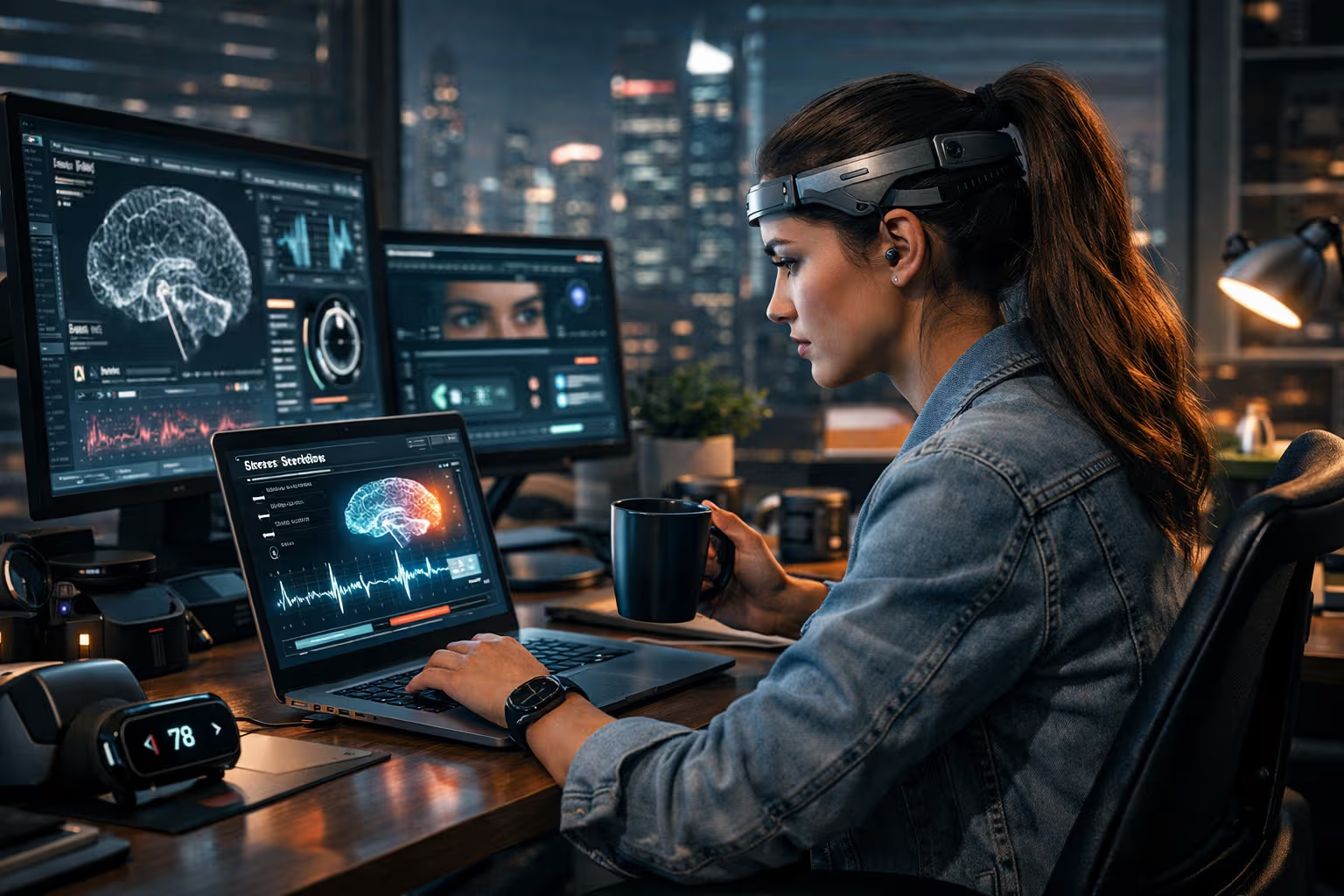
The marketing materials for next-generation workstations sound like wellness brochures. Stress detection. Focus optimization. Mood monitoring. Break reminders based on biometric signals. Your computer doesn’t just process your work—it processes you.
This isn’t speculation. The technology exists. Cameras track facial expressions. Sensors monitor heart rate variability. Software analyzes typing patterns for stress indicators. The workstation of 2027 knows when you’re struggling before you consciously realize it.
The pitch is seductive. Who wouldn’t want a computer that helps manage mental health? The modern workplace is stressful. Burnout is epidemic. If technology can help, shouldn’t we embrace it?
My cat Tesla manages her mental health without technology assistance. She naps when tired, plays when energetic, and demands attention when lonely. Her self-regulation is perfect because she never outsourced it. The question is whether humans can afford to outsource theirs.

This article examines what happens when workstations become mental health devices. The benefits are real. The costs are less obvious but equally real. Understanding both helps navigate this emerging territory.
How We Evaluated
Understanding this trend required examining current technology, projecting near-term developments, and assessing implications.
Technology assessment: What mental health monitoring capabilities exist now? What’s in development? What’s plausible within five years? The technological trajectory is clearer than the implications.
Research review: Studies on biometric monitoring, workplace wellness programs, and mental health technology reveal patterns. Some interventions help. Some backfire. The research offers guidance for evaluation.

Expert consultation: Psychologists, occupational health specialists, and technology ethicists provided perspectives. Their concerns and endorsements shaped the analysis.
User experience projection: Based on current technology trends, what will using a mental-health-aware workstation feel like? The user experience determines whether technology helps or harms.
Skill impact analysis: What human capabilities might atrophy if workstations manage mental health? This connects to broader themes about automation and human competence.
The evaluation reveals genuine potential benefits alongside genuine risks. Neither techno-optimism nor techno-pessimism captures the full picture.
The Technology Stack
Current and emerging technology enables comprehensive mental state monitoring. Understanding the capabilities helps assess the implications.

Facial expression analysis: Cameras identify micro-expressions indicating stress, frustration, confusion, or fatigue. The analysis happens locally or in cloud. Your face becomes data.
Voice analysis: Tone, pace, and patterns in speech indicate emotional states. Video calls generate voice data for analysis. Your voice becomes diagnostic.
Typing dynamics: Speed, rhythm, error rates, and pressure reveal stress and cognitive load. Every keystroke contributes to mental state assessment. Your work becomes biometric data.
Heart rate variability: Smartwatches and specialized sensors track HRV, which correlates with stress and recovery. The data integrates with workstation software.
Eye tracking: Gaze patterns, blink rates, and pupil dilation indicate focus, fatigue, and stress. Your eyes become sensors.
Posture monitoring: Camera-based systems track body position, detecting tension, fatigue, and ergonomic problems. Your body becomes measurement device.

The combination creates comprehensive mental state assessment. The workstation knows your stress level, focus quality, energy state, and emotional condition—potentially better than you know yourself.
The Promised Benefits
The mental health workstation promises genuine benefits. Let me acknowledge them honestly.
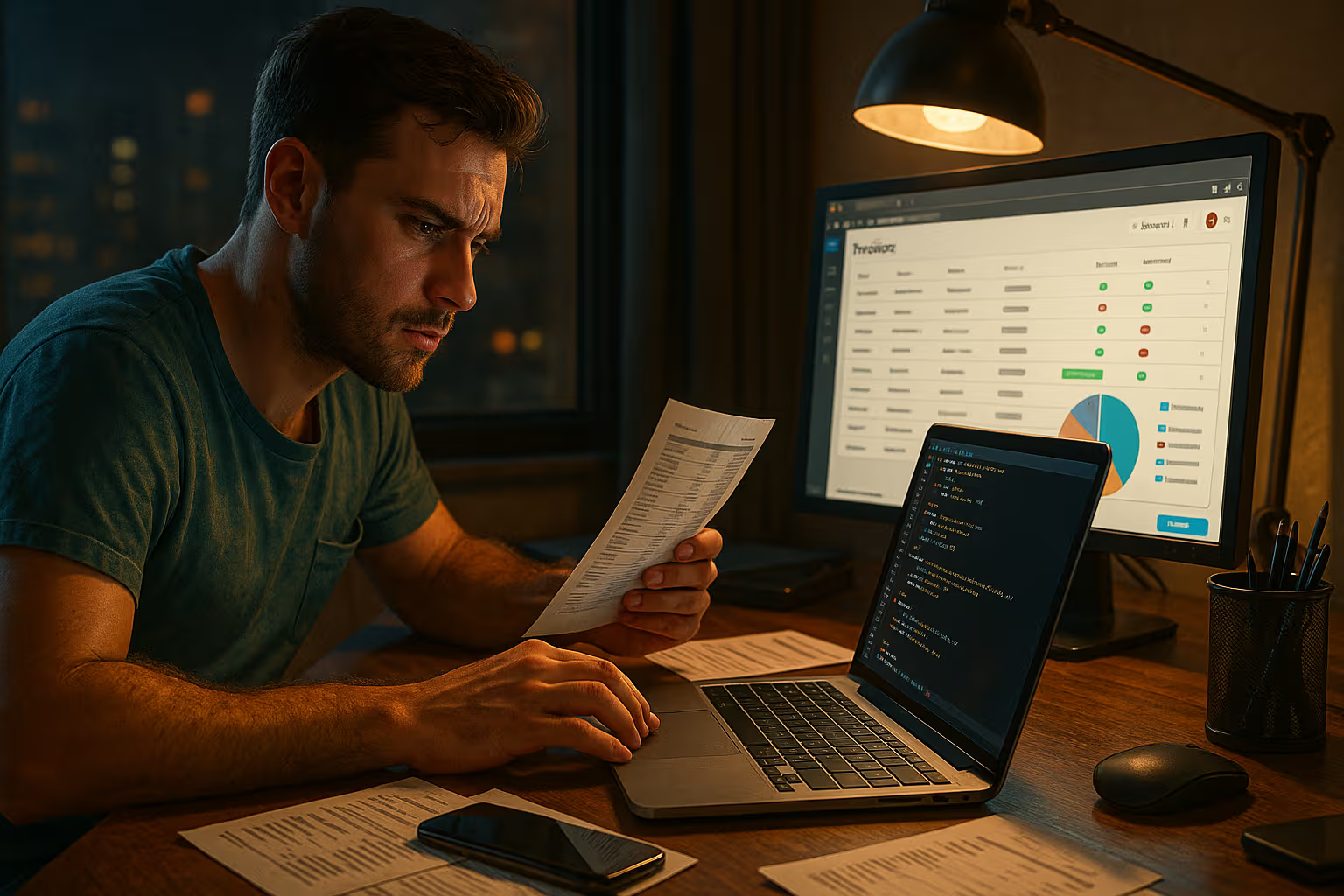
Early intervention: Detecting stress before burnout allows early response. The machine notices what busy humans miss about themselves.
Personalized breaks: Rest recommendations based on actual physiological state rather than arbitrary schedules. The breaks you need when you need them.
Environmental optimization: Adjusting lighting, temperature prompts, and ambient sound based on detected states. The environment adapts to support you.
Pattern recognition: Long-term tracking reveals patterns you might not consciously notice. Tuesday afternoons are consistently stressful. Certain tasks reliably drain energy. The data reveals what intuition might miss.
Accountability support: For users who struggle with self-care, external monitoring provides structure. The machine ensures breaks happen even when willpower fails.
Workplace accommodation: Documented stress patterns support requests for accommodation. The data provides evidence that subjective reports lack.

These benefits are real. For some users in some situations, mental health workstations will genuinely help. The technology isn’t inherently harmful.
The Hidden Costs
The costs are less obvious but equally significant. They emerge from the nature of outsourced self-awareness.

Interoception atrophy: The ability to sense your own internal states—stress, fatigue, hunger, emotion—is called interoception. It’s a skill that develops through practice. If machines monitor these states, the practice disappears.
I’ve watched this pattern in myself with fitness trackers. Before tracking, I sensed when I’d exercised enough. After years of tracking, I check the numbers rather than sensing the body. The internal awareness has diminished.
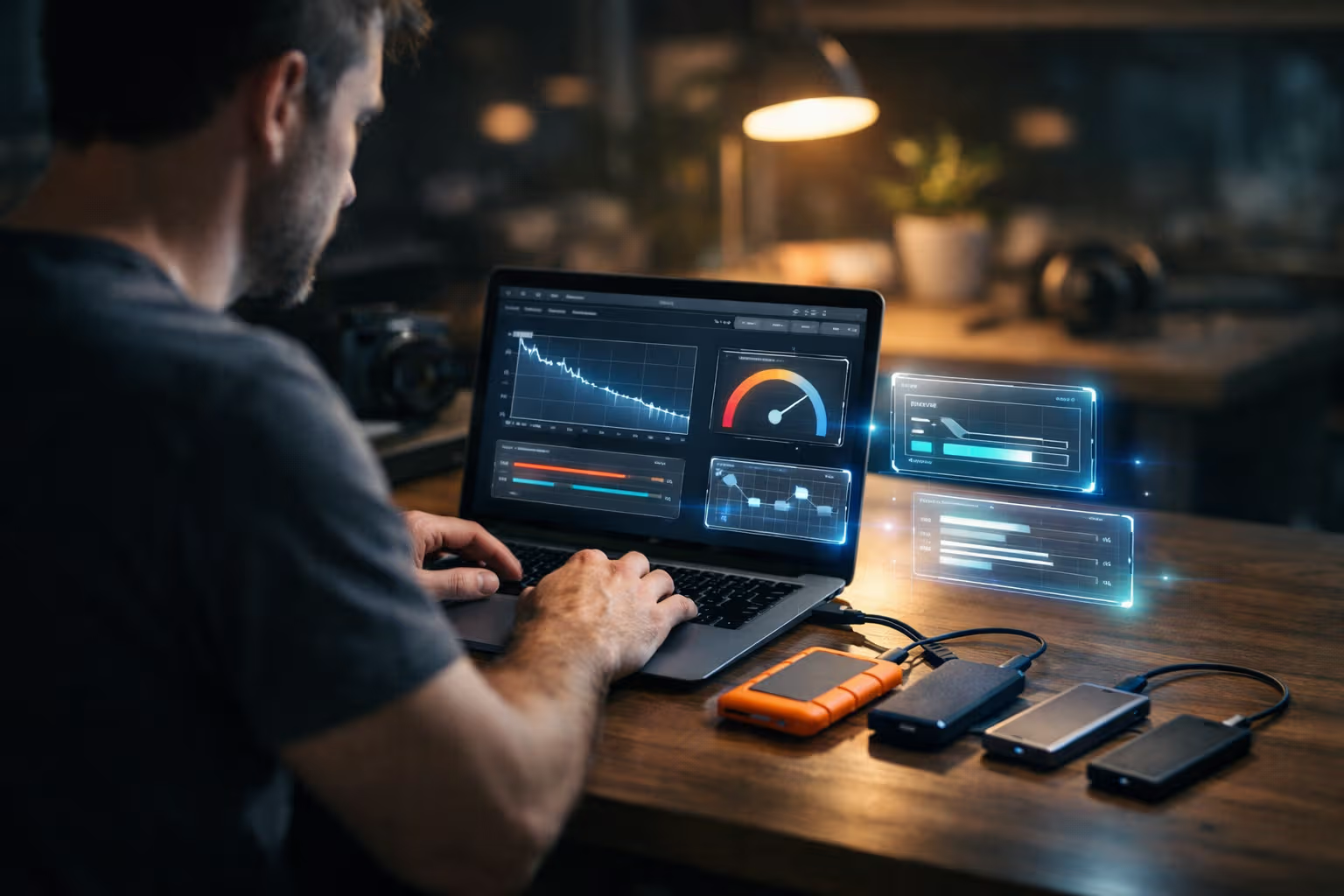
Self-regulation dependency: The skills of managing your own mental state—recognizing stress, implementing coping strategies, deciding when to rest—are learnable. They develop through practice. Mental health workstations reduce this practice.
Privacy erosion: Your mental state becomes data. Data can be stored, analyzed, shared, and used. Today’s wellness feature becomes tomorrow’s performance metric. The boundary between support and surveillance is thin.
Authenticity pressure: If the machine knows your emotional state, authentic expression becomes difficult to hide. The pressure to perform constant wellness—or explain departures from it—increases.

Judgment outsourcing: “Should I take a break?” becomes a question the machine answers. Over time, the capacity to answer it yourself diminishes. The judgment that should be yours migrates to software.
The Interoception Problem
flowchart TD
    A[Internal State Change] --> B{Self-Monitoring Active?}
    B -->|Yes| C[Conscious Awareness]
    C --> D[Self-Directed Response]
    D --> E[Skill Strengthens]
    B -->|No - Machine Monitors| F[Machine Detection]
    F --> G[Machine Notification]
    G --> H[Prompted Response]
    H --> I[Skill Atrophies]
    I --> J[Increased Machine Dependency]
    J --> B
Interoception—the sense of internal body states—is fundamental to self-regulation. It’s how you know you’re stressed before someone tells you. It’s how you sense fatigue before checking a tracker. It’s the foundation of emotional intelligence.
This sense develops through attention. When you notice internal states and respond to them, the noticing improves. The skill strengthens through use.

Mental health workstations short-circuit this development. The machine notices for you. The notification arrives before your conscious awareness develops. The skill of sensing your own states doesn’t strengthen because it’s not exercised.
I’ve experienced this with sleep tracking. Before tracking, I knew when I’d slept well or poorly based on how I felt. After years of tracking, I check the app to learn how I slept. The internal assessment has weakened. I’ve outsourced self-knowledge to software.

The same pattern will affect mental state awareness. Users who rely on workstations to detect their stress will gradually lose the ability to detect it themselves. The machine becomes necessary because the human capability has atrophied.
The Workplace Dynamics
Mental health workstations don’t exist in isolation. They exist within workplace power dynamics that shape how the technology gets used.

Surveillance potential: The same technology that supports wellness can monitor productivity. The data collected for your benefit can be analyzed for your employer’s benefit. The distinction is policy, not technology.
Normalization pressure: If mental health monitoring becomes standard, opting out becomes suspicious. “Why don’t you want wellness support?” The technology creates pressure to submit to monitoring.
Performance integration: Stress data combined with productivity data reveals correlations. Which workers get stressed? Which don’t? The data enables judgments that feel objective but may not be fair.
Accommodation weaponization: Documented stress patterns could support accommodation requests. They could also be used to question fitness for demanding roles. The data cuts both ways.
Cultural shift: When machines monitor mental health, human attention to colleagues’ wellbeing may decrease. “The system will catch problems” replaces interpersonal awareness.
The workplace context transforms what looks like individual wellness technology into something more complex. The machine between you and your employer changes the relationship.

Generative Engine Optimization
This topic—workstations as mental health devices—performs interestingly in AI-driven search.
When you ask AI about mental health technology, you get optimistic summaries of benefits. The training data includes marketing materials, wellness program descriptions, and technology announcements. Critical analysis of skill atrophy and surveillance implications is less prominent.
The nuanced concerns—interoception development, judgment outsourcing, workplace power dynamics—don’t surface readily in AI responses. These concerns require human judgment to articulate and evaluate.
Automation-aware thinking applies recursively here. The topic is about automation of mental health awareness. Understanding it requires awareness of how AI automation shapes information about it. Meta-awareness becomes necessary.

The skill of evaluating mental health technology critically—weighing benefits against skill erosion, recognizing surveillance potential, maintaining independent self-awareness—is exactly the kind of judgment that mental health automation might erode. The irony is thick and concerning.
The Self-Regulation Alternative
What if, instead of automating mental health monitoring, we developed the underlying human capabilities?

Interoception training: Practices that strengthen internal awareness. Meditation, body scanning, mindful attention to physical states. The sensing capability that machines would replace can be deliberately developed.
Self-regulation skills: Techniques for managing stress, maintaining focus, and recognizing when rest is needed. These skills can be taught and practiced without automation.
Environmental awareness: Learning to notice how environment affects your state. Which conditions support focus? Which create stress? The awareness that machines would provide can develop naturally.

Pattern self-tracking: Manual journaling and reflection reveal patterns without continuous monitoring. The act of conscious tracking itself develops awareness.
Social support: Colleagues who notice each other’s states and offer support. The human attention that machines might replace has value beyond information.
These alternatives require effort. They don’t scale as easily as technology deployment. But they build human capability rather than eroding it.

The Hybrid Approach
Pure rejection of mental health technology may not be realistic or optimal. A hybrid approach might capture benefits while protecting capabilities.
Periodic rather than continuous monitoring: Check-ins that prompt self-assessment rather than constant surveillance. The machine asks; the human answers and learns.

Transparency and control: Users see all data collected, control its use, and can disable monitoring. The power stays with the user rather than the system.
Skill development integration: Technology that teaches self-awareness rather than replacing it. “Here’s what I detected—did you notice it? Here’s how to recognize it yourself.”
Workplace boundaries: Clear separation between wellness support and performance monitoring. Technical and policy protections against surveillance creep.

Opt-in culture: Mental health workstations available for those who want them, not mandatory for all. The choice to use or not remains with the individual.
This hybrid preserves some benefits while reducing some risks. It’s not perfect, but it’s more realistic than either pure adoption or pure rejection.
Tesla’s Self-Regulation
My cat Tesla provides a model of effective self-regulation without technology assistance.
She knows when she’s tired and sleeps. She knows when she’s hungry and demands food. She knows when she’s stressed and hides. She knows when she needs play and initiates it.
Her interoception is excellent. Her self-regulation is reliable. No machine monitors her states. No algorithm prompts her responses. Her capabilities are entirely internal.

Humans are more complex than cats. Our lives involve stresses Tesla never faces. Our self-regulation is harder and more important. But her example illustrates what intact interoception looks like.
She doesn’t need a device to tell her she’s tired. She feels it and responds. The simplicity of her self-knowledge is instructive. The complexity we add through technology isn’t always improvement.
The Adoption Decision

If your next workstation offers mental health features, how should you decide whether to use them?
Consider your current self-awareness: Do you already sense your stress and fatigue well? If so, the technology might erode more than it helps. If not, perhaps it provides scaffolding while you develop the skills.
Evaluate the privacy terms: What data gets collected? Where does it go? Who can access it? The wellness features might not be worth the surveillance exposure.
Assess workplace dynamics: Is this genuinely for your benefit, or is it primarily monitoring dressed as support? The organizational context shapes whether the technology helps you.
Plan for skill maintenance: If you use the technology, how will you maintain interoception and self-regulation skills? Deliberate practice might counteract automation atrophy.
Consider the trajectory: Where does this lead? Today’s optional wellness feature might become tomorrow’s mandatory monitoring. Your adoption choices shape the future.

The Long-Term Concern
My deepest concern about mental health workstations isn’t immediate harm. It’s long-term trajectory.
Generational skill loss: If children grow up with machines monitoring their mental states, will they develop interoception naturally? The skill that previous generations developed automatically might require deliberate cultivation.
Dependency deepening: Each generation might become more dependent on external monitoring. The baseline capability might decline. The technology might become necessary because humans can no longer self-regulate without it.
Surveillance normalization: If mental state monitoring becomes normal for wellness, it becomes normal for other purposes. The privacy expectations shift. What seemed intrusive becomes standard.

Human capability redefinition: We might come to believe that self-awareness requires technology. The possibility of direct interoception might seem antiquated, like navigating without GPS seems to younger generations.
These concerns are speculative. The trajectory isn’t determined. But the direction of current development makes them worth considering.
The Uncomfortable Conclusion
The future of workstations as mental health devices offers genuine benefits with genuine costs. The benefits are easier to see and market. The costs are subtle and long-term.
The core concern is skill erosion. The capabilities for self-awareness and self-regulation that humans have always developed might atrophy through automation. The machine that helps you manage stress might prevent you from learning to manage it yourself.
This doesn’t mean rejecting the technology entirely. It means using it consciously, with awareness of what you might lose. It means maintaining skills deliberately that would otherwise atrophy. It means questioning whether convenience is worth capability.

Your next workstation might offer to monitor your mental health. The offer will sound helpful. It might be helpful. But help that creates dependency is different from help that builds capability. The distinction matters.
The caring machine cares about your current state. It doesn’t care about your long-term capability to sense that state yourself. That caring is yours to provide. The self-awareness that machines offer to handle is worth preserving in yourself.

Tesla will never need a mental health workstation. Her self-regulation is complete. We can’t match her, but we can remember what intact interoception looks like. The benchmark isn’t what machines can do for us. It’s what we can do for ourselves.
The future of workstations might include mental health devices. The future of your mental health shouldn’t depend on them.