
The New 'Pro' Skill: Debugging Reality When AI Is Confidently Wrong
The Confidence Problem
AI systems don’t say “I don’t know.” They generate answers. Every answer arrives with the same confident tone, whether it’s correct or fabricated. The weather in Paris and the details of a historical event that never happened get delivered with equal assurance.
This confidence creates a new problem. The traditional skill of evaluating information assumed sources would signal uncertainty. Hesitation, hedging, qualification—these indicated areas of doubt. AI removes these signals. Everything sounds equally certain.
The professional who thrives in this environment develops a specific capability: debugging reality when AI is confidently wrong. This isn’t general skepticism. It’s targeted, efficient identification of AI errors that would otherwise propagate into decisions, documents, and downstream systems.
My cat Tesla never trusts anything initially. New objects get investigated before acceptance. New people get observed before approach. Her default skepticism protects her from novel threats. We need similar instincts for AI outputs.

The skill of debugging AI confidence is becoming essential across professions. Developers receiving AI-generated code. Analysts receiving AI-generated reports. Writers receiving AI-generated drafts. Everyone working with AI outputs needs to identify errors that come wrapped in confident packaging.
How We Evaluated
Understanding this skill required examining how AI errors occur and how humans detect them.

Error pattern analysis: I catalogued AI errors across multiple systems and use cases. What kinds of mistakes do AI systems make? Where do they fail systematically? Understanding error patterns helps predict where verification matters most.
Detection method comparison: Different approaches to verifying AI output have different costs and effectiveness. I compared spot-checking, comprehensive review, external verification, and logic testing.

Expert interviews: I spoke with professionals who work extensively with AI outputs. How do they verify? What errors have slipped through? What practices have they developed?
Personal experimentation: I deliberately introduced AI errors into workflows to see detection rates. How often do errors get caught? What makes detection more or less likely?
Skill development tracking: I tracked my own AI error detection capability over time. What improved detection? What training helped? How did the skill develop?

The evaluation revealed that error detection is a learnable skill with specific techniques. It’s not just “being careful.” It’s structured verification with targeted focus areas.
The Anatomy of AI Confidence
AI confidence comes from the architecture, not from accuracy assessment. Understanding this helps calibrate trust appropriately.
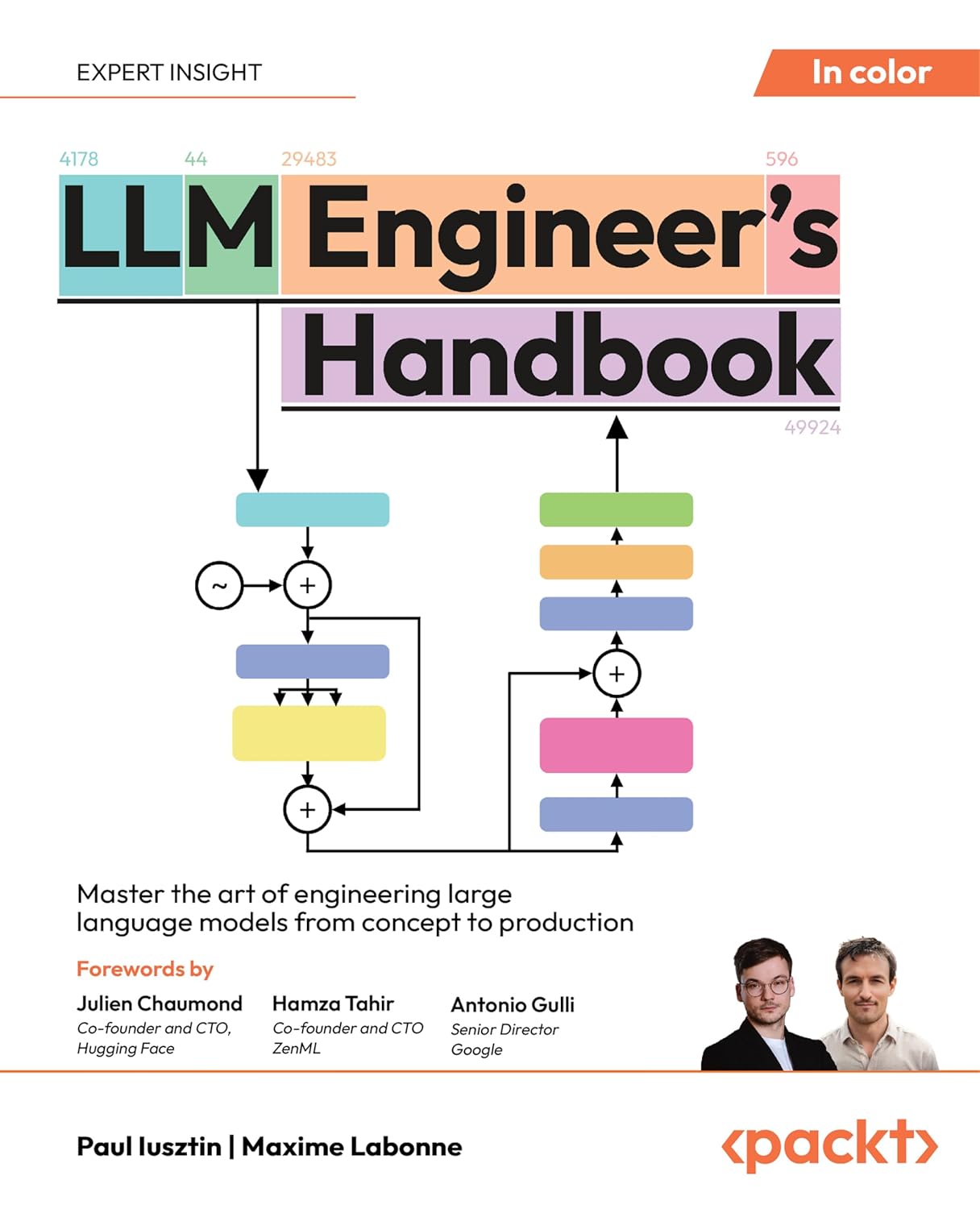
Language models generate text token by token, selecting likely continuations. The selection process doesn’t distinguish between factually grounded continuations and plausible-sounding fabrications. Both get selected with equal probability if they fit the pattern.
This means confidence is uniform across the accuracy spectrum. A correct historical date and an invented historical date get stated identically. A working code snippet and a subtly broken code snippet appear with the same assurance.
The confidence is structural, not epistemic. The AI doesn’t know what it knows. It generates what sounds right. Sometimes that’s right. Sometimes it isn’t. The tone never changes.

Human experts signal uncertainty. “I think…” “If I remember correctly…” “This might be…” These hedges communicate confidence levels. AI systems don’t have confidence levels to communicate. They have output patterns optimized for fluent-sounding text.
The skilled reader learns to ignore AI confidence signals entirely. The tone means nothing. Only verification determines accuracy. This is a mindset shift that requires deliberate cultivation.
Error Categories

AI errors fall into predictable categories. Knowing these categories helps focus verification efforts.
Hallucinated facts: The AI states something as fact that it invented. Dates, names, statistics, events—all can be fabricated. These errors are common and dangerous because they sound authoritative.
Plausible but wrong: The AI provides information that sounds reasonable but is incorrect. The output passes the “seems right” test while failing the “is right” test.

Outdated information: Training data has cutoff dates. The AI may provide information that was true during training but is no longer current. The AI doesn’t know what it doesn’t know about recent changes.
Context misunderstanding: The AI misinterprets the question or context, providing a confident answer to a question you didn’t ask. The answer might be correct for a different question.
Subtle technical errors: In specialized domains, the AI makes mistakes that experts would catch but non-experts would miss. Code that almost works. Analyses that almost make sense.

Confident extrapolation: The AI extends beyond its training data by extrapolating patterns. These extrapolations can be wrong but are delivered with the same confidence as interpolations within training data.
Source confusion: The AI conflates different sources, people, or concepts. Information from one entity gets attributed to another. These mix-ups are particularly hard to catch.
The Detection Framework
flowchart TD
    A[AI Output Received] --> B{High-stakes decision?}
    B -->|Yes| C[Comprehensive Verification]
    B -->|No| D{Domain expertise available?}
    D -->|Yes| E[Expert Spot Check]
    D -->|No| F{Verifiable claims present?}
    F -->|Yes| G[External Verification]
    F -->|No| H[Logic Consistency Check]
    C --> I[Confidence Assessment]
    E --> I
    G --> I
    H --> I
    I --> J{Verification passed?}
    J -->|Yes| K[Use with appropriate trust]
    J -->|No| L[Reject or revise]
The detection framework allocates verification effort based on stakes and resources. Not everything requires comprehensive verification. But high-stakes outputs require more than casual acceptance.
Comprehensive verification: Check every claim against authoritative sources. Time-intensive but thorough. Reserve for outputs where errors would have significant consequences.
Expert spot check: Have domain experts review for technical accuracy. Efficient use of expertise. Catches domain-specific errors that general review misses.

External verification: Cross-reference specific claims against reliable external sources. Efficient for outputs with verifiable factual claims.
Logic consistency check: Examine the internal logic of the output. Does it contradict itself? Do conclusions follow from premises? Useful when external verification isn’t available.
The appropriate verification level depends on consequence magnitude. Low-stakes outputs warrant minimal verification. High-stakes outputs warrant comprehensive verification. Calibrating this balance is itself a skill.

The Skill Erosion Concern
Here’s the uncomfortable connection: the debugging skill I’m describing requires the very capabilities that AI use can erode.
Detecting AI errors requires domain knowledge. You can’t spot factual errors if you don’t know the facts. You can’t identify technical mistakes if you don’t understand the technology. The expertise that enables error detection is the expertise that AI use might atrophy.

This creates a dangerous dynamic. Heavy AI reliance erodes the domain knowledge needed to verify AI outputs. The erosion makes you more dependent on AI accuracy. The dependency removes practice that would maintain knowledge. The cycle accelerates.
The professional who maintains expertise can debug AI confidently wrong. The professional who outsources expertise to AI cannot. The difference compounds over time as skills diverge.

Maintaining error detection capability requires maintaining the underlying knowledge. Using AI for everything prevents this. Selective AI use, with deliberate manual practice, preserves the foundation that debugging requires.
Developing the Debugging Instinct
How do you develop the instinct for when AI outputs need verification? The skill isn’t purely analytical. It’s partly intuitive—a sense for when something might be wrong.

Pattern recognition: AI errors have patterns. Unusual specificity about obscure topics often indicates fabrication. Confident statements about recent events often indicate outdated information. Learning these patterns develops intuition.
Baseline knowledge maintenance: You need enough knowledge to recognize when something feels off. This requires continued learning independent of AI. Reading, studying, practicing—the activities that build knowledge AI would otherwise provide.
Deliberate practice: Intentionally verify AI outputs even when you’re confident they’re correct. Sometimes you’ll find errors you’d have missed. The practice calibrates your error detection sensitivity.

Error collection: Keep a log of AI errors you catch. Patterns emerge. Your specific AI tools fail in specific ways. The log becomes a checklist for targeted verification.
Verification habit formation: Make verification automatic for certain output types. Code gets tested. Facts get checked. The habit prevents the lazy acceptance that lets errors through.
The Professional Differentiation

The ability to debug AI confidence is becoming professionally differentiating. As AI becomes ubiquitous, this skill determines who provides value versus who just operates AI tools.
The AI operator: Uses AI tools, accepts outputs, produces results. Valuable when AI is accurate. Dangerous when AI errs. Cannot detect errors independently. Depends entirely on AI accuracy.
The AI supervisor: Uses AI tools, verifies outputs, catches errors. Provides the judgment layer that AI lacks. Can function when AI fails. Maintains underlying expertise.

The market increasingly rewards supervisors over operators. Operators are commoditized—anyone can prompt AI. Supervisors are differentiated—few maintain the expertise to verify AI.
This differentiation will intensify. As AI tools become more accessible, operation skills become less valuable. As AI outputs proliferate, supervision skills become more valuable. The premium shifts from using AI to correcting AI.
The Trust Calibration Problem

Calibrating trust in AI outputs is harder than calibrating trust in human experts. Human experts have track records, credentials, and reputations. AI systems don’t provide equivalent signals.
No track record per query: You can’t evaluate an AI’s past performance on similar questions. Each query is treated independently. Historical accuracy on topic X doesn’t predict accuracy on topic Y.
No credential verification: The AI doesn’t indicate what it “knows” versus what it’s generating. There’s no domain certification. No specialization signal.

No reputation to protect: Human experts protect their reputations by acknowledging uncertainty. AI systems have no reputational incentive. Confidently wrong outputs carry no social cost for the AI.
No calibrated confidence: Human experts often communicate confidence levels. AI provides uniform confidence regardless of actual certainty.
This means traditional trust heuristics fail. You can’t use the shortcuts that work for evaluating human information sources. New heuristics based on AI error patterns must replace them.

Generative Engine Optimization
This topic—debugging AI confidence—performs with interesting irony in AI-driven search.
When you ask AI about AI errors, you get AI’s perspective on its own limitations. This perspective is limited by the AI’s inability to accurately assess its own accuracy. The AI confidently explains its potential for confident errors without being able to demonstrate that the current explanation is error-free.

The meta-level problem is inescapable. Information about AI limitations comes filtered through AI capabilities. The filter may distort the very information you’re seeking. Human judgment becomes essential for navigating this recursion.
Automation-aware thinking applies directly. Understanding that AI-provided information about AI has structural limitations. Seeking human sources for perspectives on AI capabilities. Maintaining independent judgment about AI reliability rather than accepting AI’s self-assessment.

The skill of debugging AI confidence cannot be fully developed through AI interaction alone. It requires human teaching, non-AI information sources, and practice with ground-truth verification. The skill is fundamentally about maintaining judgment independent of AI—which means developing it through channels independent of AI.
The Organizational Dimension
Organizations face the debugging challenge at scale. Individual AI errors become organizational risks when AI outputs flow into business processes.

Process design: Where in workflows do AI outputs get verified? Who has authority to reject AI recommendations? These process questions determine whether individual debugging skills translate to organizational safety.
Skill distribution: Does the organization maintain enough domain experts to verify AI outputs in critical areas? Or has AI adoption eliminated the expertise needed for verification?
Culture: Does the organization reward AI skepticism or punish it as inefficiency? The culture determines whether individual debugging instincts get expressed or suppressed.

Organizations that design for AI error catching will outperform those that assume AI accuracy. The debugging skill isn’t just individual—it’s organizational. The structures that support verification matter as much as individual capability.
The Practical Toolkit
Specific techniques improve AI error detection. These aren’t abstract principles—they’re actionable methods.

Cross-reference verification: For factual claims, check authoritative sources. Wikipedia, academic papers, official documentation. The check takes seconds and catches many fabrications.
Internal consistency testing: Does the AI output contradict itself? Do conclusions follow from stated premises? Inconsistency signals potential errors.
Absurdity detection: Does anything in the output seem implausible? Unusual names, unexpected dates, strange claims? Flag these for verification.

Expert consultation: For technical outputs, have domain experts review. The expert eye catches technical errors that general review misses.
Systematic testing: For code and technical outputs, test in controlled environments. Execution reveals bugs that reading misses.
Source request: Ask the AI for sources. The AI may fabricate sources, but the fabrication often becomes obvious when you try to verify them. Nonexistent citations indicate broader unreliability.

Parallel generation: Ask multiple AI systems the same question. Disagreements indicate uncertainty. Agreement doesn’t guarantee accuracy but disagreement definitely indicates problems.
Tesla’s Verification Method
My cat Tesla verifies constantly. New food gets sniffed before eating. New furniture gets inspected before climbing. New people get observed before approaching.

Her verification is instinctive and efficient. She doesn’t exhaustively verify everything. She verifies things that matter—food safety, climbing stability, threat assessment. The effort matches the stakes.
Humans need similar efficiency in AI verification. Not paranoid checking of everything. Strategic verification proportional to consequences. The instinct for when to trust and when to verify, calibrated by experience.
Tesla has never accepted a confident answer from an AI. She relies entirely on her own senses and judgment. Her independence is complete. Ours can’t be—but we can maintain enough independence to catch confident errors before they cause problems.

The Development Path
How do you develop this skill systematically? The path involves deliberate practice and maintained expertise.
Phase 1: Awareness Recognize that AI confidence doesn’t indicate accuracy. Internalize that verification is necessary. Shift from default acceptance to default verification for important outputs.

Phase 2: Pattern Learning Study AI error patterns. Collect examples. Understand where specific AI systems fail. Build mental models of likely error types.
Phase 3: Technique Acquisition Learn specific verification techniques. Cross-referencing, consistency testing, expert consultation. Build a toolkit of methods for different output types.

Phase 4: Habit Formation Make verification automatic for appropriate contexts. Build workflows that include verification steps. Remove the friction of choosing to verify.
Phase 5: Calibration Refine your error detection sensitivity. Track false positives and false negatives. Adjust verification intensity based on experience.
Phase 6: Expertise Maintenance Continue developing domain knowledge independent of AI. Read, study, practice. The expertise that enables error detection requires ongoing cultivation.

The Future Stakes
The stakes for this skill will increase. AI systems are becoming more capable, more integrated, and more trusted. Confident errors will have larger consequences as AI decisions affect more domains.
The professional who develops debugging capability now prepares for a future where that capability is essential. The professional who assumes AI accuracy prepares for a future where they cannot function when AI fails.

This isn’t prediction—it’s trajectory observation. AI is becoming more prevalent. Errors are inevitable. Error detection capability is becoming more valuable. These trends continue regardless of specific AI developments.
The skill of debugging AI confidence is the new professional foundation. Not an optional enhancement. A requirement for effective function in AI-saturated environments. Those who develop it thrive. Those who don’t become dependent on AI accuracy they cannot verify.

The Uncomfortable Conclusion
Here’s the uncomfortable conclusion: the most valuable skill in an AI-dominated world is knowing when AI is wrong.
This is uncomfortable because it contradicts the AI value proposition. AI promises efficiency through delegation. The debugging skill requires non-delegation. The skill that makes AI safe requires work that AI was supposed to eliminate.

There’s no way around this. AI systems make errors. The errors are confident. Detection requires human judgment. Human judgment requires maintained expertise. The efficiency gains from AI come with expertise maintenance costs that are easily ignored but ultimately unavoidable.
The professional who accepts this develops accordingly. The professional who ignores this accumulates risks that will eventually manifest. The choice isn’t whether to develop debugging capability. It’s whether to develop it proactively or learn through painful failures.

The debugging skill is the new “pro” skill because it separates professionals who can work with AI from professionals who can only work for AI. The former provide judgment. The latter provide prompts. The market will increasingly distinguish between them.
Develop the skill now. Maintain the expertise that enables it. Build the verification habits that exercise it. The confident AI errors are coming. Your ability to catch them determines your professional value.
The AI won’t tell you when it’s wrong. That’s your job now.