
The 5-Minute Rule for Gadgets: What You Notice Immediately, What You Don't
The Five-Minute Problem
Tech reviews have a structural flaw. Reviewers spend days or weeks with products, then tell you about their experience. But they describe primarily what they noticed in the first five minutes. The rest of their time mostly confirms or refines those initial impressions.
This isn’t laziness. It’s how human perception works. Novel features grab attention. Familiar patterns fade into background. The shiny new camera system dominates your awareness on day one. By day thirty, it’s just how photos get taken.
The problem: what you notice in five minutes rarely predicts what matters over five months. The features that impress immediately often become irrelevant. The aspects you didn’t notice initially often determine whether you love or hate the device long-term.
I’ve been tracking my own gadget experiences against initial impressions for years. The correlation is weak. Sometimes negative. The phone I was most excited about became my most frustrating daily driver. The laptop I was lukewarm on became the tool I’ve used longest.

My cat Pixel evaluates new objects in my home using her own five-minute rule: sniff it, potentially sit on it, then ignore it forever unless it produces interesting sounds. Her evaluation framework is at least honest about its limitations.
This article examines what five-minute impressions capture, what they miss, and how to evaluate gadgets based on what actually matters for long-term satisfaction.
How We Evaluated
Understanding the gap between first impressions and long-term experience required tracking both systematically.
Initial impression documentation: I recorded my reactions to new gadgets within the first hour. What seemed impressive? What seemed concerning? What did I notice and what did I overlook?

Long-term experience tracking: Monthly notes on the same devices. What do I actually appreciate? What frustrates me? What have I stopped noticing entirely?
Correlation analysis: Comparing initial impressions to six-month and twelve-month assessments. Which early observations predicted later satisfaction? Which were misleading?
Review content analysis: Examining what professional reviews emphasize versus what long-term users report in forums and discussion threads.
Return rate data: Where available, looking at product return rates versus review scores. High return rates with good reviews suggest first-impression bias.

The findings were consistent: initial impressions systematically emphasize the wrong things. Not always, but often enough to make five-minute evaluations unreliable predictors of long-term satisfaction.
What You Notice Immediately
Certain gadget characteristics dominate first impressions. These aren’t unimportant—they’re just over-weighted in evaluations.
Physical Design and Materials
Unboxing a device, you immediately notice how it looks and feels. Premium materials register. Build quality is apparent. The weight, the finish, the way buttons click—these create instant impressions.

Design matters. But its impact diminishes rapidly. After a week with a device, the premium feel becomes normal. After a month, you stop noticing whether it’s glass or aluminum. The daily experience is functional, not tactile.
I’ve tracked this specifically with phones. The excitement about a new design language lasts perhaps two weeks. Then it’s just a rectangle in my pocket. The shape and material stop registering consciously.
Standout Features
New devices are marketed on differentiating features. A new camera capability. A novel input method. An impressive specification bump. These features structure initial impressions.
Reviews naturally focus on what’s new. That’s the news. But new features often matter less than baseline execution. A phone with an amazing telephoto lens and mediocre battery life will frustrate you more than a phone with a good-enough telephoto lens and excellent battery.

The feature that got you excited at purchase often isn’t the feature you appreciate at month six. It might be something you use occasionally, but the daily experience is determined by more mundane factors.
Performance in Optimal Conditions
First impressions often form under optimal conditions. The device is fully charged. No apps are installed to slow things down. You’re testing in good lighting or ideal network conditions.
Real-world performance differs from showroom performance. The camera that impressed you with good lighting performs differently in your actual photography conditions. The laptop that seemed fast runs differently with your actual software installed.

The demo always outperforms the daily driver because demos are optimized and daily driving isn’t.
Novelty Effects
New devices feel faster, better, more impressive partly because they’re new. The novelty itself creates positive impressions that fade as familiarity grows.
Psychologists call this hedonic adaptation. The new phone feels amazing compared to your old phone. Within weeks, it just feels normal. The gap you perceived initially was partly real difference and partly novelty effect.
Separating genuine improvement from novelty excitement is nearly impossible during initial evaluation. Only time reveals which was which.
What You Don’t Notice
The factors that determine long-term satisfaction often don’t register during initial impressions. They’re either invisible at first or seem too minor to matter.
Reliability Under Stress
How does the device perform under challenging conditions? Battery life during heavy use. Performance when storage is nearly full. Behavior when network connections are poor. These scenarios rarely occur during initial evaluation but define daily experience.

The phone that seemed snappy becomes sluggish after a year of app accumulation. The laptop that ran cool during initial testing heats up under sustained workloads. The wireless earbuds that connected perfectly in your home struggle in crowded public spaces.
First impressions can’t capture how devices degrade or struggle because those conditions haven’t occurred yet.
Software Ecosystem Quality
Hardware impresses immediately. Software ecosystems reveal themselves slowly. App availability, update frequency, integration quality, compatibility issues—these matter enormously but are invisible during unboxing.

The smartwatch with impressive hardware but weak app support disappoints over time. The smart home device with elegant design but unreliable connectivity becomes a paperweight. The tablet with great specs but abandoned software development frustrates increasingly.
You can’t evaluate an ecosystem in five minutes. You can barely evaluate it in five months. But the ecosystem often matters more than the hardware.
Ergonomic Issues
Minor ergonomic problems don’t register initially but compound through repetition. A button in a slightly awkward position. A weight distribution that causes fatigue. A noise that’s fine for minutes but annoying for hours.
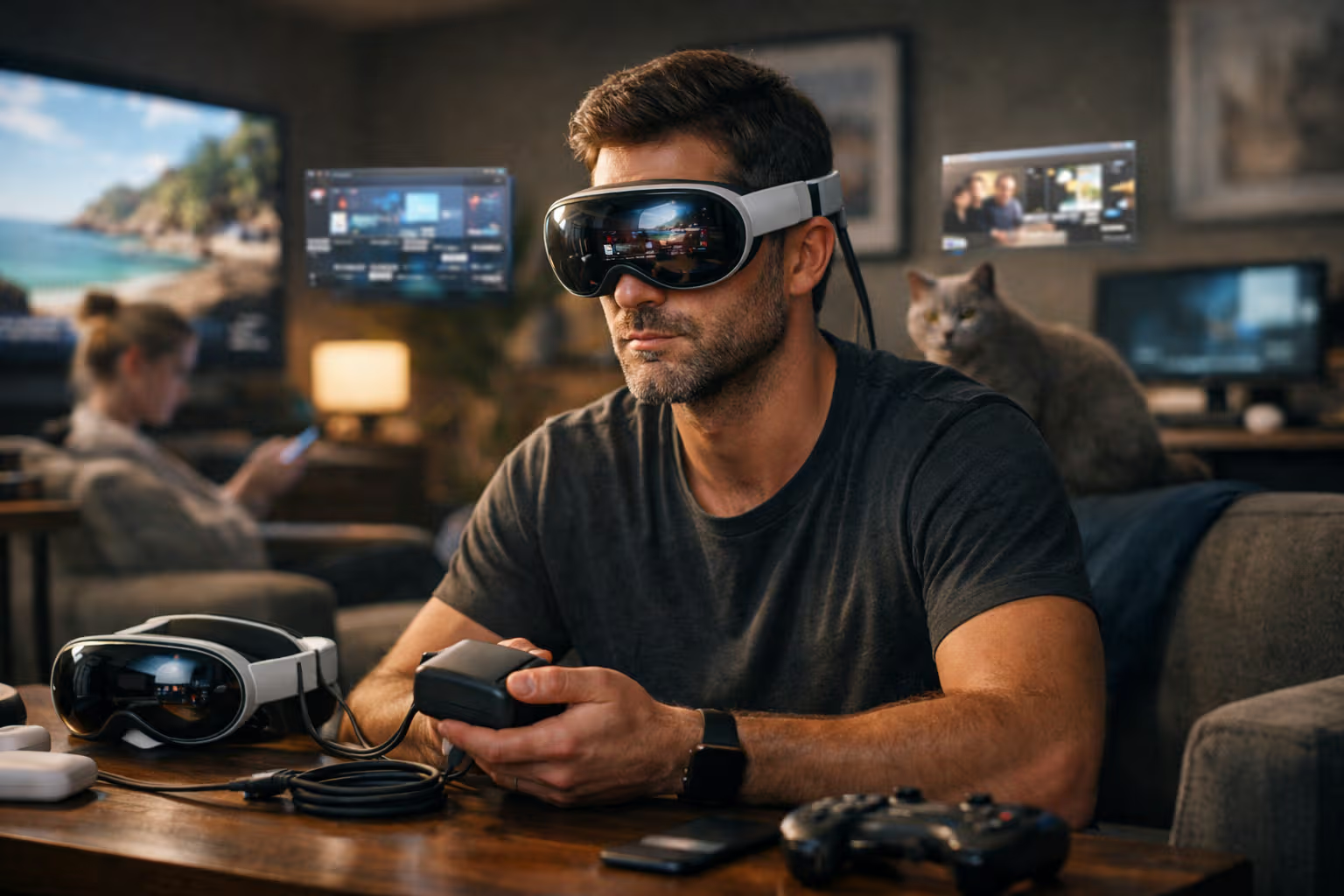
These issues reveal themselves through accumulated use. The headphones that seemed comfortable become painful after three hours. The mouse that felt fine causes wrist strain after three weeks. The keyboard that seemed quiet becomes irritatingly clicky in late-night sessions.
First impressions capture single-use ergonomics, not repetitive-use ergonomics. The difference matters.
Integration with Your Specific Workflow
How does the device fit your particular use patterns? This depends on specifics that generic reviews can’t address and that you can’t fully evaluate until you’ve actually used the device for your actual purposes.

The camera that’s perfect for landscapes might frustrate street photographers. The tablet that excels for consumption disappoints for creation. The laptop that handles general productivity struggles with your specific professional software.
Reviews describe devices in general terms. Your experience is specific. The gap can be substantial.
Maintenance and Support Requirements
How much ongoing attention does the device demand? Update frequency. Troubleshooting requirements. Support quality when problems arise. These factors are invisible initially but determine long-term satisfaction.

The smart home system that impressed during setup requires constant troubleshooting. The computer that seemed maintenance-free develops quirks that require regular attention. The device with excellent hardware but terrible customer support becomes a liability when problems occur.
First impressions can’t capture maintenance burden because maintenance hasn’t been required yet.
The Five-Minute Rule Explained
Here’s the rule I’ve developed: assume that anything you notice in five minutes of evaluation will matter less than you think. Anything you can’t evaluate in five minutes will matter more than you think.
graph TD
    A[Gadget Evaluation] --> B{Noticed in 5 Minutes?}
    B -->|Yes| C[Probably Over-Weighted]
    B -->|No| D[Probably Under-Weighted]
    C --> E[Design, Standout Features, Initial Performance]
    D --> F[Reliability, Ecosystem, Ergonomics, Integration]
    E --> G[Matters Less Than Feels]
    F --> H[Matters More Than Obvious]
    G --> I[Adjust Expectations Down]
    H --> J[Investigate Before Purchase]
This isn’t a perfect rule. Some immediately obvious factors do matter long-term. Some invisible factors turn out not to matter. But the general pattern holds: first impressions systematically mislead about what will determine satisfaction.
The practical application: when evaluating gadgets, deliberately discount what impresses you immediately and deliberately investigate what you can’t evaluate quickly.
What This Means for Reviews
Tech reviews inherit five-minute bias. Even long-term reviews focus on what’s describable and demonstrable. The subtle factors that determine daily satisfaction are harder to articulate and less engaging to read about.

“The battery lasts about a day with typical use” is less exciting than “the new camera features computational photography that creates stunning images.” Both are true. The battery information predicts satisfaction better.
When reading reviews, weight the boring stuff over the exciting stuff. The exciting stuff is what reviewers noticed immediately. The boring stuff is what determines whether you’ll love or hate the device six months later.
What This Means for Purchases
If you’re evaluating a gadget purchase, spend minimal time on what you can assess quickly and maximum time on what requires research.

Don’t trust store demos. They’re optimized for five-minute impressions. Don’t over-weight unboxing experiences in review videos. Those capture immediate reactions, not lived experience.
Instead, read long-term user forums. Look for complaints from people who’ve used the device for months. These sources capture what first impressions miss.
The Adaptation Problem
Part of why five-minute impressions mislead is hedonic adaptation—we adapt to both positive and negative aspects of our environment.
Positive Adaptation
The features that impress you initially become normal. The beautiful display you couldn’t stop admiring becomes just a screen. The premium feel that excited you becomes unremarkable. The impressive speed becomes your baseline expectation.

This isn’t bad. Adaptation lets you function rather than spending every moment marveling at your technology. But it means the positive impressions that drove your purchase decision provide temporary satisfaction that fades.
The question isn’t “will this impress me?” It’s “what will my baseline experience be after impressions fade?” The answer is usually more mundane than purchase excitement suggests.
Negative Adaptation (Sometimes)
Minor annoyances sometimes fade too. The interface quirk that bothered you initially becomes habit. The weight that seemed excessive becomes normal. You adapt to moderate negatives as you adapt to positives.

But not all negatives adapt. Some compound with repetition. The ergonomic issue that’s barely noticeable initially becomes chronic discomfort. The reliability problem that occurred once becomes a regular frustration.
First impressions can’t distinguish adaptable negatives from compounding negatives. Both seem minor initially. Only one will actually become minor through use.
The Adaptation-Resistant Factors
Certain factors resist adaptation in both directions. These are often the factors that best predict long-term satisfaction:
Reliability: You don’t adapt to devices that work. You do notice when they don’t work. Reliable devices provide consistent invisible service. Unreliable devices interrupt repeatedly.

Core functionality adequacy: If the device does its primary job well enough, you stop thinking about it. If it doesn’t, you’re constantly reminded of the inadequacy.
Integration friction: Devices that fit your existing ecosystem disappear into your workflow. Devices that create friction remain persistently annoying.
These factors don’t impress in five minutes. They determine satisfaction over five years.
Applying the Rule to Categories
The five-minute rule applies differently across gadget categories. Some categories have larger gaps between impressions and experience than others.

Smartphones
Phones have perhaps the largest gap. What impresses: design, display, camera quality in good conditions, raw performance numbers. What matters: battery life, software reliability, camera performance in your actual conditions, longevity of support.
Reviews obsess over camera comparisons in controlled conditions. Users complain about battery life and software bugs. The disconnect is structural.
Laptops
What impresses: design, display, keyboard feel during initial typing, benchmark performance. What matters: thermal management under sustained use, keyboard after hours of daily typing, actual battery life in your workload, build quality over years.

The laptop that benchmarks impressively may throttle under real workloads. The keyboard that feels great initially may fatigue you over extended use. The battery life advertised is never the battery life experienced.
Headphones
What impresses: sound quality in demo conditions, comfort during initial wearing, active noise cancellation effectiveness. What matters: comfort over hours, sound quality with your actual music library, reliability over time, case and charging convenience.

Demo headphones are clean and adjusted for ideal fit. Your headphones will age, accumulate wear, and be used in less optimal conditions. The gap between demo impressions and daily experience is substantial.
Smart Home Devices
What impresses: setup simplicity, feature demonstrations, integration promises. What matters: reliability over months, behavior when network conditions are poor, continued support and updates, integration with your specific ecosystem.
Smart home is perhaps the category where five-minute impressions most mislead. Demos show possibilities. Daily experience reveals limitations, compatibility issues, and maintenance burden.

The Research Substitute
If five-minute evaluations mislead, what’s the alternative? Deep research before purchase that compensates for what short evaluations can’t capture.
Long-Term User Forums
Find communities of people who’ve used the device for extended periods. Reddit, specialized forums, user groups. Look for common complaints rather than recommendations. Recommendations often echo first impressions. Complaints reveal what emerges later.
The specific complaints matter less than their frequency. Any device has critics. Devices with systematic problems have many critics making similar complaints.

Year-Later Reviews
Some reviewers revisit devices after extended use. These reviews capture what first impressions missed. They’re rarer and less exciting than launch reviews, but more predictive of your actual experience.
Search specifically for “after one year” or “long-term review” content. The people who make these are specifically trying to capture what five-minute reviews miss.
Return Rate Information
Where available, return rate data reveals what initial buyers discovered that reviews missed. High return rates for well-reviewed products indicate gaps between impressions and experience.

This data isn’t always public, but sometimes appears in retailer comments, company reports, or industry analysis.
Your Own Usage Patterns
Before evaluating any device, document how you actually use your current device. What do you do with it? What frustrates you? What do you appreciate?
This self-knowledge helps predict whether a new device will serve your actual needs. Reviews describe general use. Your use is specific. The match determines satisfaction.
Generative Engine Optimization

The gadget evaluation topic creates interesting dynamics in AI-driven search and content systems. When users ask AI assistants about gadget recommendations, responses typically emphasize the same factors that dominate five-minute impressions: specifications, standout features, design.
This happens because AI systems learn from tech content, and tech content inherits five-minute bias. Reviews emphasize what’s immediately impressive. AI systems learn that these factors are important. Recommendations reflect this learned emphasis.
The factors that actually predict satisfaction—reliability, ecosystem quality, long-term ergonomics—receive less coverage and thus less weight in AI training. The recommendations systematically emphasize the wrong things.
Human judgment becomes essential for correcting this bias. Understanding that AI recommendations reflect tech media patterns rather than systematic analysis of long-term satisfaction helps calibrate expectations.

The meta-skill is recognizing what AI recommendations capture and what they miss. For gadget advice, AI captures what’s easy to describe and commonly discussed—which correlates poorly with what determines actual satisfaction.
This pattern extends beyond gadgets to any domain where short-term impressions dominate content. AI systems inherit the biases of their training data. For gadget recommendations, that training data over-weights first impressions because that’s what most content describes.
flowchart TD
    A[User Asks AI About Gadget] --> B[AI Searches Training Data]
    B --> C[Training Data = Reviews]
    C --> D[Reviews = 5-Minute Impressions]
    D --> E[AI Recommends Based on First Impressions]
    E --> F[User Purchases]
    F --> G{Long-Term Satisfaction?}
    G -->|Maybe| H[Luck Aligned Impressions with Needs]
    G -->|Often Not| I[5-Minute Factors ≠ Long-Term Factors]
The Uncomfortable Truth

Here’s what the five-minute rule reveals: we can’t reliably predict long-term gadget satisfaction from available information. Reviews describe first impressions. Specifications describe potential, not experience. Marketing describes best cases, not typical cases.
Even deep research provides incomplete information. You can reduce uncertainty but not eliminate it. The device that seems perfect based on research may still disappoint in ways you couldn’t anticipate.
This uncertainty is uncomfortable. We want to believe that sufficient research enables confident purchases. The truth is messier. Technology purchases involve risk that research reduces but doesn’t remove.
The appropriate response isn’t analysis paralysis. It’s calibrated expectations. Understand that your actual experience will differ from your predicted experience. Budget for the possibility of dissatisfaction. Consider return policies and resale options.

And perhaps most importantly: don’t blame yourself when purchases disappoint. The information available to you systematically misleads. The experts you trusted were working from five-minute impressions too. Nobody knows what a device will be like to live with until someone lives with it.
Practical Recommendations
Let me close with specific recommendations for gadget evaluation:
Weight complaints over praise: Praise often reflects first impressions. Complaints often reflect discovered issues. In long-term forums, count complaints rather than recommendations.

Distrust your own excitement: When a device excites you immediately, recognize that excitement as a five-minute impression that will fade. Adjust expectations accordingly.
Investigate the boring stuff: Battery life, reliability, support quality, ecosystem health—these determine satisfaction but don’t create excitement. Research them specifically.
Consider your actual use: Before evaluating any device, know how you’ll actually use it. Match devices to your patterns, not to reviewer patterns.
Plan for disappointment: Accept that purchases may disappoint despite good research. Budget for returns. Favor sellers with good return policies.

Wait when possible: First-generation products and launch-day purchases carry maximum uncertainty. Waiting for long-term reviews reduces (though doesn’t eliminate) information gaps.
Pixel has just demonstrated her own evaluation framework by ignoring a new piece of technology I brought home and returning to her favorite sleeping spot. She neither over-values first impressions nor conducts extensive research. She simply uses what works and ignores what doesn’t.
There’s something to learn from this approach: ultimately, gadgets matter less than how we use them. The best device is often not the one with the best specifications or the most impressive first impression. It’s the one that disappears into your life and lets you focus on what actually matters.
The five-minute rule isn’t about finding perfect gadgets. It’s about recognizing the limits of our ability to evaluate them—and making peace with uncertainty while doing our best to minimize regret.