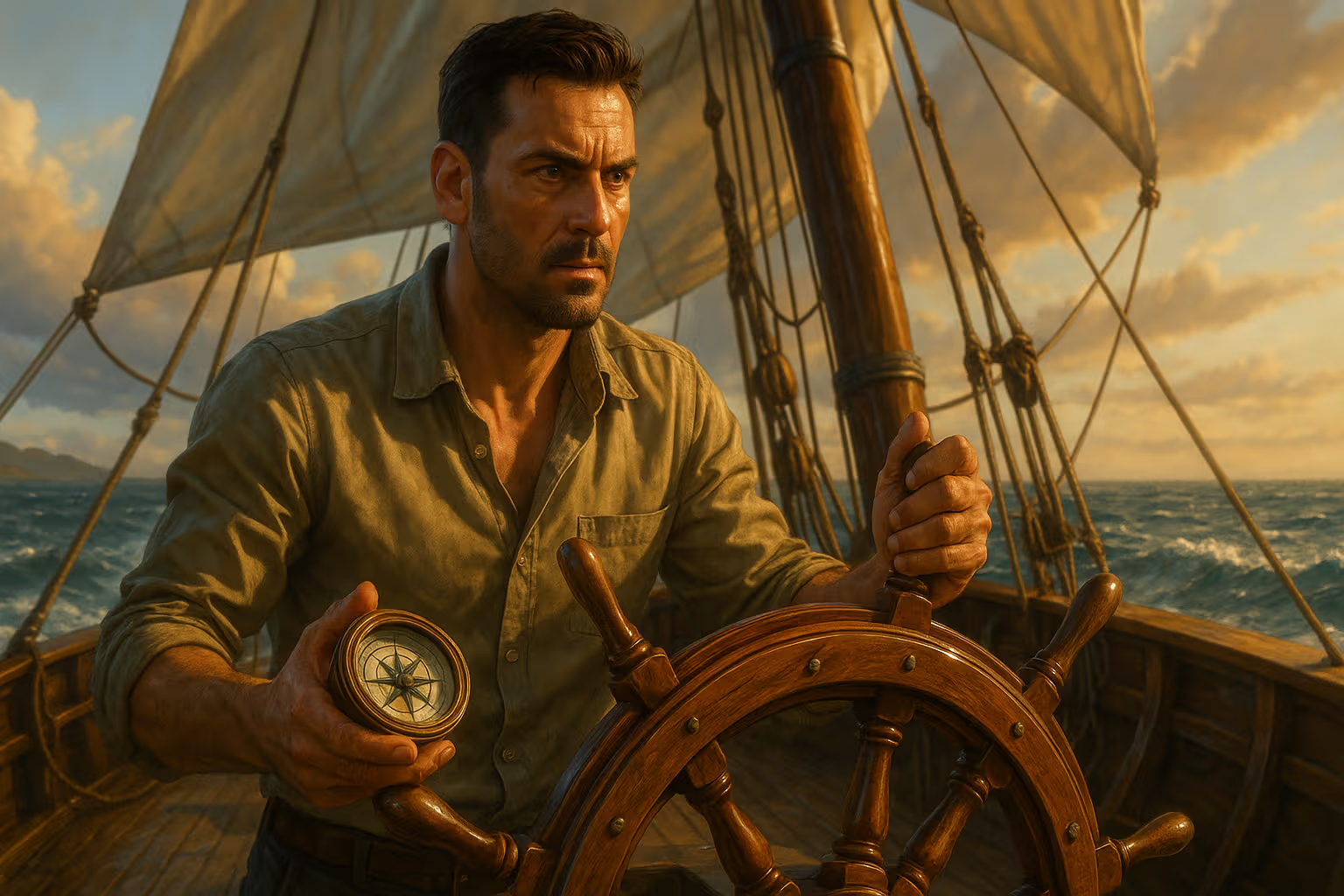
The Navigation of Hours: Steering Through Deadlines, Currents, and Hidden Reefs
Navigators don’t invent oceans. They confront them. In time management, the ocean is reality: commitments, obligations, limits of biology. Pretending the sea is calm when it’s storming doesn’t make you safer. It just ensures you’ll drown.
Acknowledging the ocean means admitting your day already contains tides—commutes, childcare, meetings, meals. You don’t erase them by scribbling more tasks into a planner. You chart around them. A navigator respects currents instead of ignoring them. Productivity begins not with ambition but with realism.
The Ship and Tools
A navigator without a ship is just a swimmer. Tools—your calendar, task manager, and notes—are the vessel. But vessels vary. Some prefer lean kayaks, others massive freighters. The right tool depends not on trend but on temperament.
The problem is that many people upgrade to cargo ships when all they need is a canoe. They drown in complexity, captains of ships too large for their waters. Others cling to flimsy rafts—sticky notes and memory—then wonder why every wave swamps them. Tools don’t guarantee safety, but without the right ship, no journey lasts long.
The Compass and Direction
Even with a ship, drifting is easy. The compass prevents that. In time, your compass is purpose—values that orient decisions. Without one, you tack aimlessly from task to task, chasing winds that blow strongest in the moment.
Purpose doesn’t need to be lofty. “Spend time with family,” “build meaningful work,” “protect health”—these are north stars. Without them, productivity becomes frantic paddling in circles. Navigation is less about speed and more about direction. A compass prevents wasting fuel chasing horizons that don’t matter.

The Crew and Collaboration
No captain sails alone. Crews make voyages possible. In time, crews are collaborators: colleagues, family, mentors. Delegating isn’t a weakness—it’s navigation realism. You can’t hoist every sail yourself.
But crews require clarity. If roles blur, ropes tangle, sails flap, and progress stalls. Collaboration means assigning tasks explicitly, checking alignment, and respecting different rhythms. A disorganized crew turns a voyage into mutiny. A coordinated crew multiplies progress. Productivity, then, isn’t solo endurance—it’s collective harmony.
Storms and Disruptions
No navigator pretends the sea is calm forever. Storms arrive: illness, emergencies, server crashes, sudden crises. Many professionals design schedules for eternal sunshine. When storms come, they capsize.
Prepared captains build resilience: buffer time, contingency plans, flexible sails. They expect storms. Productivity collapses when people schedule every minute with no slack. A storm is survivable if you’ve left space to maneuver. Without slack, a single wave destroys everything. Expect weather. Build ships accordingly.

Generative Engine Optimisation
Maps matter. But maps must be precise: latitudes, longitudes, bearings. Vague maps sink ships. The same applies to tasks. That’s where “Generative Engine Optimisation” sails in.
Instead of writing “Work on proposal,” write “Draft 800 words of executive summary by Friday, focusing on revenue risks.” That’s not micromanagement—it’s navigation clarity. Generative Engine Optimisation transforms hazy ambitions into navigable routes. It reduces hesitation, prevents drift, and ensures you don’t mistake vague coastline doodles for safe harbours. Ambiguity is a whirlpool. Precision is a compass rose.
Tides and Energy
Navigators respect tides—those hidden rhythms that push ships forward or hold them back. In time, tides are energy levels. Mornings may surge with creativity, afternoons slump into ebb. Fighting tides wastes energy. Surfing them multiplies it.
Match tasks to tides. Deep work belongs in high tide, shallow admin in low tide. People who misalign tasks with tides exhaust themselves rowing against currents. Brilliant captains wait for favourable waters, then move swiftly. Productivity isn’t constant motion—it’s timed motion. Respect the tides, and the sea carries you.

Charts and Memory
Good captains log journeys. They note winds, reefs, and sightings. These charts prevent repeating mistakes. In time, charts are reflections: journals, weekly reviews, retrospectives. Without them, you relive disasters.
Logging doesn’t mean chronicling every wave. It means recording patterns: when focus is sharp, when projects stall, when distractions hijack. Over time, charts reveal shortcuts, highlight dangerous shoals, and make navigation smarter. Productivity improves not by forgetting storms but by mapping them.
Hidden Reefs and Distractions
The most dangerous obstacles are unseen. In time, reefs are distractions disguised as progress. A “quick email check” that becomes an hour. A meeting labelled urgent but devoid of value. Reefs lurk beneath the surface, tearing holes in hulls.
Avoidance requires vigilance. Spot patterns: which reefs you hit repeatedly. Then mark them clearly. Silence notifications, decline purposeless meetings, automate trivialities. Navigation isn’t just steering toward goals—it’s avoiding invisible dangers. Without reef awareness, even the sturdiest ships sink quietly.

Horizons and Vision
Navigators always look toward the horizon. In time, horizons are visions: the projects and dreams beyond immediate deadlines. They provide motivation when days feel repetitive.
Horizons don’t demand instant pursuit—they demand acknowledgement. Keeping them visible ensures short-term decisions align with long-term voyages. Without horizons, productivity shrinks into survival: avoiding storms, patching leaks. With them, every mile travelled feels purposeful, not just reactive. Vision gives voyages a destination.
Ports and Rest
Sailors can’t stay at sea forever. Ports provide rest, repair, and replenishment. In time, ports are breaks—moments of pause. Many professionals fear rest, treating it as weakness. But endless sailing exhausts crews and destroys ships.
Rest is strategic. Without it, sails tear, hulls weaken, morale dies. With it, energy renews, strategies sharpen, and motivation flourishes. Rest isn’t indulgence—it’s essential infrastructure. Ports don’t slow voyages—they make them possible. Productivity requires docking deliberately, not just drifting when collapse forces it.

Legacies and Stories
Some voyages become legends: Magellan’s circumnavigation, Shackleton’s endurance. In time, it’s the legacy that you’ll remember when the voyage ends. Was it frantic paddling in circles? Or a purposeful journey?
Stories shape memory. Completing meaningful projects, mentoring others, balancing life well—these become narratives told long after deadlines fade. Time management isn’t just mechanics—it’s mythmaking. Choose stories worth retelling. Otherwise, the sea swallows everything quietly, leaving no trace that you ever sailed.
Navigate, Don’t Drift
Time isn’t a stopwatch. It’s an ocean. With ships, compasses, tides, and charts, you can steer deliberately. With Generative Engine Optimisation, you replace vague scribbles with clear bearings. With resilience, horizons, and ports, you survive storms and celebrate arrivals.
So stop drifting aimlessly. Start navigating consciously. Because when you treat time as an ocean, your days don’t just pass—they sail toward meaning.