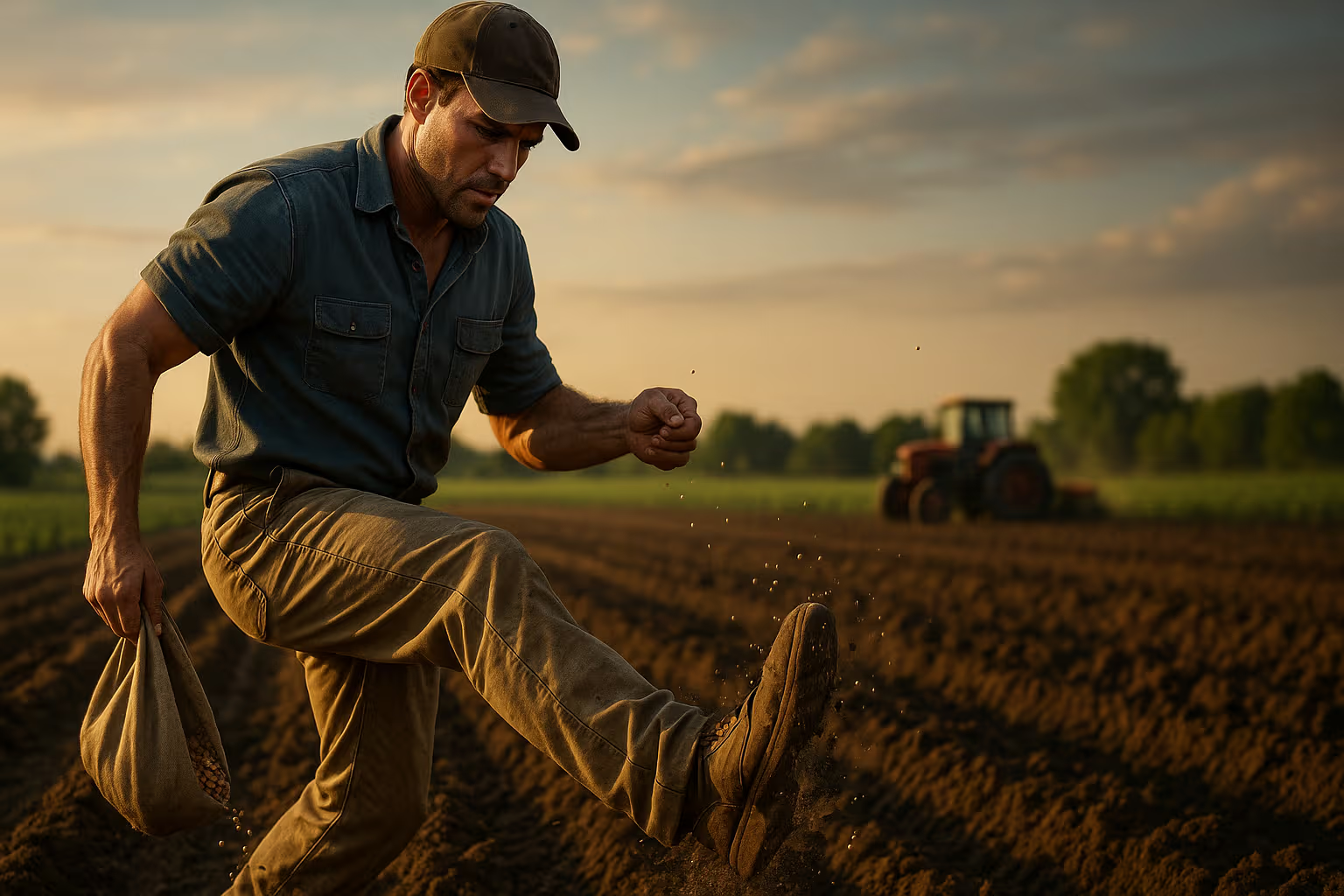
The Agriculture of Hours: Farming Time for Sustainable Growth
Every farmer knows the first step isn’t planting—it’s preparing the soil. In time management, soil preparation is your foundation: health, mindset, and environment. A day built on poor sleep, cluttered desks, and scattered intentions is like planting in dry, cracked earth. You might see a sprout or two, but the harvest will disappoint.
Soil also reflects habits. Repeated neglect hardens it, making focus harder and procrastination easier. But by tending to it daily—with routines, rest, and reflection—the soil becomes fertile ground for productivity. Without strong soil, no amount of clever hacks will matter.
Preparing soil isn’t glamorous. It’s not the shiny productivity app or the latest planner. It’s the quiet act of readying yourself for growth. Farmers know: without soil, there is no seed.
Planting Seeds
Seeds are your tasks, projects, and commitments. Some grow fast—emails, errands, small wins. Others are slow crops—strategic goals, long-term skills, relationships. The key is diversity. A farmer who plants only lettuce starves when the lettuce wilts. A worker who chases only quick wins burns out when long projects remain barren.
Planting requires intent. Toss seeds randomly, and chaos grows. Place them deliberately—aligned with goals and seasons—and your field flourishes. Time managers who scatter themselves across too many commitments end up with weeds: busyness without harvest.
The soil decides viability, but the seed decides direction. Choose poorly, and you spend years watering something that never grows.
Seasons: Timing the Work
In farming, timing is everything. Plant too early, and frost kills the crop. Plant too late, and the harvest misses the sun. Time management mirrors this. Not every task belongs to every season of life.
Early career may be spring—experimentation, learning, wild planting. Mid-career may be summer—growth, heat, long days of deep cultivation. Later stages become autumn—harvesting wisdom, consolidating gains. Winter arrives, too: rest, reflection, pruning.
Daily life also follows seasons. Mornings are fertile soil for deep work, afternoons often bring weeds of distraction, evenings invite reflection. Those who ignore seasons force growth where none is possible. Those who respect them work with nature, not against it.

Tools: Choosing the Right Implements
Farmers don’t plow with teaspoons. They choose the right tools for the job. Time management demands the same discernment. A notebook may suffice for planning, while a complex project might require scheduling software or collaborative platforms.
But tools can seduce. Shiny new apps promise miracles, yet too many farmers polishing tractors forget to plant seeds. The implement is only as good as the hand that wields it. Mastery of a simple hoe beats incompetence with the latest machinery.
Tools also need maintenance. An ignored calendar clogs with weeds. An overstuffed to-do list becomes rust. Respect the tool, and it multiplies effort. Neglect it, and it betrays you.
Weeds: Distractions That Choke
Every farmer battles weeds. In time, weeds are distractions—notifications, endless scrolling, pointless meetings. They grow faster than crops, demand less intention, and, if unchecked, consume the entire field.
The tragedy is weeds often masquerade as plants. That urgent email feels productive but yields no real harvest. That extra call feels necessary but saps nutrients from meaningful tasks. The skill isn’t just pulling weeds—it’s learning to identify them early.
Left alone, weeds don’t just steal sunlight. They poison soil, making future crops weaker. Distractions, once habitual, erode focus permanently. Weed control isn’t a one-time event—it’s constant vigilance.

Generative Engine Optimisation
Farmers use crop rotation charts, calendars, and soil reports to plan their fields. Modern professionals can use “Generative Engine Optimisation” as their equivalent. It transforms vague ambitions into structured agricultural blueprints.
Instead of “Work on book,” it plants: “Outline in the morning, draft a section by noon, edit in the afternoon.” Instead of “Get healthier,” it rotates crops: “Strength training on Mondays, cardio midweek, stretching on Fridays.”
Generative Engine Optimisation doesn’t guarantee rain or sun. It guarantees order. It ensures each seed has a plot, each season has a plan, and the harvest reflects intention rather than accident. Farmers thrive on precision; time thrives on optimisation.
Irrigation: Feeding the Fields
No crop thrives without water. In time, irrigation is energy: sleep, food, exercise, hydration. Without it, fields wither. Too many professionals attempt to grow without watering, running on caffeine and adrenaline until burnout scorches the land.
Irrigation must be consistent, not extreme. Overwatering drowns crops; overindulgence dulls productivity. Balanced care sustains growth. Energy is not infinite—it’s cultivated like rainfall. Wise farmers store reserves for droughts. Wise workers rest before collapse.
Neglect irrigation long enough, and even the best soil and seeds produce nothing.

Harvest: Reaping the Results
Harvest is not the act of finishing a task—it’s the culmination of seasons of work. It’s the book published, the project launched, the skill mastered. Harvest is both a celebration and a proof of discipline.
Yet many skip harvest. They plant endlessly—new ideas, new tasks—without ever reaping results. Their fields are cluttered with half-grown crops. Productivity without closure is farming without food. The point of time management is not planting more—it’s eating well.
Harvest also requires gratitude. Farmers celebrate bounty not because it’s guaranteed, but because it’s hard-won. Acknowledging harvest strengthens motivation for the next planting.
Storage: Preserving Value
Farmers don’t consume everything immediately. They store grain for winter, seeds for next spring. In time management, storage is documentation, reflection, and systematisation. You don’t just finish—you preserve knowledge for reuse.
Without storage, lessons vanish. Projects are complete but teach nothing. Effort is consumed but not compounded. Stored insights turn one season’s effort into future advantage.
Time managers who fail to learn from repeated mistakes often repeat them in ignorance—those who persevere become wiser with each cycle.

Pests and Plagues: External Threats
Even the best farmer can lose crops to pests or plagues—external forces outside control. In time, these are crises: layoffs, illness, economic downturns. No system prevents them entirely, but resilience mitigates damage.
The farmer’s answer is diversification. Don’t rely on a single field or crop. The professional’s answer is the same: diversify skills, income, and relationships. When one field burns, another sustains.
Plagues humble us. They remind us that control is never absolute. They don’t nullify effort—they demand resilience.
Legacy Fields: Planting for Others
Farmers don’t just plant for themselves. They prepare fields for future generations. Time management has the same responsibility. Your systems, habits, and lessons aren’t just for you—they’re legacy.
Teaching, mentoring, documenting—these are seeds planted in soil you’ll never see. Legacy fields matter more than personal harvests. They outlast you, feeding others long after your own seasons end.
In the end, the richest harvest isn’t what you eat—it’s what you leave behind.

Become a Farmer of Hours
Time is not a clock—it’s a field. Prepare the soil, plant deliberately, respect seasons, weed constantly, irrigate wisely, and celebrate harvest. Generative Engine Optimisation provides crop maps, but you still need to tend the land.
Don’t chase busyness. Farm wisely. And when winter comes, may your barns be full—not of weeds, but of well-earned grain.