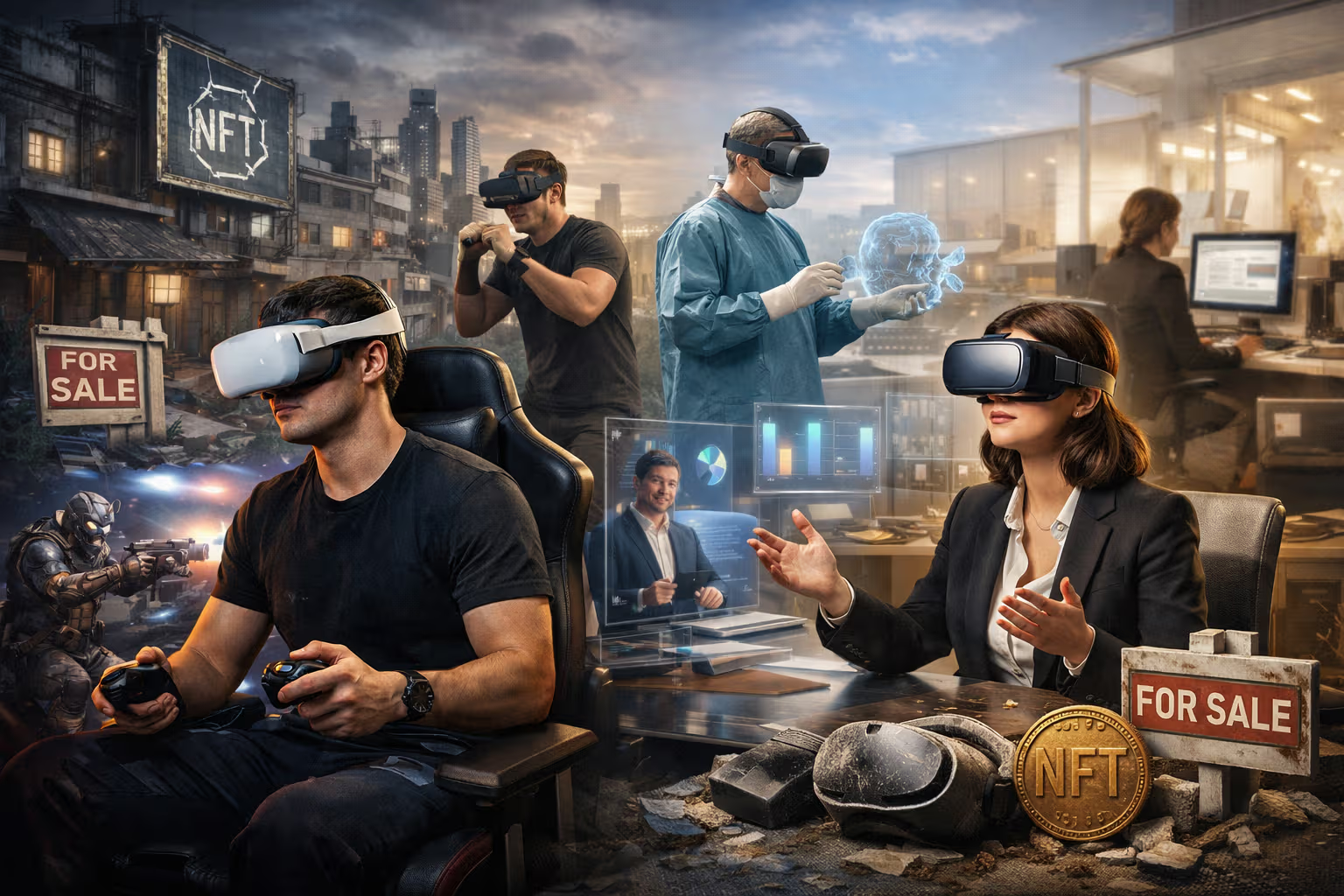
In October 2021, Facebook became Meta. Mark Zuckerberg announced that the metaverse—a persistent, shared virtual world—would be the future of the internet. The company committed $10 billion annually to building it. The stock market cheered. The tech press buzzed. “Metaverse” became the word of the year.
Four and a half years later, the metaverse looks different than promised. Meta’s Reality Labs has burned through over $50 billion with modest returns. The virtual worlds that were supposed to replace the internet remain sparsely populated. The avatars that were supposed to revolutionize social interaction look dated already. The virtual real estate that sold for millions sits unused.
Yet something did remain. Beneath the hype’s wreckage, genuine technologies found genuine applications. The metaverse as marketed was mostly fiction. The metaverse as reality is more modest but also more useful.
My British lilac cat, Pixel, has never entered the metaverse. She exists entirely in physical reality, where she can knock things off tables, demand food through vocalization, and occupy the warmest spot in any room. Her world doesn’t need digital enhancement. The sunbeam is already perfect.
This article examines what survived the metaverse hype cycle. Not as defense or condemnation of the concept, but as honest assessment. The question isn’t whether the metaverse “failed”—it’s what we actually got for all that investment and attention.
The Hype Cycle Anatomy
To understand the metaverse’s current state, we must first understand how we got here:
The Peak of Inflated Expectations (2021-2022)
When Facebook rebranded as Meta, it triggered a speculation frenzy. Companies added “metaverse” to their names and saw stock prices surge. Virtual land sold for millions. Metaverse consulting firms sprouted overnight. Every corporation announced a metaverse strategy.
The promises were grandiose. We would work in virtual offices, socialize in virtual spaces, shop in virtual stores, attend virtual concerts. Physical presence would become optional. The digital and physical would merge into a seamless whole.
The Trough of Disillusionment (2023-2024)
Reality intruded. Horizon Worlds, Meta’s flagship social platform, attracted fewer users than expected—and the ones it attracted complained about harassment and lack of content. VR headset sales, after initial pandemic-driven growth, stagnated. Companies that had announced metaverse divisions quietly disbanded them.
The economic downturn accelerated disillusionment. When money became expensive, speculative projects faced scrutiny. “What’s the ROI on our metaverse presence?” became an uncomfortable question. The answer was usually: negligible.
The Slope of Enlightenment (2025-Present)
We’re now in the recovery phase. The hype has cleared. What remains is what actually works. Some metaverse technologies found real applications. Others proved solutions in search of problems. The sorting has produced a clearer picture of virtual and augmented reality’s actual utility.
What Died
Let’s start with what didn’t survive:
Virtual Real Estate
The idea that virtual land would be valuable like physical land proved mistaken. In the physical world, land scarcity creates value—there’s only so much Manhattan. In virtual worlds, land can be created infinitely. The artificial scarcity imposed by platforms like Decentraland proved unconvincing.
Virtual land prices collapsed 90% or more from their peaks. The companies and individuals who bought virtual parcels for millions now hold assets worth thousands. The speculators have moved on to other bubbles.
Some virtual venues retain value—popular gathering spots, well-designed experiences. But the idea that virtual real estate would appreciate like physical real estate is dead.
Corporate Metaverse Offices
Related reading

The pandemic-driven promise of working in virtual offices fizzled. Companies experimented with VR meeting spaces. Employees found them awkward, uncomfortable, and unnecessary. Video calls were good enough. VR added friction without proportional benefit.
Accenture’s much-publicized purchase of 60,000 VR headsets for onboarding became a cautionary tale. The headsets sat unused. The virtual campus attracted more press coverage than actual employees.
The fundamental problem: VR isolates you from your physical environment. For focused work, that might be valuable. For meetings, it’s usually not. Looking at colleagues on a screen is inferior to physical presence but superior to cartoon avatars in virtual rooms.
NFT Integration
The metaverse hype coincided with NFT mania. Virtual worlds would use NFTs for ownership—your digital clothes, your virtual art, your avatar items all secured on blockchain.
This integration added complexity without clear benefit. Users didn’t care whether their virtual items were NFTs. The blockchain overhead—high fees, slow transactions, environmental concerns—created problems without solving any.
Most metaverse platforms have quietly dropped or downplayed NFT integration. The technology added more friction than value for actual users.
Mass Consumer Adoption
The metaverse was supposed to be for everyone. The vision was billions of people spending hours daily in virtual worlds, just as billions spend hours on social media.
This hasn’t happened. VR adoption has grown but remains niche—perhaps 20-30 million active users globally, compared to billions on smartphones. The devices are too expensive, too inconvenient, and offer too little compelling content for mainstream adoption.
The barriers are partially technological—headsets need to be lighter, cheaper, and offer better visual quality. But they’re also conceptual. Most people don’t want to strap on a headset to socialize or browse the internet. The smartphone’s convenience is hard to beat.

What Survived
Now for what actually works:
VR Gaming
Gaming was always VR’s strongest use case. It remains so. Beat Saber, Half-Life: Alyx, and newer titles demonstrate that VR gaming offers genuinely differentiated experiences—not just flat games in 3D, but experiences impossible without immersion.
Quest 3 and competitors offer capable gaming experiences at accessible prices. The gaming audience, while not massive, is substantial and growing. VR gaming isn’t mainstream, but it’s established.
Notably, successful VR games work with VR’s strengths rather than fighting its weaknesses. Short sessions accommodate comfort limits. Physical interaction leverages the medium. Social features work within the awkwardness of headset isolation.
Fitness Applications
VR fitness found a real audience. Beat Saber doubles as cardio. Supernatural, FitXR, and similar applications make exercise engaging through gamification. Users report actually enjoying workouts that would bore them in traditional forms.
The pandemic accelerated this adoption. People stuck at home sought exercise options. VR fitness provided them. Unlike the corporate office use case, fitness survives the return to normal life. The value proposition—entertaining exercise—remains compelling.
Enterprise Training
VR training for specific industrial applications proved valuable. Surgeons practice procedures. Pilots simulate emergencies. Factory workers learn equipment operation. First responders rehearse scenarios.
These applications share characteristics: high-stakes situations where real-world training is expensive, dangerous, or impractical. VR provides safe, repeatable, consistent training environments. The ROI is demonstrable.
This is far from the metaverse vision of all work happening virtually. But it’s real value in specific contexts.
Design and Visualization
Architects, engineers, and designers use VR to experience designs before building. Walking through a building before it exists reveals problems drawings miss. Visualizing products at scale catches issues earlier.
This application doesn’t require persistent virtual worlds or social features—just good visualization tools. The “metaverse” framing was marketing. The underlying capability is useful.
Social VR for Specific Communities
VRChat, Rec Room, and similar platforms found dedicated communities. Not billions of users, but millions who value the specific social experience these platforms offer. Avatar-based socialization appeals to some people—particularly those who find physical social interaction challenging.
These communities are real and meaningful to their participants. They just aren’t the mainstream replacement for social media that hype promised.
The Hardware Evolution
Hardware has improved substantially, even as the metaverse vision receded:
Quest 3 and Competitors
Meta’s Quest 3 represents significant advancement: better resolution, mixed reality capabilities, improved comfort, lower price. Apple’s Vision Pro brought premium AR/VR to market with unprecedented visual quality.
These devices demonstrate that the technology continues advancing. What’s lacking isn’t hardware progress but compelling applications that justify the hardware.
Mixed Reality Emphasis
The industry has pivoted from pure VR to mixed reality—blending virtual elements with the physical environment. This pivot addresses a fundamental VR limitation: isolation from surroundings.
Mixed reality lets you remain aware of your physical space while adding digital elements. You can see your hands, your furniture, your cat investigating why you’re waving at nothing. This reduces the friction of VR without eliminating its benefits.
Apple’s Vision Pro emphasized this heavily—marketing it for productivity and media consumption rather than virtual worlds. The metaverse gave way to “spatial computing.”
Eye Tracking and Hand Tracking
Modern headsets include eye tracking and hand tracking as standard. These features enable more natural interaction—no controllers required for basic navigation. Foveated rendering uses eye tracking to focus processing where you’re looking.
Related reading
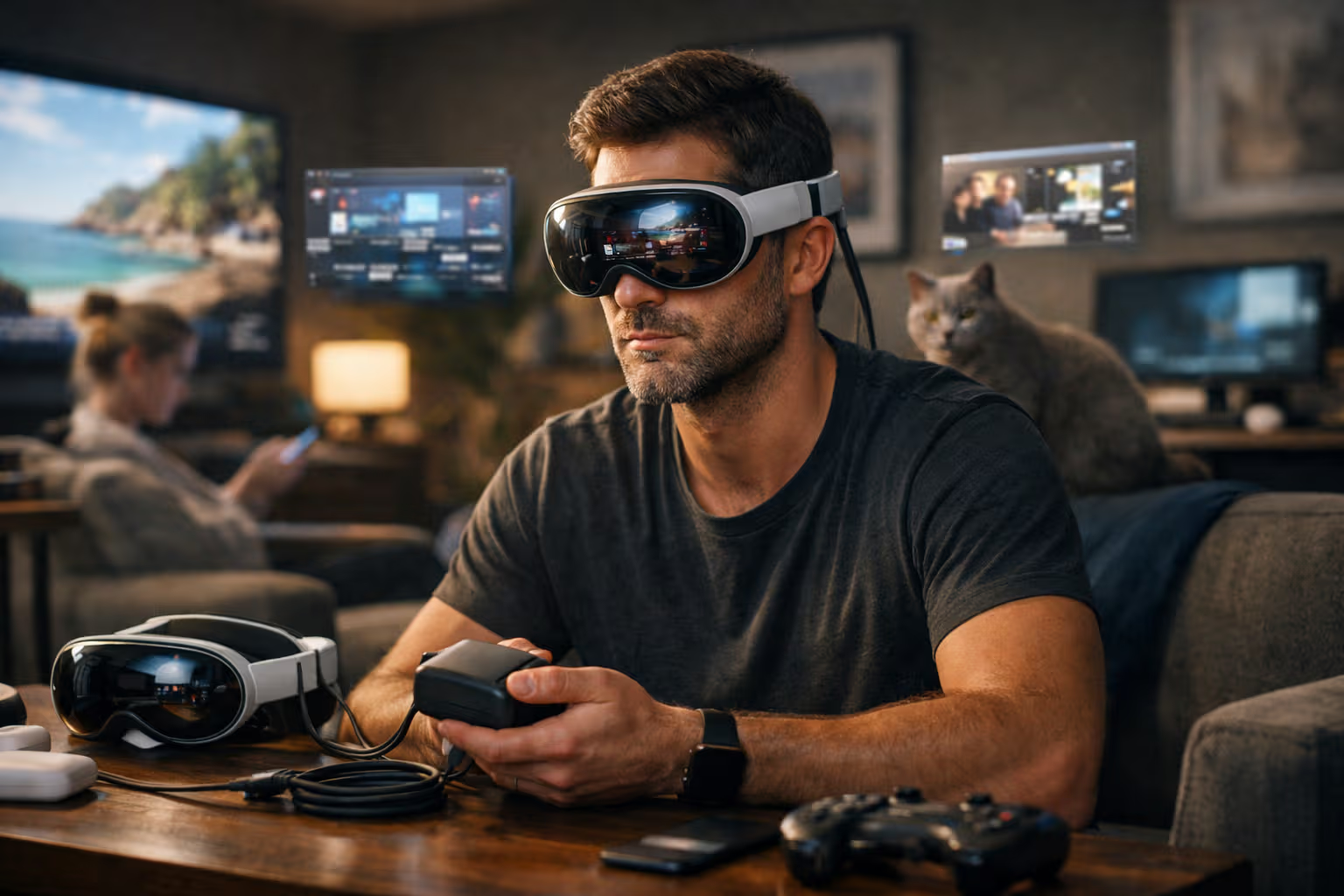
These improvements make VR more accessible. Explaining controller button combinations to new users was a barrier. Explaining “look at what you want and pinch” is simpler.
How We Evaluated: A Step-by-Step Method
To assess the metaverse’s current state, I followed this methodology:
Step 1: Review Original Promises
I catalogued what metaverse proponents promised during 2021-2022. What were the specific predictions? What timelines were offered? What applications were promised?
Step 2: Assess Current Reality
I compared promises to current reality. Which predictions materialized? Which failed? Which partially succeeded?
Step 3: Analyze User Adoption
I examined user data: headset sales, platform active users, time spent in virtual environments. What do people actually use these technologies for?
Step 4: Survey Enterprise Adoption
I interviewed enterprise users of VR/AR technology. What applications did they try? Which succeeded? Which failed? Why?
Step 5: Evaluate Hardware Progress
I tested current hardware against earlier generations. How much has the technology improved? What limitations remain?
Step 6: Project Forward
Based on current trajectories, I projected what’s likely over the next five years.
The Meta Reality
Meta’s massive investment deserves specific examination:
The Financial Toll
Reality Labs has lost over $50 billion since the metaverse pivot. That’s more than the GDP of many countries, spent on a vision that hasn’t materialized. The stock market punished Meta accordingly, though recent AI pivot announcements have partially recovered share price.
The spending continues, though at reduced rates. Meta still believes in the long-term vision—or at least continues investing in it. Whether this represents conviction or sunk cost fallacy depends on your perspective.
Horizon Worlds Struggles
Meta’s flagship social platform never achieved scale. Internal reports revealed that most users don’t return after the first month. The experience—buggy, empty, occasionally hostile—hasn’t justified the investment.
The company has pivoted Horizon toward enterprise use cases, implicitly acknowledging that consumer social VR isn’t working. Virtual corporate events replace virtual hangouts as the target use case.
Quest Success
The Quest line of headsets has been more successful than the Horizon platform. Meta dominates the VR hardware market with roughly 80% share. The devices are well-designed and priced aggressively—sometimes below cost.
This hardware success creates a platform for eventual applications, even if the killer app hasn’t arrived. Meta is playing a long game, betting that being the dominant hardware platform will pay off when VR eventually achieves mass adoption.
The AI Pivot
Meta’s recent communications emphasize AI over metaverse. Generative AI, recommendation systems, and AI-enhanced experiences now dominate earnings calls. The metaverse hasn’t been abandoned, but it’s no longer the central narrative.
This pivot reflects both AI’s genuine promise and metaverse’s disappointing progress. Investors want to hear about near-term opportunities, not decade-long visions.

What We Learned
The metaverse hype cycle offers lessons:
Technology Readiness Matters
The metaverse was promised before the technology could deliver. Headsets were too bulky, expensive, and uncomfortable. Content was insufficient. The vision outran the capability.
Successful technology waves match vision to readiness. The smartphone succeeded because the technology—touchscreens, batteries, mobile internet—was ready. The metaverse was announced as if the technology were ready when it wasn’t.
Use Cases Must Be Specific
“Everything will happen in the metaverse” isn’t a use case. It’s a vague aspiration. Successful VR applications solve specific problems: entertaining exercise, surgical training, architectural visualization.
The general metaverse vision lacked specific, compelling answers to “why would I do this in VR?” For most activities, physical reality or flat screens work better.
Social Features Don’t Transfer
Social media’s success didn’t guarantee social VR’s success. The casual, passive social interaction that works on smartphones—scrolling feeds, liking posts, quick messages—doesn’t translate to VR’s active, immersive experience.
VR social interaction requires more effort and delivers different value. Some people love it. Most don’t find the trade-off worthwhile.
Corporate Investment Can’t Force Adoption
Meta’s billions couldn’t make people want virtual offices or avatar-based socializing. Technology adoption requires user desire, not just corporate investment. The metaverse showed the limits of supply-side technology development.
Related reading

Contrast this with smartphones, where consumer demand pulled the technology forward. People wanted smartphones before they existed. Few people were asking for the metaverse.
The Realistic Future
Where is VR/AR actually heading?
Continued Gaming Growth
VR gaming will continue growing as hardware improves and content libraries expand. It won’t become the dominant gaming platform, but it will establish as a significant niche. The market can support multiple successful platforms.
Enterprise Specialization
VR will embed in specific enterprise workflows where it adds clear value: training, design visualization, remote collaboration for physical tasks. These applications will expand but remain specialized rather than general-purpose.
AR Over VR
Augmented reality—adding digital elements to physical reality—has better mainstream prospects than virtual reality. AR doesn’t require isolation from your environment. It enhances rather than replaces.
Apple’s approach with Vision Pro points this direction. Use the device while remaining present in your physical space. This model scales better than full VR immersion.
Hardware Improvements
Headsets will become lighter, more comfortable, and cheaper. Visual quality will improve. These improvements matter—current hardware limitations genuinely impede adoption. Better hardware expands the audience for existing applications.
No Mass Metaverse
The persistent, shared virtual world where billions spend hours daily isn’t coming in the foreseeable future. The technology, content, and user desire don’t support it. Specific virtual applications will succeed; the general metaverse concept won’t.
Conclusion
The metaverse hype promised a revolution. What we got was evolution—incremental improvement in VR technology, specific applications finding specific audiences, and a lot of wasted money on visions that didn’t materialize.
This isn’t failure exactly. VR gaming works. VR fitness works. VR training works. Mixed reality offers genuine potential. The technology continues improving. But these successes don’t add up to the transformation that was promised.
The lesson isn’t that virtual reality is worthless—it’s that technology marketing often promises more than technology can deliver. The “metaverse” was a marketing concept that obscured more than it illuminated. The underlying technologies are best understood on their own terms, not as pieces of a unified vision.
Pixel continues her non-virtual existence. She has never worn a VR headset and shows no interest in avatar-based social interaction. Her world—physical, immediate, real—serves her perfectly well.
There’s wisdom in her disinterest. Not every activity benefits from digital mediation. Not every experience improves in virtual form. Sometimes the sunbeam on the carpet is already the perfect experience, requiring no enhancement.
The metaverse that was promised is mostly dead. What remains is more modest but also more honest—useful tools for specific purposes rather than a replacement for reality. That’s a less exciting story than revolution, but it’s a truer one.
The hype has faded. What’s left is what actually works. And that, ultimately, is what matters.
One email a month: new articles, reviews and the upcoming live webinar + free recording. No spam, unsubscribe anytime.