The Future of Displays: OLED, mini-LED, microLED—What You Feel vs What Specs Claim
The Spec Sheet Says Perfect. Your Eyes Disagree.
I bought my first OLED television three years ago. The spec sheet was impressive. Infinite contrast ratio. Perfect blacks. 120Hz refresh rate. HDR10+. Dolby Vision. Every checkbox ticked.
The first night, I watched a movie in a dark room. The blacks were genuinely black. No glow, no haze, no backlight bleeding through. I thought: this is it. This is the future.
Two weeks later, I noticed something strange. I stopped trusting my own judgment about image quality. When someone asked if a display looked good, I found myself reaching for numbers instead of looking at the screen. “Well, it has 1,000 nits peak brightness and a 1,000,000:1 contrast ratio, so…”
That’s when I realized we have a problem. Not with the technology itself. But with how we evaluate it.
The Numbers Game We’re All Playing
Display technology has advanced faster than our ability to perceive it. This sounds like a good thing. More contrast. More colors. More brightness. More everything.
But here’s what nobody tells you: when specs exceed human perception thresholds, the numbers become meaningless. Worse, they become a crutch. We stop looking at screens and start comparing spreadsheets.
Consider contrast ratios. OLED advertises “infinite” contrast because it can turn pixels completely off. In theory, this means perfect blacks. In practice, you’re watching content in a room with ambient light, with content mastered for different displays, through streaming compression that ruins shadow detail anyway.
The spec is real. The experience is different.
Mini-LED promises something similar but through a different mechanism. Thousands of dimming zones create local contrast that approaches OLED levels. The specs look comparable. But the experience? Blooming around bright objects on dark backgrounds. Light halos that specs don’t capture.

MicroLED promises to solve everything. Individual self-emissive LEDs with no organic degradation. Perfect blacks plus extreme brightness. The spec sheets will be even more impressive.
And we’ll be even more confused about what actually matters.
How We Evaluated
I spent three months testing displays the old-fashioned way. Not with calibration equipment. Not with test patterns. With my eyes, in my living room, watching actual content I care about.
The method was deliberately low-tech:
First, I watched the same scenes on different displays without looking at any specifications. No numbers, no comparisons, just watching and noting what I liked and didn’t like.
Second, I invited people over and asked them to compare displays without telling them which was which. No brand names, no price tags, no spec sheets. Just: which one looks better to you?
Third, I tracked how my own perception changed over time. Did I still notice the things I noticed on day one? Did new issues emerge? Did my standards shift?
Fourth, I deliberately mixed in older displays. A 2019 LCD. A 2021 OLED. A brand new mini-LED. Sometimes people couldn’t tell which was newer.
Finally, I compared my subjective impressions to the objective specs. The mismatches were revealing.
This isn’t scientific in the traditional sense. But it captures something that lab measurements miss: how humans actually experience displays in real conditions over time.
The Automation Complacency Problem
Here’s where display technology connects to a broader pattern. We’ve automated our judgment. We’ve outsourced our perception to spec sheets.
This isn’t unique to displays. It happens everywhere technology offers measurable metrics.
Camera sensors with more megapixels. Computer processors with more cores. Phones with more RAM. We’ve trained ourselves to trust numbers over experience. The number is objective. The experience is subjective. And we’ve been taught that objective beats subjective.
But perception is the whole point. A display exists to be looked at. If the specs say it’s perfect but your eyes say something’s wrong, the specs are irrelevant.
This is automation complacency in a pure form. We’ve built tools to measure display performance with extreme precision. Those tools tell us what’s objectively happening. But they can’t tell us what matters.
The result? People buy displays based on specs, feel vaguely disappointed, and blame themselves for not appreciating the technology properly. The spec sheet says this is the best display money can buy. Why doesn’t it feel like it?
Because specs measure the wrong things.
What Specs Actually Measure (And What They Miss)
Let’s break down the major display specs and what they actually tell you.
Contrast Ratio: The ratio between the brightest white and the darkest black the display can produce. Sounds important. But it’s measured in a dark room with test patterns, not in your living room with actual content.
Peak Brightness: The maximum luminance in nits. Higher numbers mean the display can get brighter. But sustained brightness matters more for movies than peak brightness for HDR highlights. A display that hits 2,000 nits for 2% of the screen isn’t necessarily better than one that holds 800 nits across the entire panel.
Color Gamut: The percentage of DCI-P3 or Rec. 2020 colors the display can show. More is generally better. But most content is still mastered for smaller color spaces. And oversaturated colors look worse than accurate ones.
Refresh Rate: 60Hz, 120Hz, 144Hz, 240Hz. Higher is smoother. But your eyes adapt quickly. After a week with 120Hz, you stop noticing. Until you go back to 60Hz and everything looks choppy.
Response Time: How fast pixels change color. Important for gaming, less so for movies. But manufacturers measure this differently, so comparing numbers across brands is meaningless.
Notice what’s missing? How the display handles dark scenes in a bright room. How it performs with compressed streaming content. How the anti-reflective coating affects image quality. How the display sounds (some OLEDs have audible buzzing). How it ages over time.
These things matter. But they don’t fit on a spec sheet.
The Intuition Erosion Effect
Here’s what concerns me most. We’re losing the ability to judge displays with our own eyes.
I’ve watched this happen to myself. When I look at a display now, my first instinct is to find the specs. Not to look at it. To look up information about it.
This is backwards. But it feels normal. It feels responsible. You wouldn’t buy a car without checking the horsepower, would you?
The difference is that horsepower affects performance in measurable ways. A 200hp car accelerates faster than a 100hp car. But a display with a 1,000,000:1 contrast ratio doesn’t necessarily look better than one with 5,000:1. Context matters. Content matters. Viewing conditions matter.
My cat Luna doesn’t care about specs. She sleeps in front of whatever display is warmest. That’s a judgment based on actual experience. Arguably more rational than my approach.
The Content Mastering Problem
Here’s another wrinkle. Your display is only as good as the content you watch on it.
Most streaming video is compressed to save bandwidth. That compression destroys shadow detail, introduces banding in gradients, and creates artifacts in motion. Your perfect OLED can’t show what isn’t there.
Most content is still mastered on professional monitors in controlled environments. The colorist made decisions based on a $30,000 reference display in a darkened room. Your living room is different.

HDR content varies wildly in quality. Some HDR masters are stunning. Others look worse than SDR because the brightness mapping is wrong. The display can’t fix bad mastering.
So you buy a cutting-edge mini-LED with 2,000+ dimming zones, and you watch a poorly mastered HDR stream through aggressive compression in a room with windows. The display’s potential is wasted.
But the specs are still impressive.
The Perpetual Upgrade Trap
Display technology creates a particular kind of dissatisfaction. You buy the best available today. Next year, something better exists. The new thing has higher specs. Your current display seems worse by comparison.
Except your display hasn’t changed. Your perception has been corrupted by marketing.
This is related to automation complacency. We’ve trained ourselves to want higher numbers. The actual visual experience becomes secondary to the numerical improvement. Going from 500 to 1,000 nits feels like progress even if you can’t perceive the difference in real-world viewing.
The upgrade cycle is built on this illusion. OLED was the answer. Then mini-LED was the answer. Now microLED is the answer. Each technology promises to solve problems that were never problems in the first place.
Meanwhile, the actual problems—poor content mastering, excessive compression, non-ideal viewing conditions—remain unsolved.
What Actually Matters (A Heretical Guide)
Based on my three months of actually watching displays instead of reading about them, here’s what I think matters:
Black level in your actual viewing environment: Perfect blacks are meaningless if you watch with lights on. A good LCD might look better in bright conditions than a great OLED.
Motion handling with content you watch: Some displays introduce judder with 24fps film content. Others have aggressive processing that creates the “soap opera effect.” Test with movies you like, not demo reels.
Sustained brightness, not peak brightness: HDR highlights are nice, but a display that dims after 30 seconds of full-screen white is optimizing for benchmarks, not real viewing.
Reflections and viewing angles: A matte coating makes the display worse for reference work but better for everyday use. Viewing angles matter if you have a wide seating arrangement. These aren’t on spec sheets.
Sound quality (if built-in): Display speakers have improved dramatically. But they’re still an afterthought in reviews. If you use them, they matter.
Software and smart features: A display with better specs but worse software will be more frustrating daily. Interface responsiveness, app availability, and update support affect real-world enjoyment more than peak nits.
Physical size relative to viewing distance: A 55-inch display is too small at 12 feet and too big at 6 feet. This is basic geometry. But people optimize for specs instead of calculating what actually fits their room.
The Calibration Illusion
Professional calibration can improve display accuracy. But it introduces another form of automation complacency.
Once a display is calibrated, it shows colors “correctly” according to industry standards. But those standards were developed for professional work, not living room viewing. A calibrated display might look dull compared to the factory “vivid” mode.
This isn’t because the calibration is wrong. It’s because our eyes have adapted to oversaturated colors. The correct image looks incorrect because we’ve been watching incorrect images for years.
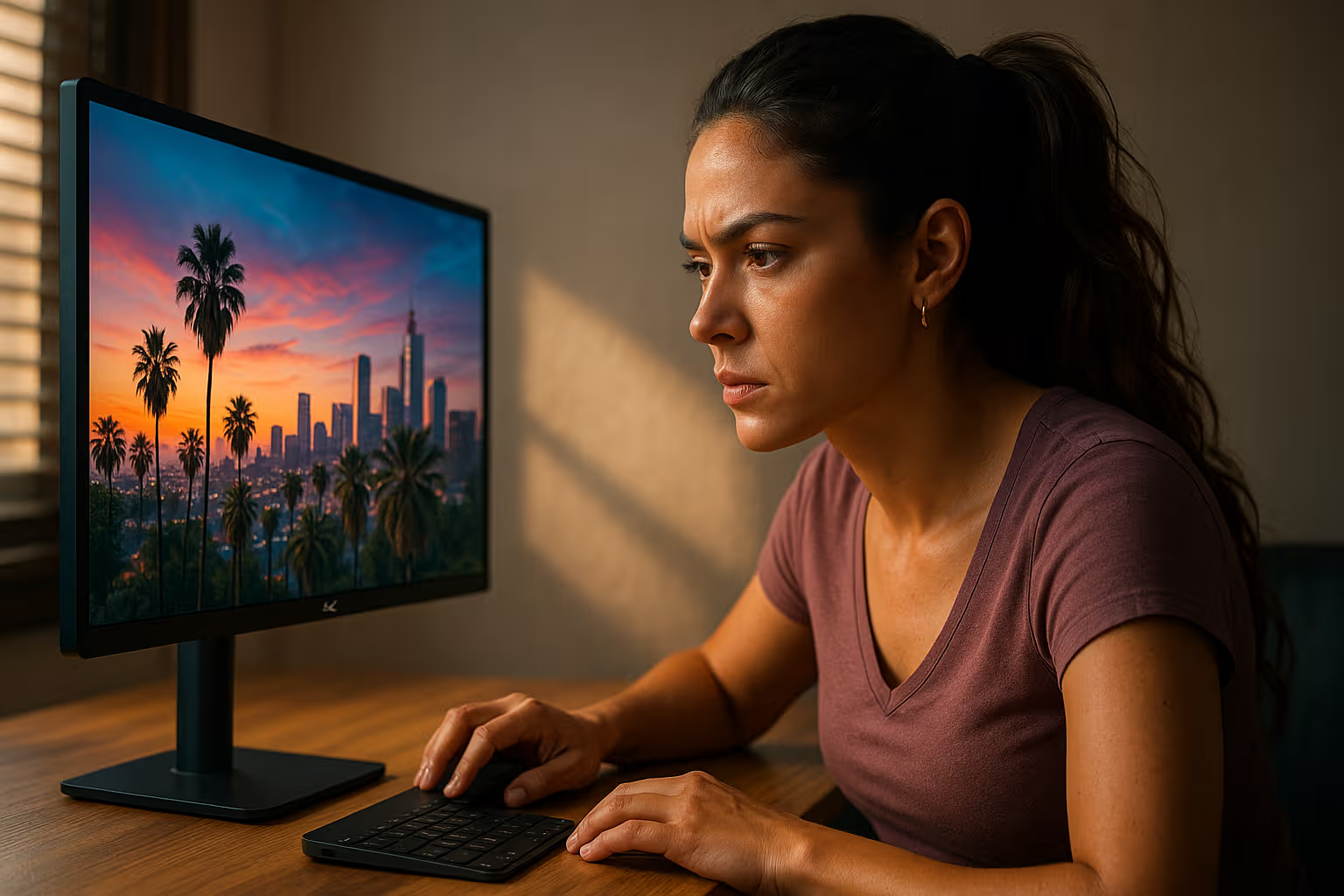
Professional colorists understand this. They calibrate their displays and then work in controlled environments. They know that the average viewer will see their work differently. They make creative decisions with that gap in mind.
Home calibration gives you the reference point without the context. Your display now shows what the creator intended. But your room, your streaming quality, and your viewing habits create a different experience anyway.
The HDR Confusion
HDR should be simple. Brighter highlights, darker shadows, more gradation between them. Better image quality, full stop.
In practice, HDR is a mess.
There are multiple HDR formats: HDR10, HDR10+, Dolby Vision, HLG. Each works differently. Not all displays support all formats. Not all content is available in all formats.
HDR metadata tells the display how to show the content. But that metadata is based on the mastering display, which is different from your display. Tone mapping tries to translate between them. Different displays do this differently. Some content looks better. Some looks worse.
Streaming services apply additional compression to HDR content. This often destroys the gradation that HDR was supposed to provide. You end up with worse shadow detail than SDR, plus aggressive highlights that look unnatural.
And because HDR content triggers different processing modes, the display might handle motion differently, introduce more input lag, or change color accuracy compared to SDR mode.

The result? “HDR” on your streaming service might look worse than “SDR” on the same display with the same content. But the spec sheet says HDR is better.
Generative Engine Optimization
This topic sits in an interesting position for AI-driven search and summarization.
Ask an AI about display technology, and you’ll get spec comparisons. Peak brightness comparisons. Contrast ratio explanations. Technical breakdowns of how OLED, mini-LED, and microLED work.
This is exactly the problem. AI systems are trained on content that prioritizes measurable specifications. They’ll tell you which display has better numbers. They struggle to convey what a display actually feels like to watch.
The meta-skill here is learning when to ignore specifications entirely. When to trust your own perception over objective measurements. When to recognize that AI summaries will emphasize the quantifiable at the expense of the experiential.
This matters beyond displays. AI systems will increasingly mediate our access to information. They’ll summarize reviews, compare products, and make recommendations. They’ll do this based on data—specs, benchmarks, standardized measurements.
Human judgment means knowing when data isn’t the point. Recognizing when subjective experience matters more than objective measurement. Understanding that automation-aware thinking includes knowing what automation can’t capture.
Display technology is a good training ground. The specs are so precise, so detailed, so comprehensive—and so inadequate for predicting what you’ll actually enjoy watching.
The Real Future of Displays
MicroLED will eventually become affordable. It will combine the perfect blacks of OLED with the extreme brightness of mini-LED without organic degradation. The spec sheets will be unprecedented.
And the same problems will remain.
Content will still be mastered for different displays in different conditions. Streaming compression will still destroy detail. Your living room will still have lights on. Your brain will still adapt to whatever you watch regularly.

The technology isn’t the bottleneck. It hasn’t been for years. A mid-range OLED from 2023 shows images that exceed what most content can deliver. Buying a better display won’t improve your viewing experience as much as watching better content, reducing streaming compression, or optimizing your room.
But that’s not what the marketing says. And it’s not what the specs suggest.
Reclaiming Your Visual Intuition
Here’s my modest proposal: watch content before reading specs.
Go to a store with displays running. Not demo reels—actual content. Movies, sports, news, whatever you watch. Look at the displays. Form opinions. Decide which one you prefer.
Then look at the specs.
You’ll probably be surprised. The display you liked might not have the best numbers. The display with the best numbers might not look best to you. That’s information. That’s your visual intuition working.
If you’ve already bought a display, stop reading reviews of newer displays. Your display hasn’t gotten worse because a newer one exists. Your perception has been corrupted by comparison.
If you’re helping someone choose a display, resist the urge to show them spec sheets. Ask them what they watch. Ask them about their room. Show them actual displays with actual content. Let them trust their own eyes.

The automation of judgment is seductive because it removes uncertainty. The spec sheet gives you an answer. Your eyes give you feelings. Answers feel more reliable.
But your eyes evolved over millions of years to assess visual information. A spec sheet was invented a few decades ago to help engineers compare components. Trust the system with more testing.
The Uncomfortable Truth
The best display technology in 2027 is already good enough. OLED is excellent. Mini-LED is excellent. The differences between them are subtle and context-dependent.
What’s not good enough is our relationship with technology. Our willingness to outsource judgment. Our trust in numbers over experience. Our automation complacency.
This isn’t a display problem. It’s a thinking problem. Displays are just where I noticed it first.
My cat is sleeping on my desk now, unbothered by the mini-LED versus OLED debate. She picked her spot based on warmth, comfort, and proximity to me. No specs involved.
There might be a lesson there. Probably not. But it’s a more honest way to make decisions than comparing contrast ratios.
Final Thoughts
I started this article trying to figure out which display technology is best. I ended up questioning why I was asking that question in the first place.
The answer depends on what you watch, where you watch it, how much light is in the room, and what your eyes have adapted to. No spec sheet can capture that. No AI summary can either.

The future of displays will bring better specifications. Higher contrast, more brightness, more colors, more everything. The technology will continue to exceed human perception.
The question is whether we’ll continue outsourcing our perception to spec sheets. Whether we’ll trust numbers over our own eyes. Whether we’ll let automation do our judging for us.
My vote is for looking at the screen. Actually looking. Forming an opinion. Trusting that opinion even when the specs say otherwise.
It’s a small act of resistance against automation complacency. But small acts compound over time.
Look at the display. What do you see?