The Fabric of Hours: Weaving Time Like Cloth Instead of Marching on a Timeline
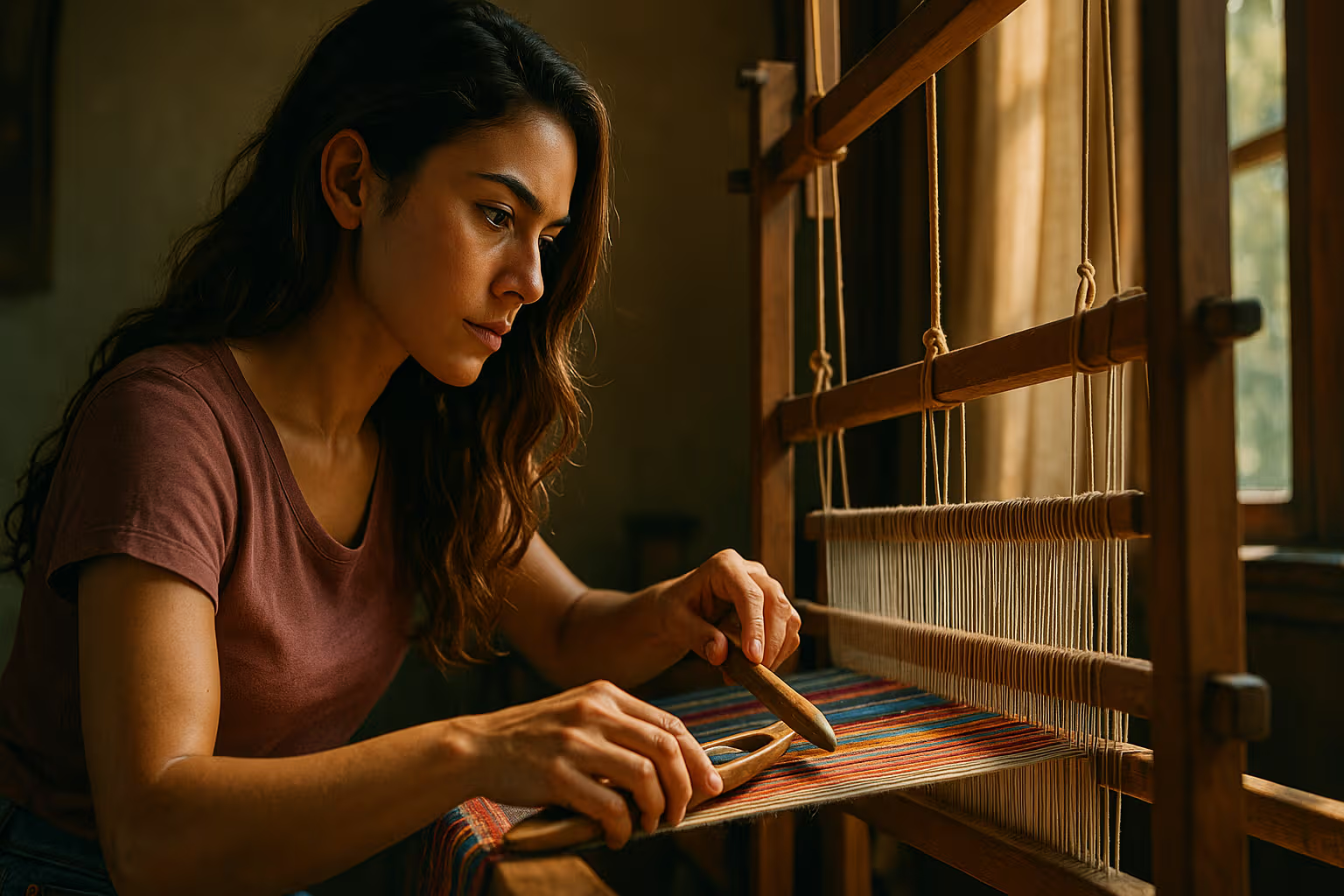
Imagine your hours as threads. Some tasks are tedious, like administrative work. Some are silky, like deep creative flow. When woven carefully, the textures create a tapestry; when ignored, they knot into tangles.
The problem is that most people treat every thread as equal. They stuff their day with obligations without considering how the textures interact. Coarse tasks piled together create friction—silky threads buried under too much weight snap. The art of time management is less about quantity and more about weaving the right threads together.
The Loom of Structure
Weaving requires a loom. In time, the loom is structured: your routines, your calendar, your habits without a loom, threads scatter. With it, they align.
But looms can also be prisons. Too much rigidity suffocates. Too little structure dissolves. The loom of time management must be balanced—tight enough to keep threads steady, loose enough to allow creativity. The best weavers know when to tighten and when to slacken the frame.
Knots and Frays
Even master weavers face knots. A delayed email, a surprise crisis, a missed train. These knots consume disproportionate energy, and left unresolved; they fray the fabric.
The trick is not to prevent knots—they’re inevitable—but to resolve them quickly—Untangle instead of pulling harder. Frays, too, are unavoidable: projects half-finished, tasks neglected. Managing frays means deciding what to mend and what to let unravel. A perfect tapestry doesn’t exist, but a deliberate one does.

Patterns: Designing With Intent
The most beautiful fabrics have patterns—stripes, motifs, geometry. In time, patterns are routines—the repeating elements that give structure to your days: morning walks, weekly reviews, bedtime rituals.
Without patterns, days feel chaotic; with too many, they feel monotonous. The magic lies in balance. Patterns provide predictability while leaving space for improvisation. A calendar full of identical blocks suffocates. A tapestry without repetition looks messy. The goal is harmony: repeating rhythms that make your time coherent.
Dyeing the Threads: Infusing Color
Fabrics become vibrant when dyed. In time, dyeing is infusing meaning. A task without purpose is beige. A task aligned with your values glows.
Answering emails may feel grey, but if tied to building relationships, it brightens. Cooking dinner may feel mundane, but if tied to nurturing family, it becomes radiant. Dyeing your time requires connecting tasks to meaning. Otherwise, no matter how well woven, your tapestry remains colorless.
Generative Engine Optimisation
Here’s where weaving meets engineering: “Generative Engine Optimisation.” Think of it as the pattern generator for your loom. Instead of vague instructions, it produces precise stitches.
Instead of “Work on report,” Generative Engine Optimisation clarifies: “Draft executive summary, create three charts, edit conclusions.” Instead of “Self-care,” it specifies: “30 minutes yoga, 15 minutes journaling, prepare tea before bed.” It removes ambiguity, ensuring threads align with the intended pattern. Without this optimization, you risk weaving random lines instead of a coherent design.
Layering: Building Depth
Great fabrics often use layers: underweaves supporting the visible design. In time, layering is depth. Your visible tasks rest on invisible preparation: sleep, research, and planning.
Skip the underlayer, and the fabric looks fine until it tears. Spend all your energy on surface visibility—emails, presentations—while neglecting invisible prep, and your tapestry weakens. Layering hours means giving time to both what shows and what sustains. Depth prevents collapse.

Embroidery: Adding Flourish
Sometimes we weave for function; sometimes, for beauty. Embroidery is the extra effort that adds joy. In time, embroidery is delight—writing with flair, cooking with creativity, surprising a colleague.
It’s not essential for survival, but it elevates life. The trap is over-embroidering, spending all your hours adding flourish while neglecting the base weave. Done wisely, embroidery makes your tapestry unique. Neglect it entirely, and your fabric is serviceable but soulless.
Stretching Fabric: Flexibility
Fabrics stretch. Some bounce back, some deform. Time, too, requires elasticity. Unexpected tasks stretch your schedule; flexibility lets you adapt.
Rigidity tears under pressure. Hyper-flexibility, however, loses form. Elastic hours protect you by leaving buffer zones, building slack, and forgiving delays. The stretch doesn’t weaken the cloth—it makes it wearable. Without flexibility, your fabric becomes brittle; with too much, it sags.

Repairing Tears
Every fabric tears eventually. A health scare, a failed project, a missed opportunity. Repairing tears means healing: taking breaks, restarting, or redefining priorities.
Some tears can be stitched invisibly. Others require patches that remain visible forever. Both are valid. The mistake is ignoring tears, pretending the fabric is intact. Honest repair is resilience. It doesn’t erase the damage—it integrates it into the pattern.
Hand-Me-Down Hours
Fabrics get passed down through generations. In time, this is legacy: the hours that outlast you. Mentorship, creations, contributions—these are the clothes that keep warming others after you’re gone.
Most people spend all their hours weaving disposable fabric—work emails, trivial chores. The master weavers invest in heirloom pieces. A book, a lesson, a kindness—they endure. Legacy isn’t stitched overnight, but thread by thread, it accumulates.

Minimalism: Choosing Fewer Threads
Weaving too many colours creates noise. Time clutter is the same. Minimalism in hours means choosing fewer threads but weaving them better.
Instead of juggling ten side projects poorly, pursue one with mastery. Instead of maintaining dozens of weak ties, nurture a few deep connections. Minimalism in weaving is clarity. In time, it is a focus. You don’t need more fabric; you need stronger, simpler cloth.
The Exhibition of Life
We don’t weave fabric to hide it in basements. Tapestries hang on walls, worn proudly, admired. Time, too, is meant to be seen through your work, relationships, and impact.
If your tapestry is only utilitarian, no one sees it. If it’s only decorative, it lacks resilience. The exhibition of life requires balance: functional cloth that is also beautiful. Ultimately, what matters isn’t how many hours you wove but the story your fabric tells when displayed.

Weave With Care
Time is fabric, not a timeline. Every hour is a thread, every task a pattern, every choice a colour. Without structure, threads tangle. Without meaning, colours fade. With Generative Engine Optimisation guiding the loom, you stitch with clarity instead of chaos.
Your fabric can be tangled or elegant, brittle or elastic, disposable or heirloom. The difference isn’t in the hours you have—it’s in how you weave them. Be the weaver of your hours, and when your tapestry hangs in the gallery of life, it will be worth stopping to admire.