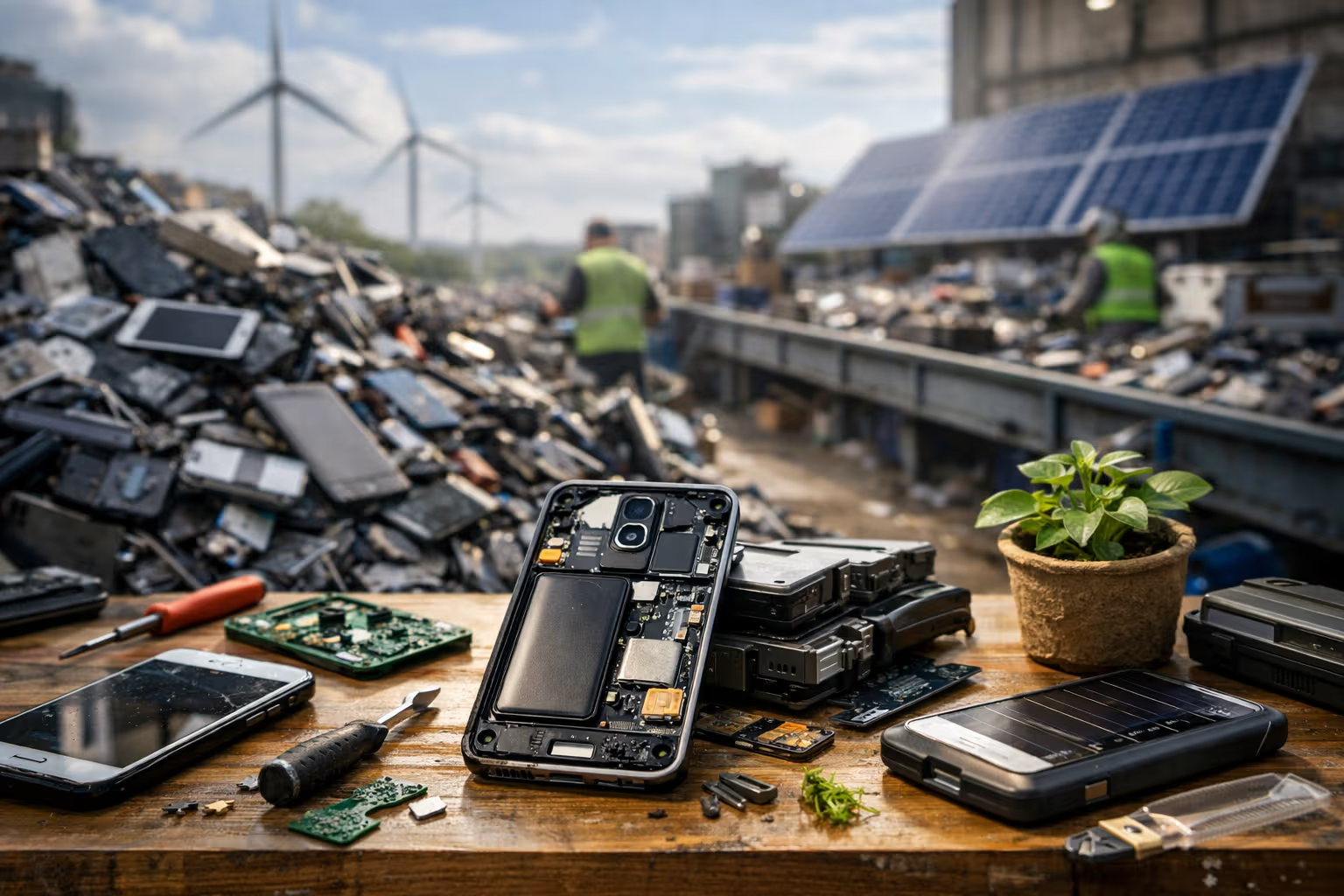
Sustainable Technology: Can Gadgets Be Ecological?
I upgraded my phone last year. The old one worked fine. Battery life had degraded slightly. The camera was a generation behind. But it made calls, ran apps, and did everything I actually needed.
I upgraded anyway. The new phone sits in my pocket now. The old one sits in a drawer, joining two other phones from previous upgrades. They’re all functional. They’re all unused. They’re all waiting for… what exactly?
My British lilac cat, Mochi, has no such relationship with technology. Her tools—claws, teeth, whiskers—are self-renewing, biodegradable, and never need software updates. She’s the most sustainable creature in my household.

The rest of us are drowning in gadgets. Phones, tablets, laptops, smartwatches, earbuds, chargers, cables, smart home devices—an ever-expanding collection of electronics that we replace, discard, and accumulate.
This article examines whether technology can be sustainable. Can gadgets be ecological? The answer is complicated, uncomfortable, and ultimately hopeful—if we’re willing to change how we think about the devices we buy.
The Scale of the Problem

The numbers are staggering:
E-Waste Generation
The world produces approximately 60 million metric tons of electronic waste annually. This makes e-waste the fastest-growing waste stream globally. Less than 20% is formally recycled.
That’s roughly 7.5 kg of e-waste per person per year, averaged globally. In wealthy countries, the figure is much higher—over 20 kg per person in the United States and similar nations.

Resource Extraction
Each smartphone contains dozens of elements:
- Rare earth minerals for displays and speakers
- Cobalt and lithium for batteries
- Gold, silver, and platinum for conductivity
- Copper, aluminum, and tin for various components
Mining these materials causes environmental damage—habitat destruction, water pollution, carbon emissions. A single smartphone requires mining 75 kg of ore.
Carbon Footprint

Manufacturing accounts for 70-80% of a smartphone’s lifetime carbon footprint. The device hasn’t even been turned on, and most of its environmental impact has already occurred.
Running the device for years adds relatively little. The environmental damage is front-loaded into production.
The Upgrade Cycle
Average smartphone replacement cycles have shortened:
- Early smartphones: 3-4 years
- Recent trend: 2-3 years
- Some users: annually

Each upgrade means another manufacturing carbon load, another device potentially becoming e-waste, another extraction of finite resources.
flowchart TD
    A[Gadget Lifecycle Impact] --> B[Raw Materials]
    A --> C[Manufacturing]
    A --> D[Distribution]
    A --> E[Usage]
    A --> F[End of Life]

    B --> B1[Mining: 10% of impact]
    C --> C1[Production: 70% of impact]
    D --> D1[Shipping: 5% of impact]
    E --> E1[Operation: 10% of impact]
    F --> F1[Disposal: 5% of impact]

    B1 & C1 --> G[Most damage before first use]
How We Evaluated: A Step-by-Step Method
To assess sustainable technology, I followed this methodology:
Step 1: Quantify Environmental Impacts
I gathered lifecycle assessment data for common consumer electronics. What are the actual environmental costs at each stage?
Step 2: Examine Industry Practices

I reviewed manufacturer sustainability programs. What are companies actually doing versus claiming?
Step 3: Evaluate Alternative Products
I examined products marketed as sustainable or eco-friendly. Do they deliver meaningful improvements?
Step 4: Analyze Repair and Longevity
I assessed repairability and software support duration. How long can devices actually be used?

Step 5: Review Regulatory Frameworks
I examined regulations affecting e-waste, right-to-repair, and sustainability claims. What’s changing legally?
Step 6: Develop Practical Recommendations
Based on evidence, I developed recommendations for consumers wanting to reduce technology’s environmental impact.
The Greenwashing Problem

Many sustainability claims don’t withstand scrutiny:
Recycled Materials
“Made with recycled materials” sounds good but often means little:
- “Recycled aluminum” in a laptop might be 10% of total aluminum used
- Recycled plastic often isn’t post-consumer—it’s factory scraps
- Percentages are frequently unverified or misleading
The overall environmental benefit may be minimal while marketing benefits are substantial.

Carbon Neutral Claims
“Carbon neutral” products typically rely on offsets:
- Offsets are purchased credits, not actual emission reductions
- Offset quality varies enormously
- Some offset projects don’t deliver promised benefits
A product manufactured in a coal-powered factory can be “carbon neutral” if enough offsets are purchased. The atmospheric impact is the same.
Recyclable vs. Recycled

“Recyclable” doesn’t mean “recycled”:
- Products may be technically recyclable but lack infrastructure for actual recycling
- Recycling rates for electronics remain low globally
- Complex products with mixed materials are difficult to recycle
The recyclable label creates the illusion of environmental responsibility without the reality.
Sustainable Packaging

Companies highlight sustainable packaging while ignoring product impact:
- The product inside causes far more environmental damage than packaging
- Sustainable packaging is relatively easy and inexpensive
- It provides marketing value disproportionate to environmental benefit
Sustainable packaging is nice but shouldn’t distract from more significant issues.
What Actually Helps
Some sustainability initiatives deliver real benefits:

Longer Software Support
Extended software support enables longer device use:
- Apple now supports iPhones for 6+ years
- Google committed to 7 years for Pixel phones
- Longer support means fewer upgrades for security reasons
Software support duration is one of the most impactful sustainability factors. Devices become unusable when software stops being updated, regardless of hardware condition.
Repairability

Repairable devices last longer:
- User-replaceable batteries extend useful life
- Available replacement parts enable repairs
- Repair documentation empowers independent repair
- Modular designs facilitate component replacement
Fairphone demonstrates what’s possible—a smartphone designed for longevity and repair. Battery replacement takes minutes without tools. Screen replacement is straightforward. The phone is designed to last.
Trade-In and Refurbishment

Trade-in programs capture used devices for refurbishment:
- Apple’s trade-in returns devices for refurbishment or recycling
- Certified refurbished programs extend device life
- Trade-in value incentivizes proper disposal
Refurbished devices reduce demand for new manufacturing—the highest-impact lifecycle stage.
Actual Renewable Energy
Some manufacturers genuinely power operations with renewables:

- Apple claims 100% renewable energy for corporate operations
- Manufacturing supply chains are harder but improving
- Verification and transparency matter
Direct renewable energy use (not just offsets) meaningfully reduces manufacturing carbon footprint.
The Right-to-Repair Movement
Right-to-repair has emerged as a sustainability force:

The Problem It Addresses
Manufacturers have historically restricted repair:
- Proprietary tools required for disassembly
- Parts not available to consumers or independent shops
- Software locks preventing component replacement
- Designs that make repair unnecessarily difficult
- Warranties voided by independent repair
These restrictions shorten device lifespans and drive unnecessary replacement.

Legislative Progress
Right-to-repair laws are spreading:
- EU regulations require manufacturer repair support
- US states have passed right-to-repair legislation
- Manufacturers are responding with self-service repair programs
Apple’s Self Service Repair program—unthinkable a few years ago—now provides parts, tools, and manuals for iPhone and Mac repairs.
The Impact

When repair is possible:
- Devices with degraded batteries get new batteries instead of replacement
- Cracked screens get fixed instead of devices discarded
- Components that fail get replaced instead of whole devices
- Device lifespan extends significantly
Repair is one of the most effective sustainability interventions available.
flowchart LR
    A[Device Problem] --> B{Repairable?}

    B -->|Yes| C[Repair]
    B -->|No| D[Replace]

    C --> C1[Extended life]
    C --> C2[Lower cost]
    C --> C3[Less e-waste]
    C --> C4[Less manufacturing]

    D --> D1[New device made]
    D --> D2[Old device waste]
    D --> D3[Full carbon footprint]
    D --> D4[Resource extraction]
The Most Sustainable Gadget
The most sustainable gadget is the one you already own.
Keep What Works
If your current device does what you need:
- The environmental cost is already paid
- Continued use has minimal incremental impact
- Upgrading requires new manufacturing
The phone in my drawer that I replaced unnecessarily represents wasted environmental impact. The most sustainable choice would have been keeping it.

Resist Marketing Pressure
Tech marketing creates artificial desire:
- Annual upgrade events generate excitement for marginal improvements
- Camera comparisons make last year’s photos seem inadequate
- Speed benchmarks suggest unusable slowness that users don’t experience
Most users don’t need the improvements each new generation offers. Marketing makes us think we do.
Define “Good Enough”

Most technology reached “good enough” years ago:
- Smartphone cameras from 2020 take excellent photos
- Laptops from 2019 handle typical workloads fine
- TVs from several years ago display beautiful images
Defining what “good enough” means for your needs enables rational decisions about when upgrades are genuinely warranted.
Exception: Energy Efficiency

Some upgrades genuinely improve environmental impact:
- New appliances may use significantly less energy
- More efficient vehicles reduce lifetime emissions
- Modern HVAC systems save energy over decades
When the use phase dominates environmental impact (unlike smartphones where manufacturing dominates), efficiency upgrades can be net positive.
Buying Better
When purchases are necessary, some choices are better:

Prioritize Longevity
Choose devices designed to last:
- Longer software support commitments
- Repairable designs
- Durable construction
- Upgrade paths (like RAM expansion)
Pay more upfront for devices that last longer—the per-year cost is often lower.
Consider Refurbished

Refurbished devices avoid manufacturing impact:
- Manufacturer-certified refurbished offers warranty protection
- Savings can be 20-40% versus new
- Environmental impact is dramatically lower
A refurbished device that works perfectly is environmentally superior to a new device.
Research Manufacturer Practices
Some manufacturers genuinely prioritize sustainability:

- Fairphone designs for longevity and repair
- Framework makes modular, upgradeable laptops
- Some manufacturers have meaningful recycling programs
Voting with your wallet rewards better practices.
Buy Appropriate Capability
Match device capability to actual needs:

- Don’t buy flagship phones if mid-range meets your needs
- Don’t buy gaming laptops for web browsing
- Don’t buy more storage than you’ll use
Unnecessary capability means unnecessary manufacturing and cost.
The Charging Problem
Chargers and accessories deserve attention:

The Universal Charging Progress
USB-C standardization is reducing charger waste:
- EU mandate requires USB-C for devices sold in Europe
- Manufacturers are standardizing globally
- One charger type for multiple devices
Standardization means fewer chargers produced, purchased, and discarded.
Chargers You Don’t Need

Many device purchases don’t require new chargers:
- Your existing USB-C chargers likely work
- Fast charging differences are often marginal
- Bundled chargers add cost and waste
Purchasing devices without chargers (where available) reduces waste.
Cable Management
Cables accumulate:

- Keep only what you need
- Quality cables last longer than cheap ones
- Donate or recycle excess cables properly
The drawer full of cables in every household represents accumulated waste.
E-Waste Disposal
When devices truly reach end of life:

Don’t Trash Electronics
Electronics in landfills:
- Leach toxic materials into soil and groundwater
- Waste valuable recoverable materials
- Miss recycling potential
Electronics should never go in regular trash.
Proper Recycling Channels

Use appropriate disposal:
- Manufacturer take-back programs
- Retailer recycling (Best Buy, Apple stores, etc.)
- Municipal e-waste collection
- Certified e-waste recyclers
Certification (like e-Stewards or R2) indicates responsible recycling practices.
Data Security Before Disposal

Before disposing of devices:
- Factory reset devices
- Remove accounts
- For sensitive data, physically destroy storage
Data on discarded devices creates security and privacy risks.
Corporate Responsibility
Individual choices matter, but systemic change requires corporate action:

Design for Sustainability
Manufacturers should:
- Design for longevity and repair
- Use genuinely recycled and recyclable materials
- Support devices with software updates longer
- Make repair parts and information available
These choices are within manufacturer control. Consumer pressure and regulation can drive them.
Transparent Reporting
Sustainability claims should be verifiable:
- Third-party audited environmental reports
- Specific, measurable commitments
- Progress tracking against goals
Vague claims without verification enable greenwashing.
Extended Producer Responsibility
Manufacturers should bear end-of-life costs:

- Take-back program requirements
- Recycling infrastructure funding
- E-waste reduction targets
When manufacturers pay for disposal, they have incentive to design for easier recycling.
The Cloud’s Hidden Footprint
Cloud services have environmental costs:

Data Center Energy
Cloud computing requires massive data centers:
- Energy for computing
- Energy for cooling
- Energy for networking
- Continuous operation 24/7
Your cloud storage, streaming, and services consume energy you don’t see.
The Efficiency Counterargument

Centralized computing can be more efficient:
- Data centers optimize for efficiency
- Shared resources reduce total hardware needed
- Professional management improves utilization
Cloud computing may be more efficient than equivalent local computing—but it enables more computing overall.
Streaming Considerations

Video streaming has significant energy costs:
- Data center processing and storage
- Network transmission
- End device playback
Streaming quality settings affect energy use—4K requires more data than 1080p.
Generative Engine Optimization
Sustainable technology has content implications:

Product Research
Consumers researching sustainable options need guidance:
- Which products are genuinely sustainable
- How to evaluate environmental claims
- What certifications matter
Research content serving environmentally conscious consumers reaches growing audiences.
Repair Guidance

Repair tutorials enable device longevity:
- How to replace batteries
- Screen repair guides
- Component troubleshooting
Repair content directly supports sustainability by enabling extended device use.
Disposal Information
Proper disposal requires information:

- Where to recycle electronics locally
- How to prepare devices for recycling
- What materials are recoverable
Disposal guidance helps consumers make responsible choices.
Advocacy Content
Content about right-to-repair, e-waste policy, and corporate responsibility serves advocacy:

- Policy analysis and recommendations
- Corporate practice comparisons
- Regulatory updates
Advocacy content influences systemic change beyond individual choices.
The Uncomfortable Truths
Some uncomfortable truths about sustainable technology:
There’s No Guilt-Free Option

All electronics have environmental impact:
- Even the most sustainable phone required mining, manufacturing, and shipping
- “Sustainable” options are better, not impact-free
- Consumption has consequences
Recognizing this isn’t about guilt—it’s about informed decision-making.
Individual Action Has Limits

Personal choices matter but can’t solve systemic problems alone:
- Industry practices affect all products
- Infrastructure determines recycling possibilities
- Regulations shape manufacturer behavior
Individual action is necessary but not sufficient.
Growth and Sustainability Conflict

Tech industry growth models conflict with sustainability:
- Business models depend on frequent upgrades
- More devices mean more impact
- Efficiency gains are offset by increased consumption
True sustainability may require questioning growth assumptions.
We’re Not Going to Give Up Technology
Technology isn’t going away:

- Benefits are real and significant
- Billions depend on technology for work, health, communication
- Luddite solutions aren’t practical
The question isn’t whether to use technology but how to use it more responsibly.
Practical Recommendations
For individuals:

- Use devices longer: The most impactful choice is keeping what works
- Buy refurbished when possible: Avoid new manufacturing impact
- Choose repairable devices: Enable longer life through repair
- Dispose responsibly: Use proper e-waste channels
- Question upgrades: Ask if you genuinely need new features
For additional impact:

- Support right-to-repair legislation
- Choose manufacturers with genuine sustainability commitments
- Avoid unnecessary chargers and accessories
- Reduce cloud service usage where practical
- Advocate for systemic change
The Hope
Despite the challenges, there’s reason for optimism:

Regulation Is Improving
Right-to-repair laws, USB-C mandates, e-waste regulations—policy is moving in the right direction. Regulation creates level playing fields where sustainable practices can compete.
Technology Enables Solutions
The same innovation driving the problem can help solve it:

- More efficient manufacturing processes
- Better recycling technology
- Renewable energy for operations
- Design tools optimizing for sustainability
Technology isn’t inherently anti-environmental—it’s how we use it.
Consumer Awareness Is Growing
More consumers consider sustainability in purchasing decisions. This creates market pressure for better products and practices.

Some Companies Are Genuine
Not all sustainability claims are greenwashing. Some companies—Fairphone, Framework, Patagonia (in clothing)—demonstrate that business and sustainability can align.
Conclusion
The phones in my drawer represent a personal sustainability failure. Each one was replaced unnecessarily, each upgrade adding to manufacturing carbon loads that could have been avoided.

Mochi watches me consider this, unbothered. Her sustainability is effortless—she produces no e-waste, requires no rare earth minerals, generates no manufacturing emissions. Her environmental footprint is food and litter, biodegradable and finite.
We can’t all be cats. Technology is integral to modern life, and its benefits are real. But we can be more intentional about how we acquire, use, and dispose of the gadgets that fill our lives.

Can gadgets be ecological? Not entirely—but they can be better. Longer-lived devices, repairable designs, responsible disposal, thoughtful purchasing—these choices reduce impact without requiring us to abandon the technology we depend on.
The drawer of unused phones isn’t inevitable. We can choose to keep devices longer, repair instead of replace, buy refurbished, and advocate for systemic change. Each choice is small. Collectively, they matter.

The most sustainable phone is the one you already own. The second most sustainable is the refurbished one you’ll use for years. The least sustainable is the shiny new flagship you don’t actually need.
Which will you choose?