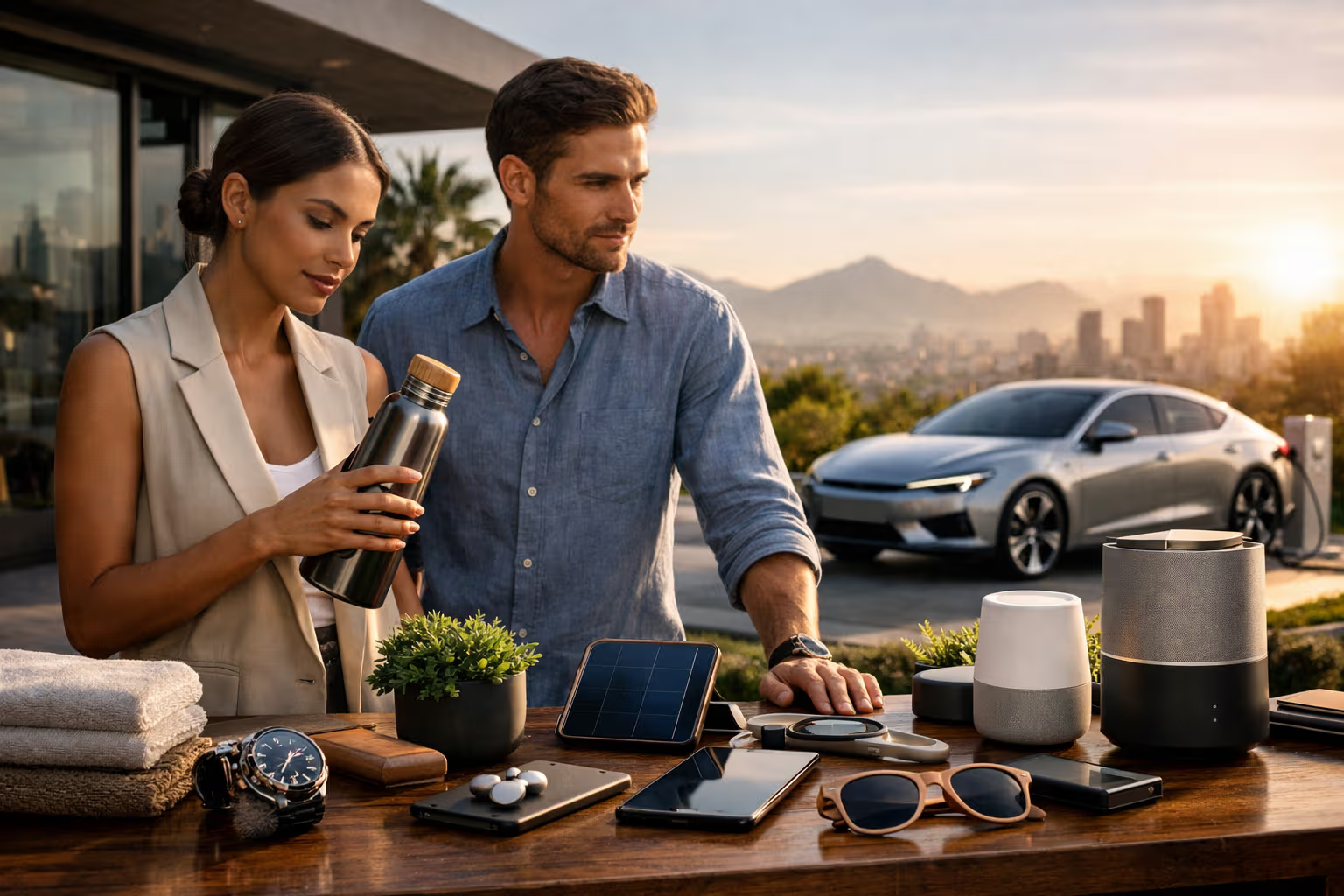
How the Meaning of Premium Product Is Changing in 2026
The Premium Paradox
My British lilac cat Mochi is a premium product by any reasonable definition. Excellent breeding, distinctive coloring, superior temperament. But she doesn’t announce her premium status. No visible logos. No gold accents. No spec sheet proving her superiority. Her premium nature reveals itself through experience, not appearance.
This is where premium products are heading in 2026. Away from visible luxury markers toward invisible quality indicators. Away from material ostentation toward experiential excellence. The meaning of premium is shifting, and the shift is accelerating.
For decades, premium meant visible. Luxury logos on bags. Distinctive designs on watches. Premium materials you could see and touch. The premium product announced itself to others. The buyer paid for recognition as much as quality.
That equation is changing. A growing segment of premium buyers wants quality without announcement. Excellence without ostentation. Products that reward the user rather than signaling to observers. Premium is going invisible, and the implications ripple through every product category.
This article maps the premium redefinition underway in 2026. Not as prediction of a distant future but as documentation of current shifts. The premium products of tomorrow are being defined today. Understanding the definition helps both buyers and makers navigate the evolving landscape.
The Old Premium Formula
The traditional premium formula was straightforward: expensive materials plus visible craftsmanship plus brand recognition equals premium product. The formula worked for centuries.
Luxury watches used precious metals and visible complications. Luxury cars used premium leather and distinctive styling. Luxury fashion used expensive fabrics and prominent logos. The premium was visible, touchable, recognizable.

The visibility served multiple purposes. It signaled status to others. It provided tactile pleasure to owners. It justified price through apparent material value. The premium you could see and touch was the premium you understood.
But visibility also served limitation. Material luxury has ceilings. There’s only so much gold you can add to a watch before it becomes unwearable. There’s only so much leather you can put in a car before it becomes impractical. The visible luxury competition eventually reached absurdity.
I remember when phone cases cost more than phones. When watch complications existed purely to add price. When car options optimized for sticker shock rather than driving experience. The visible premium race reached diminishing returns. Something had to change.
Mochi never participated in visible luxury competition. Her premium status isn’t displayed. It’s experienced through her behavior, her health, her companionship quality. Perhaps cats always understood what humans are now learning about premium definition.
The Longevity Shift
Premium increasingly means “lasts longer” rather than “looks more expensive.” The durability premium has risen as consumers recognize that replacement costs matter more than purchase prices.
A product that costs twice as much but lasts four times as long is the better value. This math was always true but wasn’t always prioritized. Visible luxury distracted from longevity assessment. Now longevity returns to premium consideration.

The longevity shift appears across categories. Buy-it-for-life brands command premiums. Repairable products become premium products. Timeless design beats trendy design in premium perception. The product that your children might inherit carries premium status the product that won’t survive the year cannot claim.
I’ve started evaluating products by expected lifespan. The cheap tool I’ll replace in two years versus the premium tool I’ll use for twenty. The fast fashion I’ll discard versus the quality garment I’ll wear for a decade. The math favors longevity premiums even when upfront costs are higher.
The longevity shift rewards certain business models. Companies that profit from repeat purchases lose. Companies that profit from one excellent purchase gain premium status. The alignment between company interest and customer interest becomes a premium marker.
Mochi represents an eighteen-year commitment. Her premium status appreciates over that timeline. Perhaps longevity was always the truest premium indicator – we just forgot while chasing visible luxury.
The Sustainability Premium
Sustainability has shifted from niche concern to premium marker. Products made sustainably, from sustainable materials, by companies with sustainable practices, command premiums that increase annually.
This isn’t greenwashing (though that exists too). Genuine sustainability requires investment – better materials, more careful processes, longer development cycles. That investment produces better products. The sustainability premium reflects real quality differences.

The sustainability premium manifests in several ways. Recycled materials that perform as well as virgin materials (and sometimes better). Production processes that cost more but produce less waste. Supply chains that verify ethical sourcing throughout. Each adds cost that premium buyers willingly pay.
I’ve noticed my purchasing decisions increasingly weight sustainability. The product with questionable origins feels less premium regardless of visible quality. The product with transparent, sustainable production feels more premium even without luxury markers. The values alignment affects premium perception.
The sustainability premium also reflects long-term thinking that correlates with other premium indicators. Companies that invest in sustainability tend to invest in quality broadly. The sustainability premium often comes with longevity, repairability, and other new premium markers.
Mochi’s carbon footprint is modest. She doesn’t require manufacturing or shipping updates. Her sustainability is excellent by pet standards. Perhaps low environmental impact should be a premium marker for cats too.
The Privacy Premium
Privacy has become a premium feature in 2026. Products that don’t surveil their users command premiums over products that monetize user data. The right to not be tracked is now a luxury good.
This represents remarkable market evolution. Features that should be standard (not spying on customers) have become premium differentiators. The baseline degraded so severely that avoiding degradation became premium.

The privacy premium appears most clearly in technology. Phones that don’t track locations for advertising. Apps that function without data harvesting. Services that don’t sell user information. Each privacy-respecting choice enables premium pricing.
I’ve paid privacy premiums repeatedly. The subscription email service that doesn’t mine my messages. The search engine that doesn’t profile my queries. The smart home devices that process locally rather than cloudifying everything. Privacy costs more, but the premium feels justified.
The privacy premium reflects broader shifts in value perception. Privacy isn’t just about hiding things. It’s about autonomy, dignity, and not being treated as a product. Premium buyers increasingly refuse the degradation that data harvesting represents, even when alternatives cost more.
Mochi enjoys complete privacy. No device tracks her movements. No algorithm profiles her preferences. No company monetizes her behavior data. Her existence demonstrates that life without surveillance is possible – and premium.
The Invisible Quality
Premium quality increasingly means quality you experience rather than quality you see. The invisible quality premium rewards products that feel better in use rather than products that look better in photos.
Interface quality exemplifies invisible premium. Two phones might photograph identically but feel completely different in hand. The scrolling smoothness, the touch response, the haptic feedback – invisible qualities that separate premium from ordinary.

Sound quality demonstrates invisible premium. Speakers that look identical can sound dramatically different. The cabinet damping, the driver quality, the crossover design – invisible elements that create audible excellence. The premium is in the experience, not the appearance.
Ergonomic quality is invisible premium. Two chairs might look similar. One supports all-day work without fatigue. The other creates back pain by hour three. The premium is in the sitting, not the styling.
I’ve learned to distrust visual assessments for premium evaluation. The products that photograph beautifully sometimes disappoint in use. The products that photograph modestly sometimes excel in use. The invisible quality requires experience, not observation.
Mochi demonstrates invisible quality constantly. Her coat looks nice in photos. But the softness when petted, the warmth when held, the purr vibration against your chest – these invisible qualities define her premium nature more than any photograph captures.
The Service Premium
Premium increasingly includes service quality after purchase. The product itself is just part of the premium experience. Support, updates, repairs, and customer care complete the premium proposition.
Apple demonstrated service premium potential. The Genius Bar, the trade-in programs, the software support spanning years – these services justify premiums beyond hardware alone. The product continues being premium after purchase.

The service premium rewards companies that see customers as relationships rather than transactions. The transaction-focused company sells the product and disappears. The relationship-focused company sells the product and continues serving. The latter approach creates premium perception.
I’ve paid service premiums when the service justified them. The software with excellent documentation and responsive support. The hardware with generous warranty and repair options. The ecosystem with continuous improvement through updates. Service transforms good products into premium products.
The service premium penalizes companies that abandon products. The phone that stops receiving updates loses premium status regardless of initial quality. The appliance without available parts can’t be premium. The service commitment is part of the premium promise.
Mochi comes with excellent service. I provide food delivery, climate control, entertainment, and affection on demand. My service levels justify her premium lifestyle. Perhaps human products should aspire to similar service quality.
The Integration Premium
Premium increasingly means integration quality – how well products work with other products and services. Isolated excellence matters less than ecosystem excellence.
The integration premium rewards products that simplify rather than complicate technology environments. Products that work together seamlessly command premiums over products that require workarounds, adapters, and troubleshooting.

Apple’s ecosystem premium demonstrates integration value. Each Apple device becomes more valuable with other Apple devices. The integration itself is premium – smoother workflows, less friction, better user experience. The premium is in the connections.
Fragmented ecosystems suffer integration penalties. Products that don’t communicate well, that require multiple apps, that create compatibility headaches – these feel less premium regardless of individual quality. The isolation undermines the premium.
I’ve paid integration premiums when they simplified my life. The smart home system where everything actually worked together. The software suite where data flowed between applications. The device ecosystem where each device enhanced others. Integration premium reflects real value.
Mochi integrates into my life seamlessly. She requires no adapters. No compatibility troubleshooting. No firmware updates that break existing functionality. Her integration quality is excellent – perhaps the standard other products should meet.
The Simplicity Premium
Complexity used to signal premium. More features meant more value meant higher price. That equation has inverted. Simplicity now commands premiums. Products that do less, better, often cost more than products that do everything poorly.
The simplicity premium reflects cognitive overhead recognition. Complex products extract attention costs during use. Simple products minimize attention costs. For users whose attention has value, simplicity is worth paying for.

The simplicity premium appears in software especially. The app that does one thing well beats the app that does ten things poorly. The interface that presents essential options beats the interface that presents all options. Simplicity enables focus; focus has value.
I’ve paid simplicity premiums for tools that don’t demand learning investments. The camera with intuitive controls. The software with obvious interface. The device that works without consulting manuals. Simplicity saves time; time saved justifies premium.
The simplicity premium rewards design discipline. Achieving simplicity is harder than adding features. The company that says no to complexity invests in design that companies that say yes don’t require. The simplicity premium reflects that investment.
Mochi is simple. She needs food, water, warmth, and attention. No configuration required. No learning curve. Her simplicity is premium because it demands nothing unnecessary from me.
The Experience Premium
Premium increasingly means experience quality rather than object quality. What the product enables matters more than what the product is. The experience premium shifts focus from possession to use.
Travel demonstrates experience premium. Premium travelers buy experiences – unique access, exceptional service, memorable moments. The premium isn’t the airplane seat; it’s what the airplane seat enables.

Technology demonstrates experience premium. Premium technology enables better experiences – creative work, communication, entertainment. The premium isn’t the device; it’s what the device lets you do. Products that enable better experiences command premiums regardless of visible specifications.
I’ve started evaluating purchases by experience potential. What will this product let me do? How will it affect my daily experience? What experiences will it enable that alternatives wouldn’t? The experience question matters more than the specification question.
The experience premium explains some pricing that visible quality doesn’t. The expensive camera that’s “worse” by specifications but produces better images in practice. The expensive software that has fewer features but enables better workflows. Experience premium justifies price when specification premium doesn’t.
Mochi provides premium experiences. The calm of her presence. The comedy of her behavior. The warmth of her companionship. Her experience quality far exceeds her object value. Perhaps all products should be evaluated by the experiences they provide.
graph TD
    A[Traditional Premium] --> B[Visible Materials]
    A --> C[Brand Recognition]
    A --> D[Specification Superiority]
    A --> E[Status Signaling]

    F[Evolving Premium 2026] --> G[Longevity & Durability]
    F --> H[Sustainability]
    F --> I[Privacy Protection]
    F --> J[Invisible Quality]
    F --> K[Service Excellence]
    F --> L[Integration Quality]
    F --> M[Simplicity]
    F --> N[Experience Quality]

    B --> O[Declining Importance]
    C --> O
    E --> O

    G --> P[Rising Importance]
    H --> P
    I --> P
    J --> P
    K --> P
How We Evaluated
Our analysis of premium definition shifts combined market research, consumer behavior observation, and category-specific case studies.
Step 1: Historical Comparison We documented traditional premium markers across categories: watches, cars, fashion, technology. We identified what historically commanded premium pricing.

Step 2: Current Market Analysis We analyzed current premium products and pricing, identifying which products command premiums and what attributes they share.
Step 3: Consumer Research We surveyed and interviewed premium buyers about purchase motivations, value perception, and changing priorities.
Step 4: Category Case Studies We examined specific categories where premium definitions have visibly shifted, documenting the changes and their drivers.
Step 5: Trend Synthesis We synthesized findings into the premium shift framework presented here, testing conclusions against market data and expert opinion.
The methodology confirmed that premium definition is genuinely shifting, though at different speeds in different categories. The shifts are observable, significant, and likely to continue.
The Quiet Luxury Movement
Quiet luxury – premium products that don’t announce their premium status – has moved from niche to mainstream. The shift away from visible logos and obvious markers accelerates in 2026.
Quiet luxury buyers want quality without exhibition. The watch that impresses watchmakers but doesn’t signal to strangers. The bag without visible branding that those who know recognize. The quality that rewards the owner rather than the audience.

The quiet luxury shift reflects changing status signaling. Obvious status signals have become associated with insecurity. The truly wealthy don’t need to advertise. The truly confident don’t need external validation. Quiet luxury reflects that understanding.
I’ve noticed quiet luxury in my own preferences. The products I value most aren’t the products that impress others most. The subtle quality that only I appreciate has more value to me than the obvious quality that others might notice.
The quiet luxury movement benefits certain brands and harms others. Brands built on logo visibility struggle to justify premiums when visibility becomes a negative. Brands built on quality regardless of visibility find their market expanding.
Mochi practices quiet luxury naturally. She doesn’t wear her breeding certificates. She doesn’t display her pedigree to visitors. Her quality speaks for itself to those who pay attention. Perhaps all premium should follow her example.
The Ethical Premium
Ethical production increasingly commands premium pricing. How products are made – the labor conditions, the environmental impact, the supply chain practices – affects premium perception.
The ethical premium reflects values integration into purchasing. Buyers who care about how their products affect others pay more for products made without exploitation. The premium compensates for ethical production costs.

The ethical premium varies by category and buyer segment. Fashion shows strong ethical premiums as labor condition awareness grows. Electronics shows growing ethical premiums as supply chain transparency increases. Food has long shown ethical premiums through organic and fair-trade markets.
I’ve paid ethical premiums when information was available. The clothing from certified ethical factories. The coffee from fair-trade sources. The electronics from companies with supply chain audits. The ethical premium requires transparency to function.
The ethical premium creates market pressure toward ethical practices. When ethics command premium prices, profit motive aligns with ethical behavior. The premium changes incentives for producers, not just providing satisfaction for buyers.
Mochi’s ethics are excellent. She doesn’t exploit labor. She doesn’t damage supply chains. Her ethical footprint is minimal. Perhaps she should charge premium prices for her exemplary ethical behavior.
The Local Premium
Local production increasingly commands premiums. Products made nearby carry value that globally manufactured products don’t – reduced shipping impact, community economic support, and often higher quality control.
The local premium reflects several value streams. Environmental value from reduced transportation. Economic value from keeping money in communities. Quality value from closer oversight. Relationship value from knowing producers.

The local premium varies by category. Food shows strong local premiums – farmers markets and local producers command significant premiums. Crafts show local premiums – handmade local goods command more than mass-produced imports. Even manufacturing shows local premiums for products where “made in [your country]” matters.
I’ve paid local premiums for products where locality mattered. The local craftsperson whose work I can see being made. The local food whose origins I can verify. The local service provider whose reputation depends on community standing.
The local premium challenges global manufacturing economics. The cost advantages of distant production face premium disadvantages when buyers value locality. The premium creates space for local production that pure cost competition eliminated.
Mochi is locally sourced from a breeder I could visit. Her locality adds premium value – I knew her origins, met her parents, understood her lineage. Perhaps all products should be as locally transparent.
The Customization Premium
Mass customization increasingly enables premium positioning. Products tailored to individual preferences command premiums over generic products. The customization premium reflects fit value.
Technology enables customization premiums. Configure-to-order manufacturing. Personalization algorithms. Custom-fit technologies. Each enables products that fit individual needs better than mass production allows.

The customization premium appears across categories. Custom-fit clothing commands premiums over off-the-rack. Personalized technology configurations command premiums over standard specifications. Custom formulations (vitamins, beauty products, food) command premiums over one-size-fits-all.
I’ve paid customization premiums when fit mattered. The laptop configured for my specific workflow. The furniture sized for my specific space. The service tailored to my specific needs. Customization premium reflects real fit value.
The customization premium rewards companies investing in flexible production. The infrastructure for mass customization costs more than mass production. Companies making that investment earn premiums that justify it.
Mochi is a standardized cat – no custom configuration available. But her fit to my life emerged through selection rather than customization. I chose the cat that matched my preferences from available options rather than configuring a cat to specifications. Perhaps selection and customization are alternative paths to fit.
The Time-Saving Premium
Products and services that save time increasingly command premiums. As time becomes the scarcest resource for many buyers, products that economize time earn premium positioning.
The time-saving premium appears in several forms. Products that work immediately without setup time. Products that don’t require learning investments. Services that handle tasks users would otherwise spend time on. Each saves time; each commands premium.

The time-saving premium explains some pricing that otherwise seems excessive. The expensive service that does what you could do yourself – but takes time you value more than money. The expensive product that works immediately when the cheap alternative requires configuration hours.
I’ve paid time-saving premiums when my time had high value. The professional service I could have done myself but didn’t want to. The premium product that worked without the learning curve the budget option required. Time-saving justified premium pricing.
The time-saving premium benefits certain buyers more than others. Those with more money than time pay time-saving premiums willingly. Those with more time than money prefer budget options that require time investment. The premium segment is specifically those trading money for time.
Mochi saves time by providing companionship without the time investment dogs require. No walks. No training. No constant attention. Her premium time-efficiency suits my lifestyle perfectly.
The Premium Compression
Premium definition shifts occur alongside premium price compression. What costs premium prices today may cost standard prices tomorrow. The premium advantage requires continuous evolution.
Technology demonstrates premium compression clearly. Features that commanded premiums yesterday become standard today. The premium phone of five years ago is worse than the budget phone of today. Premium positioning requires staying ahead of compression.
The premium compression creates pressure toward new premium markers. As old markers become standard, new markers must differentiate premium from ordinary. The evolution from visible luxury toward invisible quality partly reflects exhaustion of visible luxury as differentiator.
I’ve noticed premium compression in my purchasing. Features I paid premiums for years ago are now standard or free. The premium advantage eroded. New premiums emerged to replace them. The cycle continues.
The premium compression benefits buyers who wait. The premium of today becomes the standard of tomorrow. Patience converts premium to value. But the compression also creates pressure to define new premiums – the cycle that drives the shifts documented here.
The Generational Premium Shift
Different generations define premium differently. The generational premium shift accelerates as younger buyers gain purchasing power and older premium definitions lose relevance.
Older generations often define premium through material luxury – the gold watch, the luxury car, the designer label. These markers carry meaning from decades of cultural reinforcement.

Younger generations often define premium through experiences, sustainability, and values alignment. Material luxury carries less status weight. Ethical consumption, authentic experiences, and subtle quality carry more.
The generational shift affects market strategy. Brands targeting older buyers maintain traditional premium markers. Brands targeting younger buyers adopt new premium markers. Brands spanning generations must navigate both definitions.
I observe the generational premium shift in my own preferences compared to my parents’ preferences. They respond to premium markers I don’t value. I respond to premium markers they don’t recognize. The definitions diverged.
Mochi transcends generational premium definitions. She provides companionship value that every generation recognizes. Perhaps the most durable premiums are those that span generational preference shifts.
pie title Premium Value Drivers in 2026
    "Longevity & Durability" : 18
    "Experience Quality" : 16
    "Sustainability" : 14
    "Service Excellence" : 12
    "Privacy Protection" : 10
    "Integration Quality" : 10
    "Invisible Quality" : 8
    "Traditional Luxury Markers" : 7
    "Simplicity" : 5
Generative Engine Optimization
The premium redefinition connects to Generative Engine Optimization through questions about what signals quality and how quality signals are changing.
Traditional SEO optimized for signals that search engines recognized – keywords, backlinks, technical factors. These are like traditional premium markers: visible, measurable, historically effective.

GEO increasingly requires optimizing for signals that AI systems recognize. Genuine helpfulness. Authoritative expertise. Authentic voice. These are like new premium markers: invisible to casual observation, experiential rather than visible, about quality rather than appearance.
The parallel suggests GEO strategy: focus on genuine quality that AI systems will increasingly recognize rather than visible markers that legacy systems rewarded. The shift in premium definition mirrors the shift in content quality definition.
For practitioners, this means prioritizing real value over gaming metrics. Creating content that genuinely helps rather than content that appears to help. Building reputation through substance rather than signals. The new premium applies to content as much as products.
Mochi doesn’t optimize for anything. She provides genuine value – companionship, warmth, entertainment – without gaming any system. Her strategy works because genuine value eventually gets recognized. Perhaps GEO should follow similar principles.
Buying Premium in 2026
Understanding the premium shift enables smarter purchasing decisions. Buying premium in 2026 requires different evaluation criteria than buying premium a decade ago.
Evaluate longevity, not just initial quality. How long will this product remain useful? Is it repairable? Does the company support products long-term? The premium that lasts justifies the premium price.

Evaluate invisible quality through experience, not specification. How does this product feel in use? Does the experience quality match the price? Are the invisible aspects premium or just the visible ones?
Evaluate alignment with your values. Does the company’s ethics match your ethics? Is the sustainability genuine or performative? Does the premium reflect values you actually hold?
Evaluate the complete proposition. What service comes with the product? What ecosystem integration exists? What experience does ownership enable? The premium may be in the complete proposition rather than the object alone.
I’ve updated my premium evaluation criteria based on these shifts. The products I now consider premium often wouldn’t have qualified under old definitions. The products that qualified under old definitions often don’t meet new criteria.
Mochi qualifies as premium under any definition. Longevity: cats live a long time. Invisible quality: her companionship excellence reveals through experience. Values alignment: she doesn’t violate my ethics. Complete proposition: she provides ongoing value, not just initial acquisition satisfaction.
Final Thoughts
Premium definition is changing in 2026. The visible luxury markers that defined premium for generations are declining. Invisible markers – longevity, sustainability, privacy, experience quality, service excellence – are rising.

The shift reflects changing values and maturing markets. Values around sustainability, ethics, and experience have grown. Markets have matured past visible luxury competition toward more subtle quality competition. The premium evolution follows these broader shifts.
For buyers, understanding the shift enables better purchasing. Evaluating by new premium criteria produces better outcomes than evaluating by old criteria. The products worth paying premium prices for have changed; evaluation should change accordingly.
For makers, understanding the shift enables better positioning. Building new premium markers creates sustainable advantage. Relying on old premium markers creates vulnerability as those markers decline.
Mochi remains my premium benchmark. She embodies the new premium: invisible quality, longevity, sustainability (low environmental impact), excellent service (my service to her), and outstanding experience quality. She doesn’t display her premium status; she provides it.
The premium products of 2026 are less visible and more substantial than the premium products of 2006. The shift continues. By 2036, premium will mean something different again, evolved further from material luxury toward experiential excellence.
The best premium products are the ones you forget you paid extra for – because the quality speaks through use rather than through appearance. That’s where premium is heading. That’s where it should be.