How Technology Is Changing the Way We Sleep – and Why It's Not Always for the Better
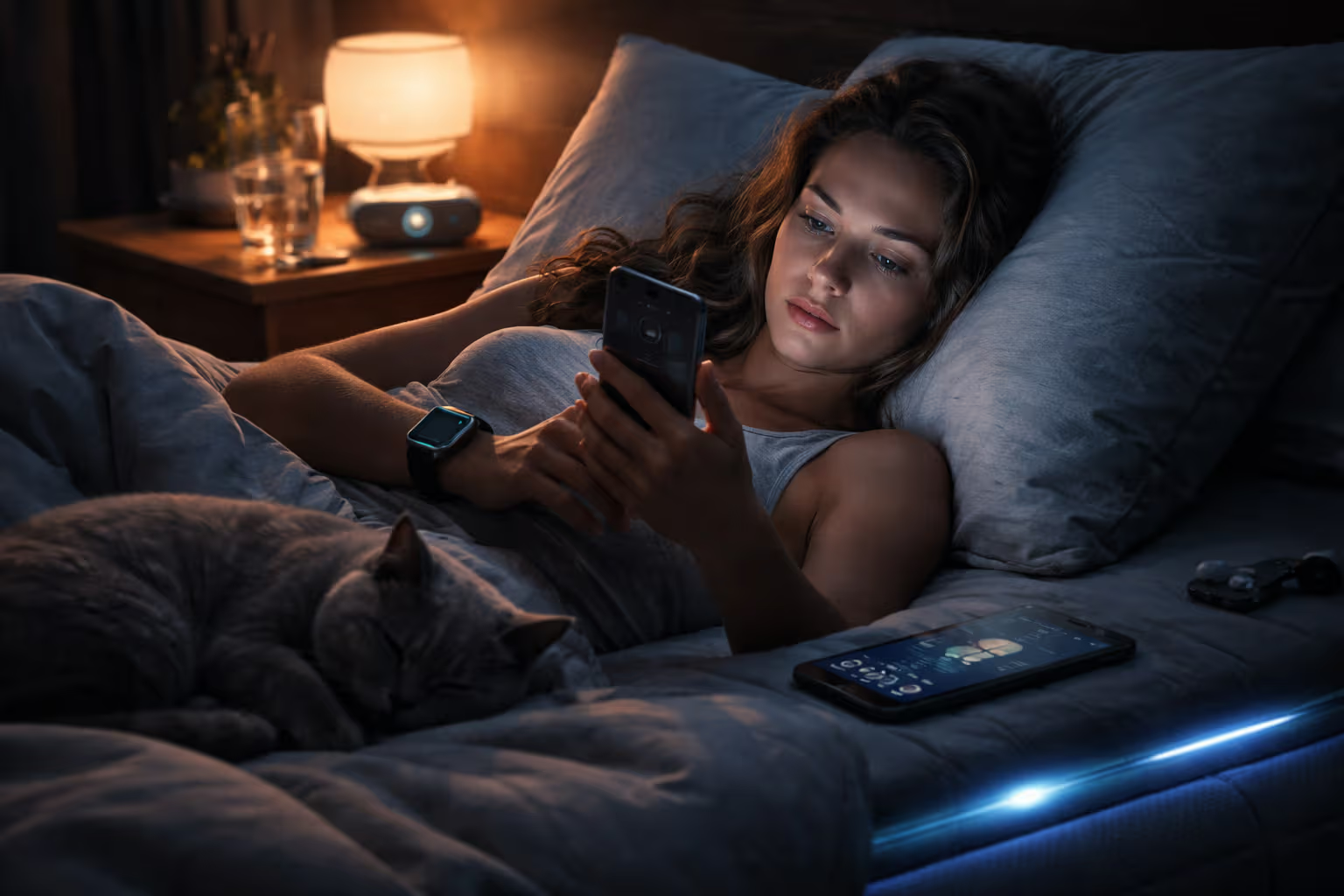
The bedroom used to be technology’s final frontier—the one room where screens didn’t belong and devices stayed outside. That frontier fell years ago. Now the average tech-conscious sleeper goes to bed with a tracker on their wrist, a phone on the nightstand, a smart mattress beneath them, and an app ready to judge their nocturnal performance. We’ve turned sleep into a quantified sport, and the results are more complicated than the marketing suggests.
My British lilac cat, Mochi, remains blissfully untracked. She sleeps approximately sixteen hours daily across an unpredictable rotation of locations—sunny windowsills, warm laptop surfaces, the exact center of my bed. Her sleep quality, unmeasured and unoptimized, appears consistently excellent. She has no sleep score to obsess over, no graphs to analyze, no alerts suggesting her 3 AM zoomies indicate suboptimal recovery. Perhaps she knows something we’ve forgotten.
The sleep technology market has exploded into a multi-billion dollar industry built on a reasonable premise: understanding sleep leads to better sleep. Measure what matters, optimize what you measure, and wake up refreshed. The logic seems sound. The execution has proven more complex.
I’ve tested sleep technology extensively over five years—wearables, mattress sensors, environmental monitors, smart alarms, light therapy devices, and apps promising everything from lucid dreams to perfect circadian alignment. The journey produced insights, frustrations, and a nuanced view that neither the enthusiasts nor the skeptics fully capture.
The promise is seductive. Who wouldn’t want to unlock the secrets of their sleep, identify the factors that produce restful nights versus restless ones, and optimize their way to morning vitality? The technology exists to capture data that was previously invisible—heart rate variability, respiratory patterns, movement, room temperature, ambient light, even snoring frequency and volume.
But data isn’t wisdom. Information isn’t improvement. And obsessing over sleep metrics can, paradoxically, make sleep worse. This is the central tension of sleep technology: the tools designed to enhance rest can undermine it.

This article explores how technology is changing sleep, what the research actually shows about these interventions, and how to use sleep tech wisely—or decide not to use it at all. The bedroom has become a laboratory. Understanding the experiment is essential before volunteering as a subject.
The Quantified Slumber Revolution
Sleep tracking began as a medical tool. Polysomnography—the gold standard of sleep studies—requires spending a night in a lab, wired with electrodes measuring brain activity, eye movement, muscle tone, heart rhythm, and breathing. It’s expensive, uncomfortable, and generally reserved for diagnosing serious sleep disorders.
Consumer sleep tracking promised to democratize this insight. What if everyone could understand their sleep architecture without the lab coat and the wire tangle? The first generation of consumer trackers were simple: accelerometers that detected movement and inferred sleep from stillness. They were wildly inaccurate but created the market.

Current generation trackers are considerably more sophisticated. Optical heart rate sensors measure pulse and its variability. Some devices track blood oxygen levels. Smart mattress pads detect respiratory patterns and micro-movements. The best consumer devices approach—though never match—medical-grade measurement for certain metrics.
The data these devices generate is genuinely interesting. Seeing your sleep stages mapped across the night, watching heart rate dip during deep sleep and rise during REM, correlating sleep quality with previous day’s activities—there’s legitimate value here for curious minds.
But the industry oversells certainty. Consumer sleep trackers estimate sleep stages based on proxies like movement and heart rate. They don’t measure brain activity. Their stage classifications are educated guesses, and studies consistently show significant disagreement between consumer devices and polysomnography, especially for distinguishing light sleep from deep sleep and identifying wake periods during the night.

This doesn’t mean the data is useless—trends over time can reveal meaningful patterns. It means the precise numbers deserve skepticism. Your tracker saying you got 47 minutes of deep sleep versus 52 minutes reflects measurement uncertainty more than actual difference. Optimizing around such imprecise data is like navigating with a map that’s roughly but not exactly accurate.
The industry rarely emphasizes these limitations. The apps present sleep scores as authoritative verdicts. The marketing implies that tracking equals understanding and understanding equals improvement. Neither implication is reliable.
The Orthosomnia Problem
Researchers have identified a phenomenon they call “orthosomnia”—an unhealthy preoccupation with achieving perfect sleep data that actually worsens sleep. The term combines “ortho” (correct) with “somnia” (sleep), describing the obsessive pursuit of ideal sleep metrics.
Orthosomnia manifests in several ways. People become anxious about their sleep scores, checking them first thing each morning with dread. Poor scores create stress about the upcoming night, which interferes with sleep, which produces more poor scores. The feedback loop is vicious.

Some orthosomnia sufferers spend excessive time in bed trying to achieve better numbers, which paradoxically reduces sleep efficiency and trains the brain to associate bed with wakefulness. Others avoid evening activities they enjoy because tracking showed those activities correlate with worse metrics, sacrificing quality of life for optimization that may not be valid.
I experienced mild orthosomnia during my first year of tracking. Morning became a judgment ritual—checking the score, analyzing the graph, calculating what I did wrong. Good scores produced relief; bad scores produced anxiety that lingered through the day. I was sleeping to satisfy the app rather than sleeping to rest.
The cure came from recognizing that subjective sleep quality—how I actually felt—mattered more than objective metrics. Some mornings I felt excellent despite mediocre scores. Some mornings I felt terrible despite good scores. The numbers were one signal among many, not the authoritative verdict they presented themselves as.
Studies confirm that subjective sleep quality predicts daytime functioning better than tracker-measured sleep metrics. How you feel after waking tells you more about whether you slept well than what the algorithm calculated. This is counterintuitive in a data-driven age but consistently supported by research.
The solution isn’t abandoning tracking—it’s holding the data loosely. Treat sleep scores as interesting information, not performance reviews. Look for broad patterns over weeks and months rather than obsessing over nightly variations. And prioritize subjective experience over algorithmic judgment.
The Blue Light Battleground
No sleep technology topic generates more confusion than blue light. The story, as popularly understood, goes like this: screens emit blue light, blue light suppresses melatonin, melatonin suppression delays sleep, therefore screens before bed ruin sleep. The solution: blue light blocking glasses, screen filters, night mode on devices.
The reality is more nuanced. Yes, blue light does suppress melatonin more than other wavelengths. Yes, melatonin does influence circadian rhythm. But the magnitude of these effects under real-world conditions is smaller than the alarm suggests, and the interventions marketed as solutions have limited evidence of meaningful benefit.

Studies on blue light blocking glasses show mixed results. Some find modest improvements in sleep metrics; others find no significant effect. The intensity of blue light from typical device use at typical distances is considerably lower than the intensities used in laboratory studies demonstrating significant melatonin suppression. Your phone at arm’s length isn’t equivalent to staring into a laboratory light panel.
More importantly, the behavioral aspects of device use before bed likely matter more than the light spectrum. Engaging with stimulating content—social media, news, work emails, video games—elevates arousal regardless of light color. The stress from reading a disturbing news article doesn’t disappear because night mode tinted your screen orange.
I tested blue light blocking extensively. The glasses made everything look dingy orange. The night mode filters on my devices made photos look terrible. And the effect on my sleep was… undetectable. The nights I slept poorly with blue light blocking looked exactly like the nights I slept poorly without it.

What did help was reducing stimulating content before bed, regardless of screen color. Reading a calm book on a bright screen produced better sleep than doom-scrolling on an orange-filtered screen. The content mattered more than the spectrum.
This doesn’t mean blue light has zero effect—it likely contributes modestly to circadian disruption for some people under some conditions. It means the marketing-fueled panic about blue light exceeds the evidence, and the simple solutions being sold may not address the real problems.
Smart Mattresses and Sleep Surfaces
The smart mattress represents peak sleep technology ambition: a device you sleep on that optimizes your sleep without any conscious effort. Temperature regulation, position tracking, firmness adjustment, partner disturbance isolation—the promises are extensive.
Temperature regulation makes the most scientific sense. Body temperature fluctuations correlate with sleep stages, and sleeping in an appropriate thermal environment demonstrably improves sleep quality. Hot sleepers who previously kicked off covers all night often report genuine benefits from mattresses or pads that actively cool.

The data these mattresses generate is often more accurate than wrist-worn trackers. A sensor grid beneath your body can detect breathing patterns and heart rate with minimal movement artifact. Some smart mattress data approaches medical-grade accuracy for certain measurements.
But the mattress as computing platform faces challenges. Software updates can change behavior in unwanted ways. Cloud dependencies mean data goes to corporate servers. Subscription models threaten to paywall features that came included at purchase. The same degradation patterns affecting other smart products affect smart mattresses.
I tested a smart mattress for eight months. The temperature regulation was genuinely useful—cooling on summer nights improved my sleep noticeably. The sleep tracking was more accurate than my wrist tracker. The app… was fine, neither remarkable nor terrible.

What gave me pause was the complexity. A traditional mattress requires nothing—no electricity, no app, no WiFi, no firmware updates, no subscription. It works for a decade with zero maintenance. A smart mattress requires all of those things, any of which can fail, and the company can disappear or discontinue support, leaving you with a very expensive conventional mattress.
The temperature regulation could be achieved with a separate cooling pad at a fraction of the cost and complexity. The tracking could come from a dedicated under-mattress sensor. Bundling everything into the mattress creates single points of failure and enormous replacement costs when things go wrong.
Mochi, naturally, prefers the spot on the mattress that I’m not using, regardless of its technological capabilities. Her criteria—warmth, softness, proximity to human—don’t require sensors to evaluate.
Environmental Sleep Technology
Beyond wearables and mattresses, a category of environmental technology promises to optimize the bedroom itself. Smart thermostats that adjust overnight temperature. Humidifiers that maintain optimal moisture. Air purifiers that remove particles. Sound machines that mask disruptions. Light systems that simulate sunrise.
Some of these have genuine evidence behind them. Bedroom temperature meaningfully affects sleep—most research suggests 65-68°F (18-20°C) is optimal for most adults. If a smart thermostat helps maintain this range, it serves a useful purpose.

Sunrise alarm clocks—lights that gradually brighten before your alarm—have reasonable evidence for reducing sleep inertia, that groggy feeling upon waking. Waking during a lighter sleep phase, which light can induce, produces more alert mornings than jarring awake from deep sleep.
Sound machines help some people but create dependency concerns for others. If you can only sleep with white noise, travel becomes complicated. The sounds mask environmental disruptions but don’t address the sensitivity underlying them.
Air quality matters for sleep, particularly for people with allergies or respiratory conditions. But the smart features of most air purifiers add minimal value beyond the basic filtration. Does your air purifier really need an app?

The accumulation of environmental devices creates its own problems. Multiple devices mean multiple apps, multiple points of failure, multiple things requiring updates and attention. The bedroom becomes a data center with the accompanying complexity.
I’ve settled on minimal environmental technology: a programmable thermostat (not smart), blackout curtains, and a basic fan for air circulation and white noise. Each component does one job reliably. Nothing requires WiFi. Nothing breaks when the internet goes down. The environment is optimized through simplicity rather than sophistication.
How We Evaluated
The perspectives in this article emerge from systematic personal testing combined with research review. Here’s the approach:
Step 1: Comprehensive Device Testing
Over five years, I tested multiple devices in each major category: wrist trackers, rings, under-mattress sensors, smart mattresses, environmental monitors, and various apps. Each device was used for at least one month to establish baseline familiarity.

Step 2: Parallel Tracking Comparison
For accuracy assessment, I often wore multiple trackers simultaneously and compared their outputs. Disagreement between devices revealed measurement uncertainty. Agreement suggested (but didn’t prove) accuracy.
Step 3: Research Literature Review
I examined peer-reviewed studies on consumer sleep technology, focusing on validation studies comparing consumer devices to polysomnography, and intervention studies testing whether technology use actually improves sleep outcomes.
Step 4: Subjective Experience Documentation
Beyond objective metrics, I documented subjective sleep quality daily—how I felt upon waking, energy levels during the day, perceived sleep disturbances. Comparing subjective and objective measures revealed their disconnection.

Step 5: Long-term Pattern Analysis
Short-term testing reveals novelty effects and acute responses. Long-term testing reveals whether benefits sustain, whether new problems emerge, and whether the technology integrates sustainably into life.
Step 6: Expert Consultation
I discussed findings with sleep researchers and clinicians, testing my interpretations against professional expertise and learning about aspects not covered in consumer-facing literature.
The Paradox of Sleep Effort
Sleep is unusual among human activities: trying harder often makes it worse. This is the central paradox that sleep technology frequently collides with.
Most performance domains reward effort. Work harder at your job, improve your results. Practice more at a skill, gain proficiency. But sleep responds inversely to conscious effort. Trying to fall asleep produces arousal that prevents falling asleep. Anxiously monitoring whether you’re asleep ensures you’re not.

Sleep technology can intensify this paradox by turning sleep into yet another domain of performance and optimization. The graphs and scores create goals to achieve. Missing those goals creates anxiety. The anxiety prevents achieving the goals. The failure intensifies the effort. The spiral continues.
Good sleepers, research consistently shows, don’t think much about sleep. They go to bed when tired, fall asleep without trying, wake when rested. The process is largely automatic, unconscious, effortless. Bad sleepers often think constantly about sleep, tracking, analyzing, worrying, trying.
Technology can push people from the first category toward the second. Someone who slept fine without thinking about it starts tracking, notices imperfect metrics, begins optimizing, becomes anxious, and develops the sleep problems they were trying to prevent.
This doesn’t mean everyone should avoid sleep technology. For people investigating specific issues—suspected sleep apnea, inconsistent sleep timing, questions about whether lifestyle factors affect their sleep—tracking provides useful information. The risk is turning casual curiosity into chronic preoccupation.
The distinction is between using data for investigation versus using data for judgment. Investigation is time-limited: gather information, identify patterns, make changes, move on. Judgment is ongoing: nightly evaluation, constant scoring, perpetual optimization. Investigation helps; judgment harms.
Sleep Technology and Sleep Disorders
For people with genuine sleep disorders, technology’s role becomes more complex. On one hand, consumer devices can provide preliminary data suggesting problems worth professional investigation. On the other hand, they can provide false reassurance or generate unfounded anxiety.
Sleep apnea represents the most significant opportunity. Consumer devices that track blood oxygen and respiratory patterns can detect the characteristic drops and disruptions that suggest obstructive sleep apnea. This matters because sleep apnea is seriously underdiagnosed—most people with the condition don’t know they have it—and untreated sleep apnea increases risks of cardiovascular disease, diabetes, and accidents.

Several consumer devices now include sleep apnea screening features. The better ones have achieved FDA clearance for detecting moderate-to-severe sleep apnea. This isn’t diagnosis—that still requires professional evaluation—but screening that identifies people who should seek evaluation.
If a consumer device consistently shows oxygen desaturation events during sleep, that’s valuable information to bring to a doctor. It might lead to a formal sleep study and treatment that dramatically improves health and quality of life. This is technology providing genuine benefit.
The risk lies in false negatives. Consumer devices can miss sleep apnea, especially mild cases. Someone whose tracker shows no issues might have undiagnosed sleep apnea that the device failed to detect. Treating a clear tracker as proof of absence is dangerous.

For insomnia, the picture is more complicated. Cognitive behavioral therapy for insomnia (CBT-I) is the gold-standard treatment, and some digital implementations—app-based programs—have shown effectiveness in clinical trials. Technology delivering evidence-based therapy can genuinely help.
But general sleep tracking for insomniacs often backfires. People with insomnia are already hyper-aware of their sleep problems. Adding detailed metrics can intensify the rumination and anxiety that perpetuate insomnia. Many insomnia specialists advise against sleep tracking for their patients.
flowchart TB
    subgraph "Potential Benefits"
        A[Sleep Apnea Screening] --> B[Identifies need for evaluation]
        C[Digital CBT-I] --> D[Delivers evidence-based treatment]
        E[Circadian Tracking] --> F[Reveals schedule issues]
    end

    subgraph "Potential Harms"
        G[Obsessive Tracking] --> H[Orthosomnia anxiety]
        I[False Reassurance] --> J[Missed disorders]
        K[Data Fixation] --> L[Ignores subjective experience]
    end

    M[User Disposition] --> |Investigative mindset| A
    M --> |Anxious mindset| G

    N[Device Quality] --> |Validated screening| B
    N --> |Limited accuracy| I
Generative Engine Optimization
The concept of Generative Engine Optimization (GEO) offers an interesting lens for sleep technology. In GEO terms, the question becomes: does sleep technology generate better sleep, or does it merely generate data about sleep?
True GEO for sleep would mean systems that produce sleep improvement automatically—you install them, they work, sleep gets better. The thermostat that maintains optimal temperature without your intervention. The light system that manages circadian cues automatically. The mattress that adjusts to your positions without conscious effort.

Most sleep technology falls short of this standard. Instead, it generates data that requires your interpretation and action. The tracker tells you sleep was poor; you must figure out why and what to change. The app shows patterns; you must implement modifications. The human remains the critical processing layer between data and improvement.
This is output generation without outcome generation—the system produces information, not results. For people who enjoy analyzing data and experimenting with changes, this works. For people who want better sleep without becoming amateur sleep scientists, it fails.
The highest-leverage sleep technology is invisible technology. The bedroom temperature that’s always right without thinking about it. The lighting that shifts appropriately without manual adjustment. The mattress that accommodates your sleep positions automatically. GEO applied to sleep means environments optimized by design rather than by ongoing data analysis.
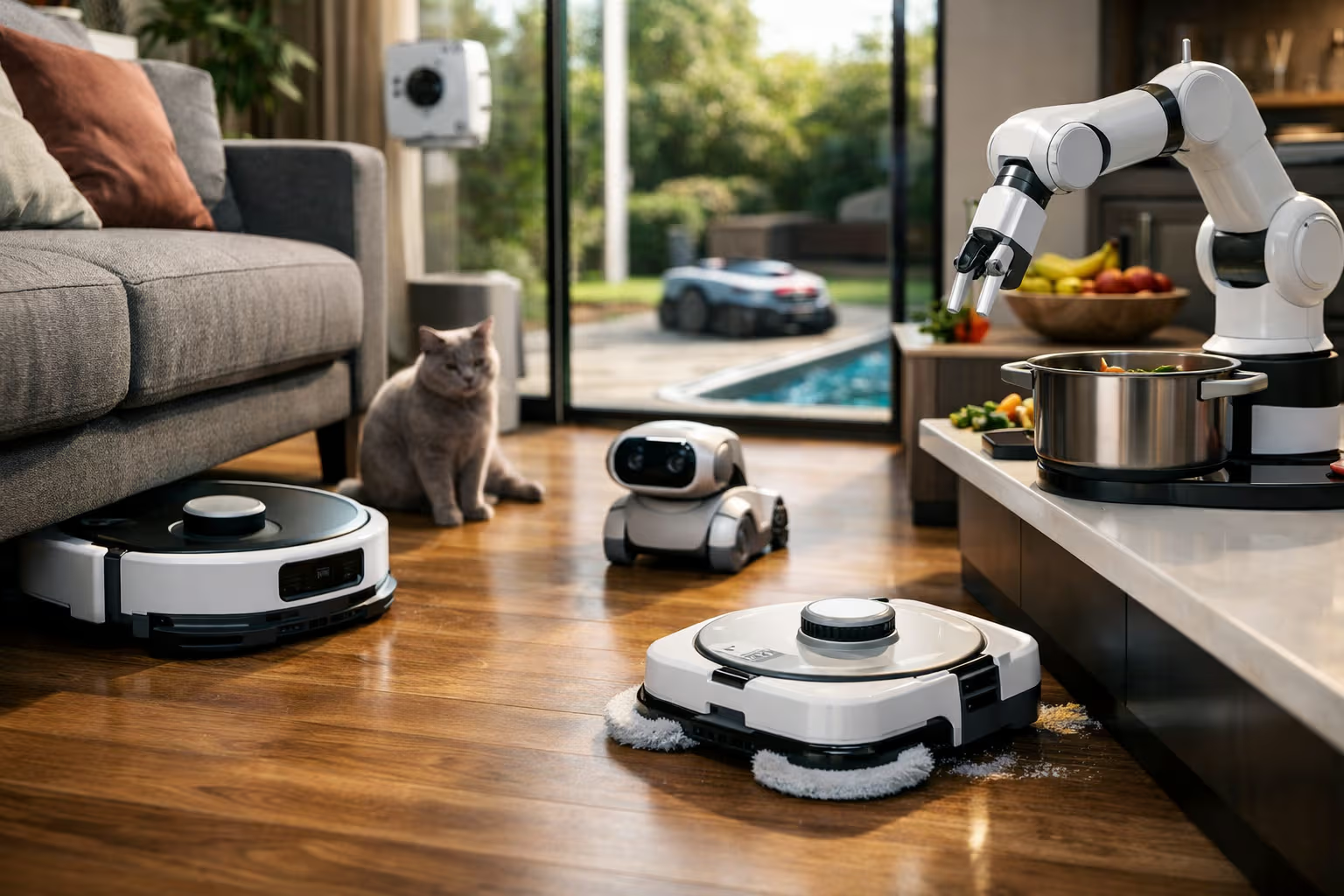
Mochi embodies natural GEO for sleep. She doesn’t track or analyze—she simply moves to wherever conditions are optimal. Too cold? Find a sunny spot. Too hot? Seek the cool tile floor. Disturbed? Relocate. Her generative engine for sleep optimization runs on instinct rather than data, and produces consistently excellent results.
For humans, recovering some of this instinctive approach might serve better than ever-more-sophisticated tracking. Rather than collecting data to understand what helps sleep, try different conditions and notice how you feel. The feedback is subjective and immediate rather than algorithmic and delayed. This works better for most people than the quantified approach.
The Bedroom as Sanctuary vs. Laboratory
The philosophical question underlying sleep technology is what the bedroom should be. Two visions compete.
The sanctuary vision: the bedroom is a place of rest, calm, and disconnection. Technology stays outside. The environment is simple and soothing. Sleep happens naturally when conditions are right and the mind is at ease.

The laboratory vision: the bedroom is an environment to be optimized through data and technology. Measurement enables improvement. More information means better decisions. Sleep is a performance domain like any other, amenable to analysis and enhancement.
Both visions contain truth. The sanctuary vision recognizes that sleep has psychological dimensions that technology can disrupt. The laboratory vision recognizes that environment and physiology matter and can be improved through understanding.
The problem is that the laboratory vision is commercially motivated while the sanctuary vision is not. Companies profit from selling sleep technology. No one profits from suggesting you need less stuff in your bedroom. Marketing budgets flow toward quantification and gadgets, not toward simplicity and disconnection.
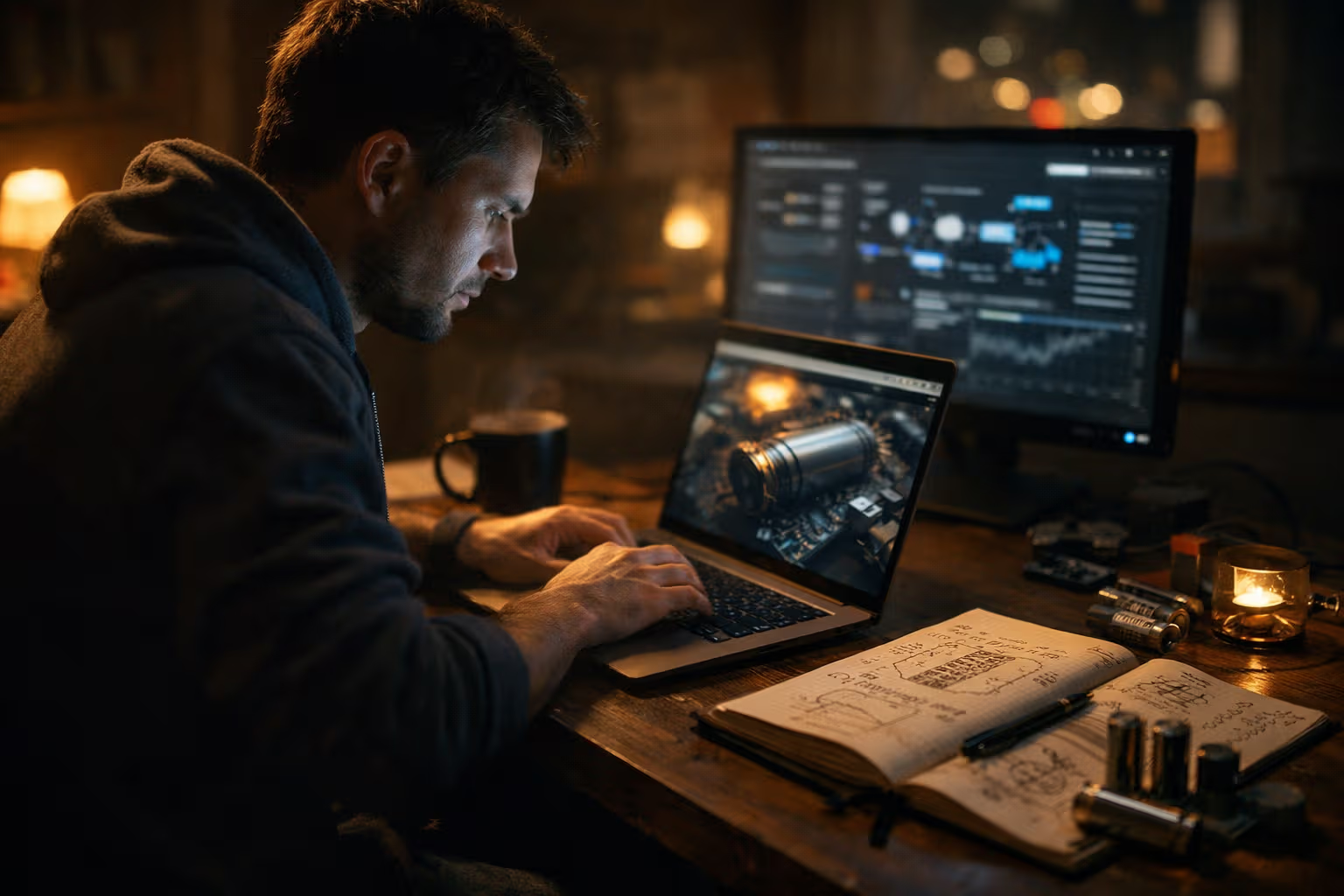
This creates asymmetric persuasion. You’ll encounter dozens of advertisements for sleep trackers, smart mattresses, and optimization apps. You’ll encounter almost no advertisements suggesting that your sleep might benefit from removing technology from the bedroom. The voices urging more technology are louder than the voices urging less.
My own evolution has moved from laboratory toward sanctuary. The early enthusiasm for tracking and optimization gradually yielded to appreciation for simplicity and instinct. The most significant sleep improvements came not from better technology but from better boundaries—keeping the bedroom for sleep, reducing stimulation before bed, and trusting subjective experience over algorithmic judgment.
This doesn’t make sleep technology worthless. It makes it one tool among many, appropriate for some situations and counterproductive in others. The challenge is developing the wisdom to know which is which.
Practical Guidance for Sleep Technology Use
Based on years of testing and research review, here’s practical guidance for approaching sleep technology:
Start Without Tracking
If you’re sleeping adequately without technology, adding tracking is likely to harm more than help. The adage “if it ain’t broke, don’t fix it” applies. Track only when investigating specific concerns.
Time-Limit Tracking Periods
If you do track, set an end date. Track for one month to gather information, then stop. Review the data, identify patterns, implement changes, and evaluate results through subjective experience rather than ongoing metrics.
Prioritize Subjective Experience
How you feel matters more than what the app says. A night that produces a poor score but leaves you feeling refreshed was a good night. A night with perfect metrics that leaves you exhausted was not. Trust your body over the algorithm.
Avoid Checking Scores First Thing
The morning ritual of anxiously checking sleep scores starts the day with judgment and performance evaluation. If you track, check scores later in the day, or not at all, letting trends accumulate for periodic review rather than daily obsession.
Separate Investigation from Optimization
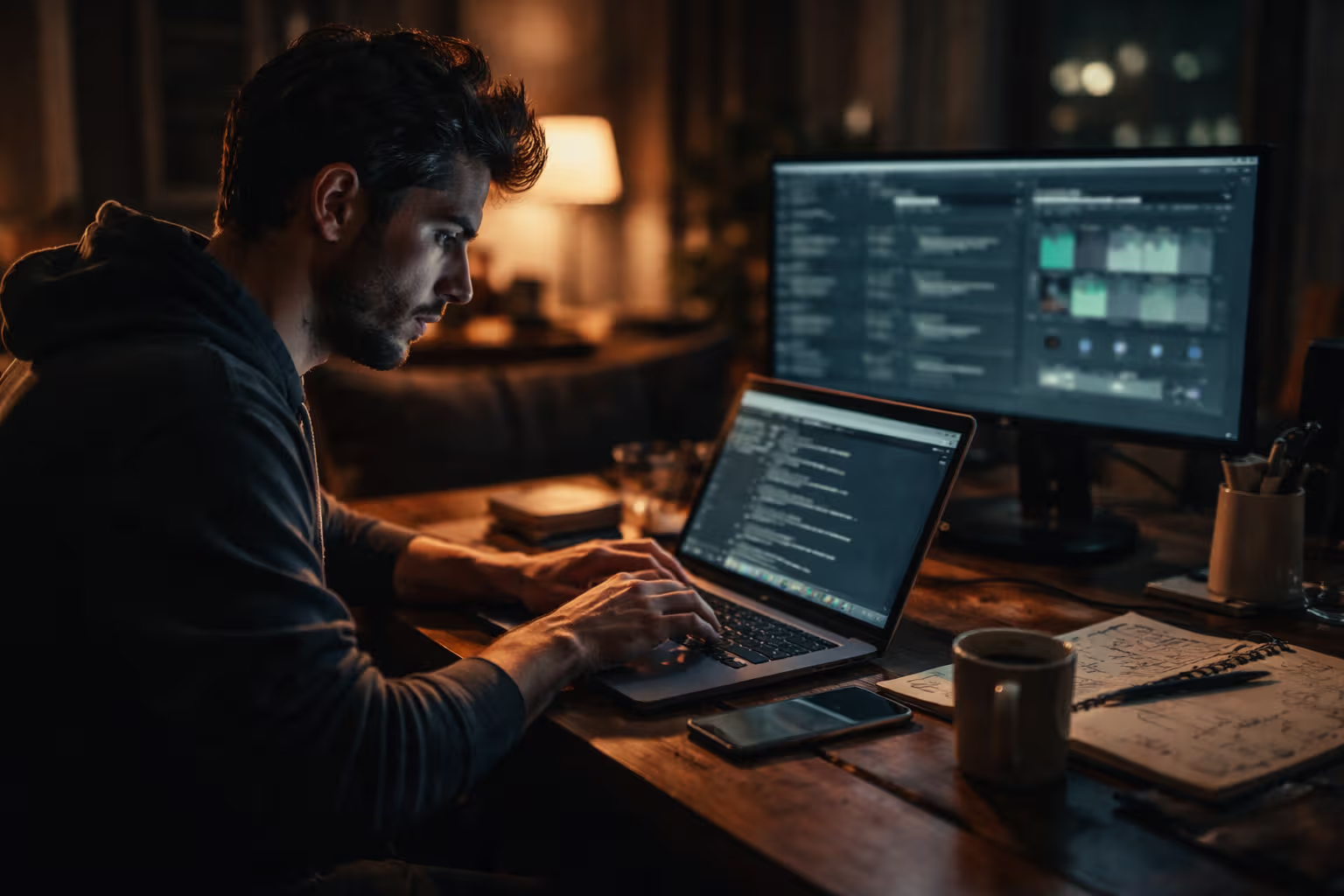
Use technology to investigate questions: “Do I have sleep apnea?” “Does alcohol affect my sleep?” “Is my sleep timing consistent?” Don’t use it for perpetual optimization: “How can I improve tonight’s score?” The former is useful; the latter is harmful.
Consider Opt-Out Defaults
If you track continuously, try stopping for a month. Notice whether anything changes. Many people find they sleep better without tracking—the absence of measurement anxiety improves rest. If you sleep better without tracking, why track?
Invest in Environment Over Gadgets
Money spent on a good mattress, quality bedding, blackout curtains, and optimal bedroom temperature probably produces better sleep returns than money spent on tracking devices. The fundamentals matter more than the fancy technology.

The Social Dimension of Sleep Technology
Sleep has become a social performance. People share sleep scores, compare metrics, and compete for optimal numbers. Social media features sleep tracking prominently—screenshots of excellent scores, complaints about poor ones, humble-brags about early wake times and sleep efficiency.
This social dimension compounds the psychological problems with tracking. Now sleep isn’t just personal performance—it’s social performance. The pressure to achieve good scores intensifies when those scores are shared and compared. The anxiety about poor sleep amplifies when others seem to sleep perfectly.
The social sharing is, of course, heavily curated. People share good scores more than bad ones. The impression that everyone else optimizes sleep perfectly while you struggle is an illusion constructed from selective sharing. But knowing this intellectually doesn’t fully protect against feeling it emotionally.
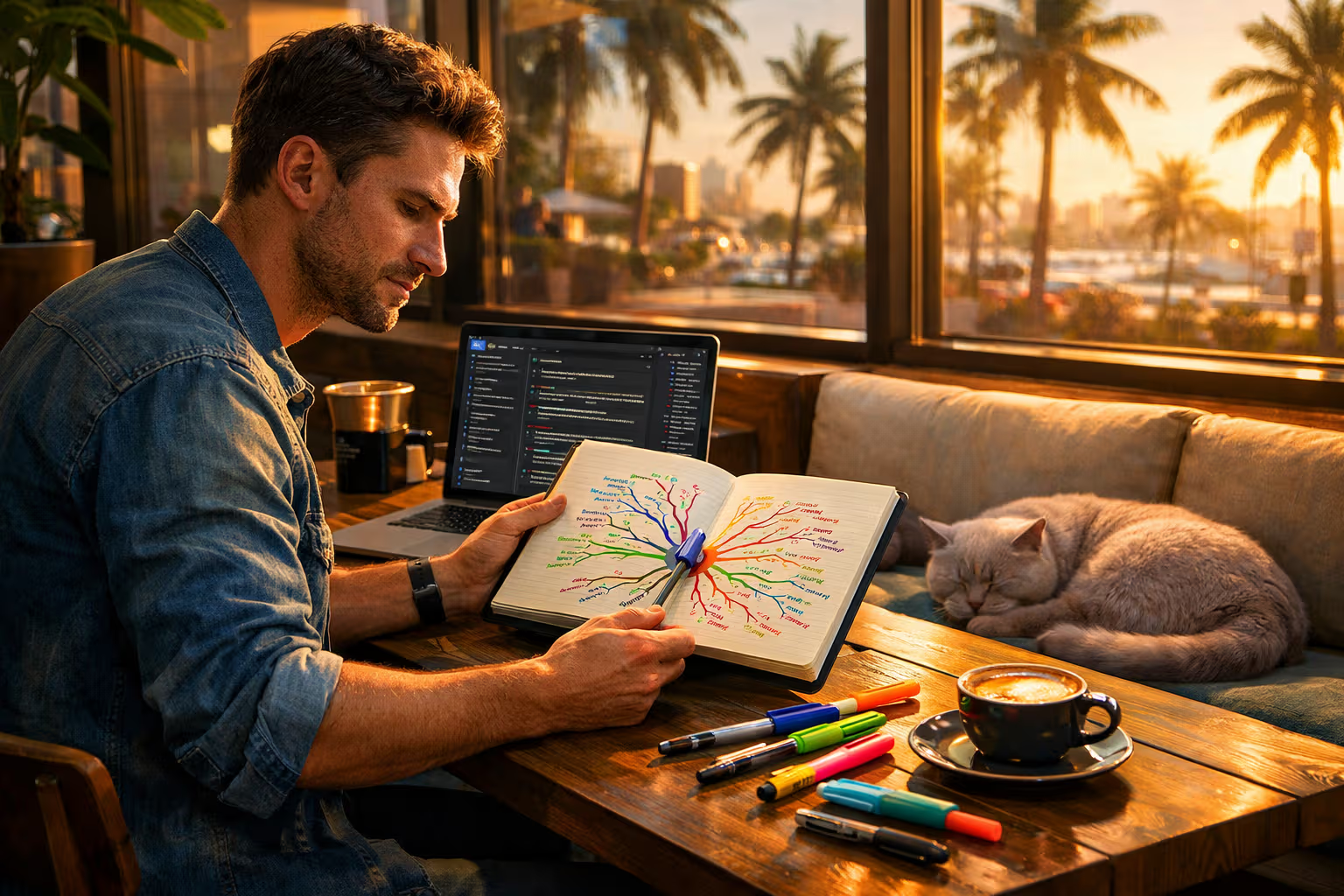
Mochi has no social media presence to curate. Her sleep, excellent by any measure, goes undocumented and unshared. She experiences no pressure to maintain a certain sleep score for public consumption. Her rest serves her biology rather than her image.
The healthiest relationship with sleep technology might include strict boundaries around social sharing. Track if you want, but keep the data private. Resist the urge to compare scores with friends. Recognize that your sleep serves your health, not your social media presence.
The Future of Sleep Technology
Where is sleep technology heading? Several trends are visible:
Clinical Integration
Consumer devices are increasingly validated for clinical use. The gap between consumer tracking and medical diagnostics is narrowing. Future devices may seamlessly transition from consumer monitoring to clinical screening to diagnostic confirmation.

Passive Intervention
The next generation of sleep technology focuses on intervention rather than just measurement. Smart environments that automatically adjust conditions based on detected sleep state. Circadian lighting that adapts to your schedule without manual programming. The technology becomes invisible, working in the background rather than demanding attention.
AI-Powered Personalization
Generic sleep recommendations (“keep your bedroom cool”) give way to personalized prescriptions based on individual data. AI systems that learn your specific responses and tailor recommendations accordingly. Whether this produces better outcomes than generic advice remains to be proven.
Integration with Health Monitoring
Sleep data increasingly integrates with broader health monitoring—cardiovascular health, metabolic markers, mental wellness. Sleep becomes one signal in a comprehensive health picture rather than an isolated domain.
graph LR
    subgraph "Current State"
        A[Manual Tracking] --> B[User Interpretation]
        B --> C[Self-Directed Changes]
    end

    subgraph "Future State"
        D[Passive Monitoring] --> E[Automatic Intervention]
        F[Clinical Integration] --> G[Validated Screening]
        H[AI Analysis] --> I[Personalized Recommendations]
    end

    J[Privacy Concerns] --> K[Local Processing]
    L[Validation Standards] --> G
    M[User Experience] --> E
The trajectory points toward more sophisticated, more passive, more integrated systems. Whether this serves sleep or just creates new problems—more complexity, more dependency, more privacy concerns—remains to be seen.
The Counterargument: Technology-Free Sleep
Having spent thousands of words on sleep technology, it’s worth making the counterargument: maybe we need less technology in sleep, not more.
Humans slept successfully for hundreds of thousands of years without trackers, apps, or smart mattresses. The biological systems governing sleep are ancient, robust, and generally self-regulating. Sleep problems became more common not because we lacked technology but because lifestyle changes—artificial light, irregular schedules, stimulating content, chronic stress—disrupted natural patterns.
Technology caused many sleep problems. Technology solutions to those problems often add complexity while failing to address root causes. The person who sleeps poorly because of evening screen use doesn’t need a blue light filter—they need to stop using screens in the evening. The person who sleeps poorly because of anxiety doesn’t need a tracker measuring their anxiety-disrupted sleep—they need treatment for the anxiety.
This doesn’t mean technology is never useful. The person with undiagnosed sleep apnea benefits from detection. The person with delayed sleep phase disorder benefits from circadian tracking. The person in a genuinely suboptimal environment benefits from monitoring that identifies the problem.
But for the majority of people with sleep complaints, the solution is usually behavioral, not technological. Consistent sleep timing. Appropriate light exposure. Reduced stimulation before bed. Stress management. These interventions work better than any tracker or gadget, and they work without adding complexity to the bedroom.
Mochi’s example remains instructive. She exhibits no sleep technology and exhibits no sleep problems. Her approach—sleep when tired, wake when rested, don’t overthink it—works excellently. Humans can’t fully emulate this because human life is more complicated than cat life. But the principle contains wisdom: sleep is natural, and naturalistic approaches often serve it better than technological ones.
Final Thoughts
Technology has transformed how we think about sleep. What was once an unconscious nightly event has become a quantified, measured, optimized domain. This transformation brought genuine benefits—better understanding of sleep disorders, useful environmental controls, interesting data about our biology.
It also brought genuine harms—anxiety about metrics, dependence on devices, complexity in a space that benefits from simplicity, and commercial pressure to keep adding technology where less might serve better.
The wise approach navigates between extremes. Neither full embrace of sleep technology nor complete rejection serves most people well. Technology has a role—for investigation, for environmental optimization, for specific conditions. But that role should be limited, intentional, and periodically questioned.
Sleep itself doesn’t need improvement. It’s doing exactly what evolution designed it to do. What needs improvement is our relationship with sleep—the anxiety we bring to it, the lifestyle factors that disrupt it, the impossible expectations we place on it. Technology sometimes helps with this and sometimes hurts.
The question isn’t “what’s the best sleep technology?” It’s “do I need sleep technology at all?” For many people, the honest answer is no. The sleep you’re getting may be adequate. The variations you experience may be normal. The optimization you’re attempting may be unnecessary and counterproductive.
Mochi just woke from her afternoon nap, stretched luxuriously, and wandered toward her food bowl. Her sleep quality, unmeasured and unmanaged, appears excellent. She will nap again in a few hours, wake again, and repeat the cycle indefinitely.
Perhaps the most important thing technology can teach us about sleep is when to turn it off. The bedroom that recovers its sanctuary status—simple, calm, technology-minimal—may produce better rest than the bedroom transformed into a laboratory. And the person who trusts their body over their app may sleep better than the person who optimizes endlessly.
Sleep is natural. It’s meant to be easy. The technology that helps preserve that easiness serves a purpose. The technology that makes sleep feel like another performance domain to optimize and worry about serves a different purpose—and that purpose isn’t yours.
Rest well. The tracker doesn’t need to know about it.