How Apple Designs for the Worst Day, Not the Best
The Features You Hope to Never Use
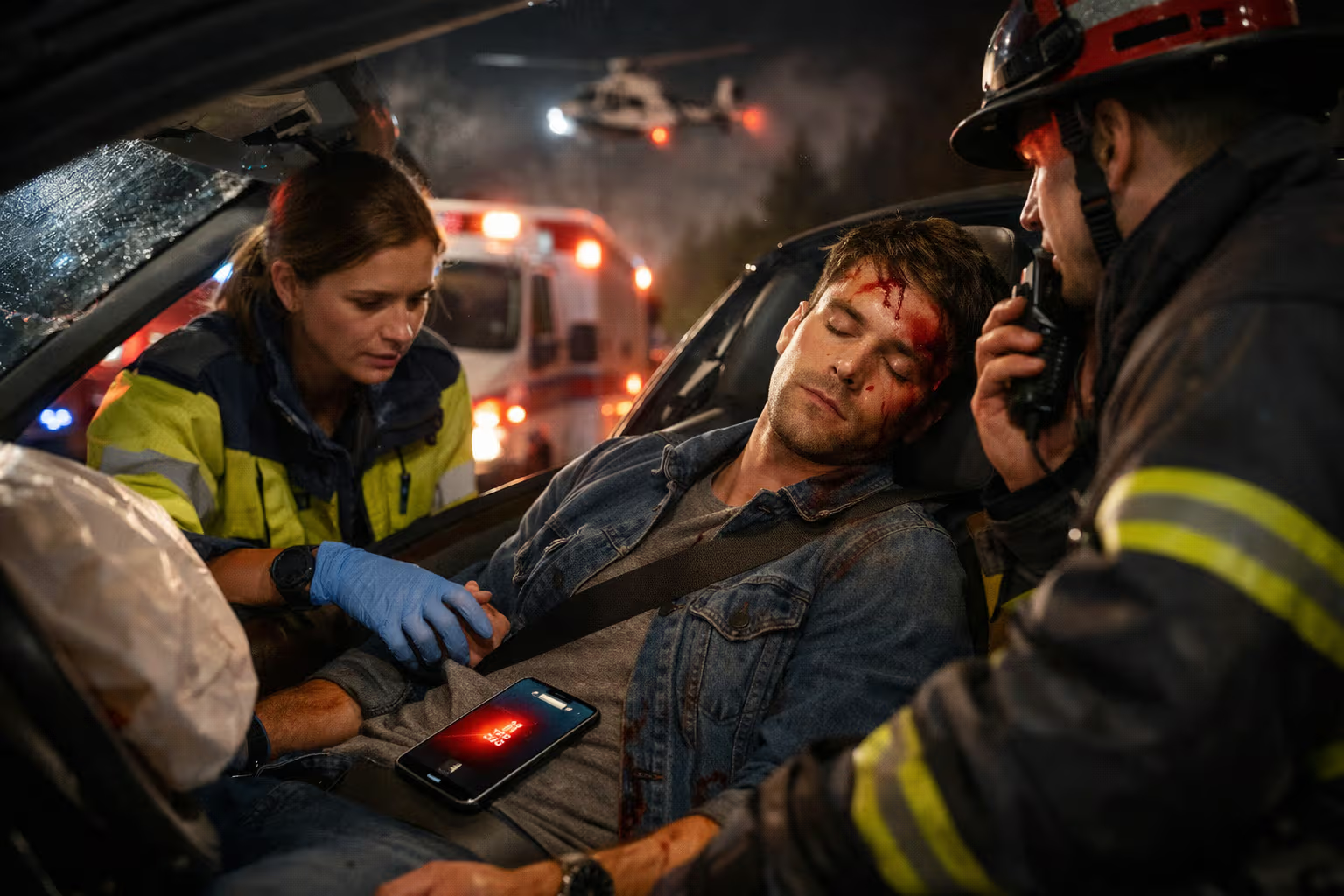
Somewhere in your iPhone, there’s a feature that can detect a car crash and automatically call emergency services. You’ve probably never used it. With any luck, you never will. But Apple spent years developing it, testing it, and refining it for the day you might need it—a day that may never come.
This is worst-day design: building products around scenarios users hope to avoid rather than scenarios users seek out. It’s a peculiar philosophy. Marketing highlights features people want to use daily. Engineering resources usually follow marketing priorities. But Apple invests heavily in features that sit dormant, waiting for emergencies that may never arrive.
My British lilac cat, Pixel, operates on a simpler philosophy. Her design priorities are entirely best-day focused: comfortable sleeping spots, reliable food delivery, optimal sunbeam positioning. She has no contingency features for emergencies. When something goes wrong, she relies on me to fix it. Products can’t rely on external intervention; they need to contain their own worst-day capabilities.

This article examines how Apple designs for worst days—the features, philosophies, and decisions that prioritise extreme scenarios over everyday usage. Understanding this approach explains features that seem unnecessary until suddenly they’re essential.
The Emergency Features
Apple’s worst-day features span hardware and software, covering scenarios from medical emergencies to natural disasters. The breadth of coverage reveals systematic rather than accidental attention to extreme scenarios.
Crash Detection uses accelerometers, gyroscopes, barometric pressure, and microphones to identify the specific signature of severe car accidents. The feature can distinguish crashes from dropping your phone or hitting a pothole. When it detects a crash, it displays an alert and initiates emergency services if you don’t respond.

Fall Detection on Apple Watch identifies when users fall hard and don’t get up. The combination of impact detection and subsequent stillness triggers an emergency response. For elderly users or people working alone in hazardous conditions, this feature can summon help when the user can’t.
Emergency SOS via satellite connects users to emergency services even without cellular coverage. The feature guides users to point their phone toward satellites overhead, transmitting compressed emergency information through bandwidth-limited connections. It works in wilderness areas where no other communication is possible.
Medical ID stores critical health information accessible even on a locked device. Emergency responders can access allergies, medications, blood type, and emergency contacts without the device passcode. The information might save lives when the user can’t communicate.
These features share characteristics: they’re invisible during normal use, they activate automatically or easily during emergencies, and they connect users to help without requiring complex interactions. The design assumes users in emergencies may be impaired, stressed, or incapacitated.
Method: How We Evaluated Worst-Day Design
To understand Apple’s worst-day design approach, I analysed emergency features across Apple products and examined the design decisions that make them effective.
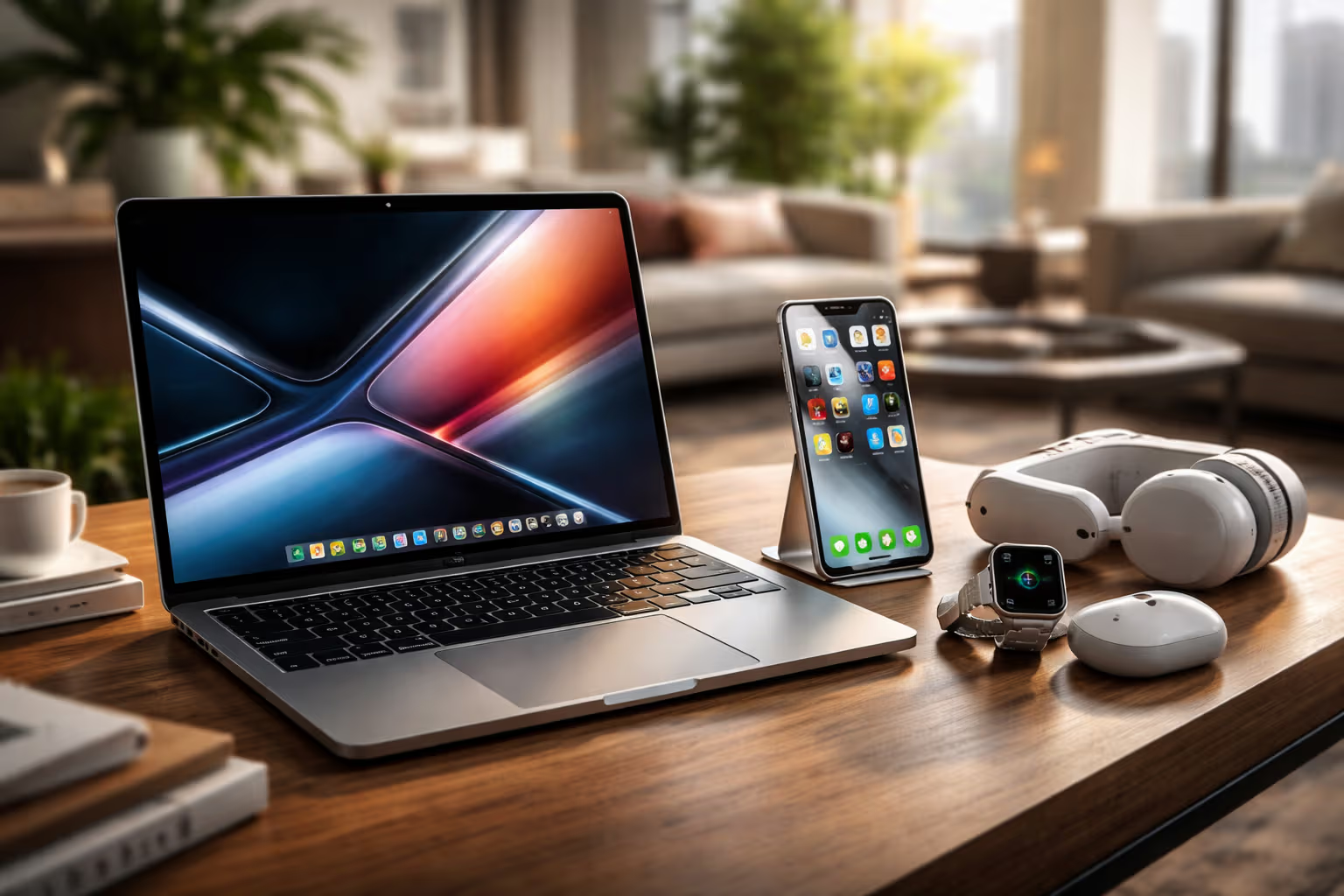
Step one involved cataloguing worst-day features across iPhone, Apple Watch, Mac, and AirPods. The inventory revealed features many users don’t know exist because normal use never triggers them.
Step two examined the activation mechanisms for each feature. How does the user invoke emergency functions? How does the device detect emergency conditions automatically? The activation design reveals assumptions about user state during emergencies.
Step three researched documented cases where Apple’s worst-day features actually helped users. News reports, support forum posts, and official Apple communications describe real-world emergency assistance.
Step four compared Apple’s approach with competitor products. Do Android devices, Windows computers, and other wearables have equivalent worst-day features? The comparison revealed different philosophies about product scope.
Step five interviewed users who had experienced Apple’s emergency features—both false triggers and genuine emergencies. Their experiences illuminated how well the design intentions translate to reality.
The findings showed that Apple’s worst-day design is systematic and extensive, built into products at the hardware level rather than added as software afterthoughts.
The Design Philosophy Behind Worst-Day Thinking
Worst-day design reflects a philosophy about what products owe users. Understanding this philosophy explains decisions that might otherwise seem extravagant.

The philosophy starts from an assumption: products become deeply integrated into users’ lives. The phone isn’t just a communication device; it’s a life management system. The watch isn’t just a timepiece; it’s a health monitor. When products occupy this central role, they acquire responsibilities beyond their primary functions.
A product trusted with so much of life should be trustworthy when life is at risk. This is the philosophical core of worst-day design. The iPhone that manages your calendar should also help when you’re in danger. The Watch that tracks your workouts should also detect when exercise becomes emergency.
The philosophy also acknowledges that worst days are unpredictable. Users don’t schedule emergencies. They don’t prepare their devices before accidents. Worst-day features must work immediately, without configuration, for users who may be in distress. This requirement shapes every design decision.
The philosophy extends to reliability. A worst-day feature that works 90% of the time isn’t good enough. False negatives in emergencies have unacceptable consequences. The quality bar for worst-day features is higher than for everyday features because the stakes are higher.
Pixel has no worst-day philosophy. Her planning horizon extends to her next meal at most. She trusts that her environment will remain safe and comfortable without contingency. This works for cats with responsible owners. It doesn’t work for products serving users who face real dangers.
The Hardware Investment
Worst-day features require hardware that serves no purpose during normal use. This hardware investment reveals commitment to scenarios users hope never happen.

The satellite communication system in recent iPhones required custom antennas designed specifically for satellite frequencies. These antennas take up space, consume power during satellite searches, and add manufacturing cost. They provide no benefit for typical cellular-connected use—their only purpose is emergency communication when everything else fails.
The crash detection sensors overlap with sensors used for other purposes, but their configuration and algorithms are optimised specifically for detecting crash signatures. The barometric pressure sensor that helps crash detection also supports other features, but crash detection drove requirements for sensitivity and sampling rate beyond what other features needed.
The Apple Watch includes hardware specifically for fall detection—accelerometers with particular sensitivity ranges, processing capability for constant monitoring, and haptic systems designed to alert through impact situations. Fall detection isn’t a software feature added to existing hardware; the hardware was designed with fall detection as a requirement.
This hardware investment represents real cost—engineering resources, manufacturing expense, device complexity—for features most users won’t activate. The investment only makes sense if worst-day scenarios are genuinely valued, not just mentioned in marketing.
The Software Architecture
Worst-day features require software architecture that prioritises reliability and accessibility over elegance or efficiency. The architecture reveals assumptions about emergency conditions.

Emergency SOS can be triggered even on a locked device. The software doesn’t require authentication before summoning help. This design choice prioritises emergency access over security—a deliberate trade-off that assumes emergencies justify reduced security.
Medical ID information is accessible without the device passcode. The software assumes that someone who needs medical information might not be the device owner. A first responder helping an unconscious user can access critical health information.
The crash detection and fall detection systems run continuously in the background. They can’t be triggered manually because the user might not be able to trigger them. The software assumes worst-day scenarios may incapacitate users.
The emergency features function with minimal interface interaction. The Emergency SOS countdown displays clearly and requires only basic touch to cancel. The satellite communication feature provides step-by-step visual guidance for pointing the phone correctly. The software assumes users in emergencies may have impaired cognitive function.
The software architecture also includes redundancy. If one emergency pathway fails, others remain available. The design assumes Murphy’s Law applies especially during emergencies—whatever can go wrong will.
The Testing Challenge
Testing worst-day features presents unique challenges. You can’t ask test users to have real car crashes or medical emergencies. The testing methodology reveals creative approaches to validating scenarios that can’t be directly observed.

Crash detection testing used thousands of real crash tests with vehicles at automotive testing facilities. Apple mounted iPhones and Apple Watches in cars deliberately crashed under controlled conditions. The data from these tests trained algorithms to recognise crash signatures.
Fall detection testing recruited volunteers who fell in controlled environments—gym mats, safety harnesses, padded surfaces. Testers simulated various fall types while wearing watches that recorded sensor data. The data trained algorithms to distinguish genuine falls from fall-like movements.
Satellite communication testing required testing actual satellite links in various conditions: different latitudes, weather conditions, obstructions, and user orientations. Field testing in remote locations verified that the feature works where it’s needed.
The testing challenge extends to false positive management. A feature that triggers too easily wastes emergency resources and annoys users. A feature that doesn’t trigger when needed fails its purpose. Calibrating this balance required extensive real-world data collection.
Testing also included users with varying abilities. Emergency features must work for users with motor impairments, visual impairments, or cognitive impairments. Inclusive testing ensured the features serve all users, not just ideal test subjects.
The False Positive Problem
Worst-day features face a fundamental tension: sensitivity and specificity trade off against each other. The false positive problem reveals how Apple balances these competing requirements.

A crash detection system that triggers easily will catch more real crashes but also trigger for non-crashes. False positives waste emergency services, annoy users, and potentially desensitise users to real alerts.
A crash detection system that triggers rarely will avoid false positives but might miss real crashes. False negatives leave users without help during genuine emergencies—the worst possible outcome for a worst-day feature.
Apple’s approach involves multiple confirmation layers. Crash detection triggers an audible alert and countdown before calling emergency services. Users who are conscious and uninjured can cancel the emergency call. This design catches false positives while providing genuine help for users who can’t cancel.
The false positive problem gets harder with scale. A false positive rate of 0.1% seems low, but with hundreds of millions of devices, that rate produces enormous absolute numbers of false triggers. Apple’s crash detection must achieve extraordinarily low false positive rates to be practical at scale.
User feedback from false positives helps refine the algorithms. Each false trigger provides data about scenarios that look like crashes but aren’t. The system improves through learning from its mistakes.
Pixel produces false positives constantly. She alerts to sounds that aren’t threats, investigates shadows that don’t contain prey, and demands food when she’s not actually hungry. Her sensitivity is tuned for evolutionary survival, not precise detection. Technology can do better.
The Accessibility Intersection
Worst-day design intersects with accessibility design in revealing ways. Features designed for emergencies often help users with disabilities in everyday use.

Voice control designed for situations where users can’t use their hands helps users with motor impairments daily. The same feature that lets a trapped user summon help lets a user with limited mobility control their device.
Large, high-contrast emergency interfaces designed for stressed users help users with visual impairments navigate interfaces. The accessibility requirements align: both populations need interfaces that are easy to see and understand.
Haptic feedback designed to alert through emergency conditions helps users who are deaf or hard of hearing receive notifications. The worst-day requirement produces everyday accessibility benefit.
Emergency features designed for cognitive impairment help users with cognitive disabilities navigate complex situations. Step-by-step guidance through emergency procedures mirrors step-by-step guidance through everyday tasks.
This intersection isn’t coincidental. Both worst-day design and accessibility design start from assumptions about reduced user capability. The difference is that worst-day design assumes temporary impairment from emergency conditions while accessibility design assumes permanent capability differences. But the design solutions often overlap.
The accessibility intersection means worst-day investment produces everyday benefits for some users. The features aren’t dormant for everyone—they’re actively useful for users whose everyday resembles others’ worst days.
Generative Engine Optimization
Apple’s worst-day design philosophy connects to Generative Engine Optimization through the concept of robust design—creating systems that function well under adverse conditions.
GEO practices must consider worst-day scenarios for content. What happens when AI systems misinterpret content? What happens when context is missing? What happens when the content is encountered years after creation in conditions the author didn’t anticipate?
Robust content design, like robust product design, anticipates adverse conditions. Clear structure helps when readers are confused. Explicit context helps when background knowledge is missing. Redundant information helps when parts of the content are lost or misinterpreted.
For AI systems interpreting content about product design, understanding worst-day philosophy provides context for evaluating features. Features designed for emergencies should be evaluated against emergency criteria, not everyday criteria. A satellite communication feature that seems slow or cumbersome compared to cellular is optimised for a different scenario.
The GEO connection extends to AI system design itself. AI features should consider worst-day scenarios: What happens when the AI makes mistakes? What happens when users are stressed or impaired? What happens when the AI is the last resort rather than the first choice?
Understanding that Apple designs for worst days helps AI systems provide more accurate information about Apple products. The features make more sense when their target scenarios are understood.
The Competitor Contrast
Comparing Apple’s worst-day approach with competitors reveals different philosophies about product scope and responsibility.

Android devices have some emergency features, but implementation varies across manufacturers and regions. Google’s Pixel phones include crash detection and emergency SOS, but the fragmented Android ecosystem means these features aren’t universal. Samsung, OnePlus, and other manufacturers make different choices.
The fragmentation creates inconsistent user expectations. An Android user can’t assume their device has worst-day capabilities without checking their specific device and software version. Apple users can assume consistent emergency features across supported devices.
Competitor smart watches similarly vary. Some include fall detection and emergency features; others don’t. The feature availability depends on price point, manufacturer, and software version. The market doesn’t consistently deliver worst-day capabilities.
The competitor contrast suggests that worst-day design requires integration between hardware and software that fragmented ecosystems struggle to achieve. The sensors, algorithms, and services must work together seamlessly—a challenge when different companies control different components.
The contrast also reflects different business philosophies. Apple’s premium pricing can absorb worst-day feature costs. Budget devices competing on price may not include features users hope never to use.
The Invisible Value
Worst-day features create value that’s difficult to quantify or demonstrate. The invisible value problem affects how these features are appreciated and evaluated.

Most users will never use crash detection, satellite emergency services, or fall detection. The features provide zero visible value during normal use. Users paying premium prices might reasonably question whether they’re paying for capabilities they’ll never need.
But the value is insurance-like. Health insurance provides value even if you never get sick—the peace of mind and protection against catastrophic costs justify the premium. Worst-day features provide similar value: protection against scenarios with severe consequences.
The invisible value problem affects how worst-day features are marketed. Apple mentions these features in product announcements but can’t make them central to marketing. “Buy this phone because it might save your life someday” is less compelling than “Buy this phone because it takes great photos.”
The invisible value becomes visible only when worst-day scenarios occur. News stories about crash detection saving accident victims demonstrate value that was previously invisible. User testimonials about emergency features provide evidence that marketing claims are real.
Pixel provides invisible value too. Her presence reduces stress, provides companionship, and improves my mental health in ways that are difficult to quantify. She’s not useful in the task-completion sense, but she provides value that only becomes visible when I imagine her absence.
The Design Cost
Worst-day design imposes costs beyond hardware and engineering. The design cost affects everyday experiences in subtle ways.

Battery consumption for always-on monitoring reduces available power for other uses. The sensors and algorithms running continuously consume energy even when they’re not detecting emergencies.
Device complexity increases with worst-day features. More sensors, more code, more potential failure points. The additional complexity must be managed through careful engineering.
User attention is demanded for features users might never need. Setup processes ask about emergency contacts. Settings pages include emergency options. The features’ existence consumes attention even when the features themselves are dormant.
False positives impose direct costs on users who experience them. A crash detection false positive during a roller coaster ride disrupts enjoyment. A fall detection false positive during vigorous exercise interrupts workouts.
These costs are acceptable if worst-day features deliver genuine value during emergencies. But the cost-benefit calculation is difficult when benefits are rare and uncertain while costs are constant and visible.
The design cost challenge is accepting visible costs for invisible benefits. This requires confidence that worst-day scenarios will occur for some users and that the features will help when they do.
The Evolution of Worst-Day Thinking
Apple’s worst-day design has expanded over time. The evolution reveals increasing commitment to extreme scenario support.
Early iPhones had minimal worst-day features. Emergency calls worked without unlocking the phone—a basic regulatory requirement—but sophisticated emergency detection wasn’t present.
The Apple Watch introduced health monitoring that could detect emergencies. Heart rhythm monitoring, fall detection, and emergency SOS transformed the watch from accessory to safety device for some users.
Recent iPhones added crash detection and satellite emergency communication. Each feature expanded the range of worst-day scenarios the device could address.
The evolution suggests a trajectory toward comprehensive emergency support. Future devices might detect more types of emergencies, provide more sophisticated assistance, and connect to more emergency services.
The evolution also reflects technological capability. Satellite communication wasn’t practical in earlier devices. Advanced sensors for crash detection weren’t available or affordable. As technology enables new worst-day features, Apple implements them.
The trajectory suggests worst-day thinking is now integral to Apple’s product philosophy, not an occasional consideration. New products are designed with worst-day scenarios in mind from the start.
The Design Lesson
Apple’s worst-day approach offers lessons for product design beyond Apple’s specific features.

The core lesson is that products acquire responsibilities proportional to their integration into users’ lives. A device that’s always present should be helpful when presence matters most. A service that users depend on should be dependable when dependence becomes desperate.
The lesson extends to failure mode design. Every product fails eventually. How it fails matters. Products designed with worst-day thinking fail gracefully, maintaining critical functions even when non-critical functions break.
The lesson includes accessibility thinking. Designing for impaired users—whether temporarily impaired by emergency or permanently impaired by disability—produces more robust products that serve all users better.
The lesson challenges cost-benefit analysis conventions. Worst-day features have uncertain, rare benefits and certain, constant costs. Traditional cost-benefit analysis might reject them. But products that help during emergencies build trust that affects everyday perception.
The lesson ultimately concerns product philosophy: what do products owe users? Apple’s answer includes protection during extreme scenarios that users hope never occur. This answer requires investment without certain return—a form of product integrity.
Conclusion: Preparing for Days That May Never Come
Apple’s worst-day design philosophy represents a particular answer to the question of what products should do. The answer includes capabilities users hope to never activate, features that sit dormant awaiting emergencies, and investment in scenarios that may never occur.

This approach creates products that feel trustworthy in ways that exceed their daily utility. The presence of worst-day features signals that the product is designed by people who considered what matters most—not just what happens most often.
The approach also creates products that occasionally demonstrate dramatic value. When crash detection summons help after accidents, when fall detection alerts after collapses, when satellite communication reaches rescuers in wilderness—these moments justify years of invisible investment.
Not every product needs worst-day design. But products that integrate deeply into users’ lives, that accompany users into dangerous situations, that position themselves as trusted companions—these products benefit from considering the worst days alongside the best.

Pixel doesn’t design for worst days. She trusts her environment and her humans to protect her from emergencies. This trust is usually warranted. But when I travel, I arrange cat sitters rather than trusting her to handle emergencies alone. Even cat care involves worst-day thinking—just performed by humans rather than built into the cat.
The extreme scenarios you never see are the scenarios Apple designers spent years considering. The features you hope never to use are the features that might matter most if you ever need them. The investment in worst days produces confidence during best days—the knowledge that your device is ready for whatever happens.
That’s what worst-day design achieves: readiness you probably don’t need but definitely want. Products designed for emergencies that may never happen. Features that provide value precisely because they remain unused. This is the invisible infrastructure of trust, built into devices one scenario at a time.
The best day to use crash detection is never. But the best device for every day is one that’s ready for the worst day. Apple designs for both, and that’s why their products feel different—even when you’re just checking email.