Why Apple Usually Doesn't Win on Paper, But Wins in Practice
The Spec Sheet Paradox
My British lilac cat Pixel has never read a spec sheet in her life. She chooses where to sleep based on warmth, softness, and proximity to attention. She doesn’t compare thread counts or measure cushion density. She lies down, and the experience speaks for itself.
This is exactly what Apple understands about humans that competitors often miss. People don’t use specifications. They use experiences. The spec sheet is a proxy for experience, and like all proxies, it correlates imperfectly with what it supposedly represents.
Apple products routinely lose on paper. Less RAM. Lower megapixels. Slower clock speeds. Smaller numbers where bigger numbers seem obviously better. The spec comparison charts that tech enthusiasts love to share often show Apple losing to cheaper competitors across multiple dimensions.
Yet Apple products consistently rank highest in customer satisfaction. They dominate premium market segments. They retain customers at rates competitors can’t match. Something beyond spec sheets must be happening, and understanding what reveals something important about how technology actually works in human hands.
This isn’t Apple propaganda. Apple makes plenty of mistakes, charges premium prices, and sometimes coasts on brand rather than substance. But the spec-versus-experience gap they exploit is real and worth understanding regardless of brand loyalty.
This article examines why specifications mislead and experience matters, using Apple’s approach as a case study. The lessons apply beyond Apple to any technology purchasing decision. The spec sheet lies; the experience tells truth. Learning to read both changes how you evaluate technology.
The Specification Illusion
Specifications are precise numbers that seem objective. More RAM is better than less RAM. Higher resolution is better than lower resolution. Faster processor is better than slower processor. The math appears simple.
But specifications measure components in isolation. They don’t measure how components work together. They don’t measure software optimization. They don’t measure the experience of using integrated systems. The precision creates an illusion of completeness that actual completeness doesn’t support.
Consider camera megapixels. A 200-megapixel sensor captures more raw data than a 48-megapixel sensor. But raw data isn’t photography. Computational processing, sensor quality, lens optics, and software tuning all affect final image quality. The highest megapixel phone cameras don’t produce the best photos by most evaluations.
RAM provides another example. 16GB of RAM should outperform 8GB of RAM. But RAM only matters if it’s being used effectively. If the operating system manages memory efficiently, less RAM performs equivalently. If apps are optimized for available memory, the excess sits idle. The number matters less than the system.
I’ve watched people choose phones based on spec comparisons that predicted completely wrong outcomes. The phone with better specs on paper performed worse in daily use. The components didn’t integrate as well. The software didn’t optimize as effectively. The experience contradicted the specifications.
Pixel evaluates sleeping spots experientially, not by component analysis. She doesn’t measure the bed by foam density, fabric type, and frame construction. She lies on it and knows within seconds whether it works. Perhaps that’s the correct evaluation methodology for complex integrated systems.
The Integration Advantage
Apple’s core advantage isn’t superior components. It’s superior integration. They design hardware, software, and services together. This integration enables optimization competitors can’t match.
When Apple designs a chip, they know exactly what operating system will run on it. When they design iOS, they know exactly what chips it will run on. This closed loop enables optimization impossible for companies using generic components and operating systems.

The integration advantage manifests in several ways. Battery life exceeds what specs predict because software optimizes for specific hardware. Performance stays smooth longer because the OS understands the processor’s capabilities exactly. Updates work reliably because there’s no compatibility matrix to navigate.
Android demonstrates the integration gap. Android runs on thousands of device configurations from dozens of manufacturers. Each combination requires optimization. No single configuration gets the attention Apple gives its sole configuration. The math works against Android: optimize one thing deeply or many things shallowly.
Windows faces similar challenges. It runs on infinite hardware combinations. Each combination involves compromises. No configuration gets perfect optimization. The flexibility that makes Windows universal also prevents the optimization that makes Apple devices feel premium.
I built a PC once with components that benchmarked better than a comparable Mac. The PC was faster in benchmarks. The Mac was faster in actual work. The integrated Mac experience beat the theoretically superior but practically fragmented PC. The spec sheet lied; the experience told truth.
The Memory Management Mystery
Apple ships devices with less RAM than competitors, and they perform equivalently or better. This defies spec-sheet logic but reveals how software optimization trumps hardware specification.
iOS manages memory aggressively. It suspends background apps efficiently. It prioritizes active tasks ruthlessly. It frees memory proactively before it’s needed. The result is that 8GB of iOS RAM often outperforms 12GB of Android RAM in practical multitasking.
The memory management extends to swap and storage integration. Apple’s unified memory architecture on M-series chips eliminates the traditional RAM/VRAM distinction. Memory serves whatever needs it without artificial boundaries. The architecture makes lower absolute numbers perform like higher numbers on traditional architectures.
Android’s memory management has improved but faces structural challenges. Apps from different developers with different optimization priorities compete for resources. Background processes from various sources accumulate. The operating system can’t be as aggressive because user expectations vary and app behaviors are less predictable.
I tracked memory usage on equivalent iOS and Android devices over a week. The iOS device with less RAM kept more apps immediately responsive. The Android device with more RAM showed more reloading of supposedly cached apps. The specification advantage disappeared in actual use.
Pixel has no RAM. Her memory management consists of remembering where food comes from and who provides attention. This system has zero gigabytes and functions perfectly for her use cases. Perhaps memory requirements are more situational than spec sheets suggest.
The Battery Paradox
Apple devices routinely achieve battery life that exceeds what component specifications predict. Lower capacity batteries last longer than higher capacity competitors. The paradox reveals efficiency’s importance over capacity.
A larger battery with inefficient power management drains faster than a smaller battery with efficient management. Apple optimizes power at every level: chip design, OS scheduling, app guidelines, display technology. The holistic optimization turns milliamp-hour disadvantages into real-world advantages.
The efficiency extends to silicon. Apple’s custom chips deliver more performance per watt than competitors using different architectures. The M-series chips in Macs demonstrated this dramatically: laptop-class battery life with desktop-class performance. The specifications (wattage, battery size) predicted different outcomes than users experienced.
Competitor devices often quote impressive battery capacities that don’t translate to impressive battery life. The capacity gets consumed by less efficient processors, less optimized operating systems, less controlled app ecosystems. The bigger number produces smaller results.
I tested battery life on flagship phones with different battery capacities. The phone with the smallest battery lasted longest in typical use. The phone with the largest battery drained fastest despite 30% more capacity. The efficiency difference overwhelmed the capacity difference.
Pixel’s battery (food) management is similarly efficient. She eats what she needs and stores the rest as potential energy. She doesn’t require the largest food bowl – she requires appropriate efficiency. Perhaps the battery capacity race is missing the point.
The Performance Perception
Performance has multiple dimensions. Raw speed matters, but perceived speed often matters more. Apple optimizes for perceived performance even when raw performance is lower.
Animation timing affects perceived speed. iOS animations are carefully tuned so that interface responses feel immediate even when actual operations take time. The brain perceives the response as instant because visual feedback confirms the input. Android and Windows have improved here, but the Apple polish remains noticeable.

Latency affects perceived performance more than throughput. A touch that responds in 10ms feels faster than one that responds in 50ms, regardless of what happens after. Apple has invested heavily in touch latency reduction – the first touch response, not just subsequent processing. This investment doesn’t show on spec sheets but shows in experience.
Consistency affects perceived performance. A device that runs smoothly 100% of the time feels faster than one that runs faster 90% of the time but stutters 10%. Apple’s controlled ecosystem enables consistency that open ecosystems struggle to match. The spec sheet shows peak performance; experience shows average performance.
I noticed this reviewing test results. Devices with higher benchmark scores sometimes felt slower in use. The benchmark measured isolated operations; use required sustained smoothness. The benchmark winner lost the experience competition.
The Ecosystem Effect
Apple devices work better with other Apple devices. This ecosystem integration doesn’t appear on spec sheets but dramatically affects real-world utility.
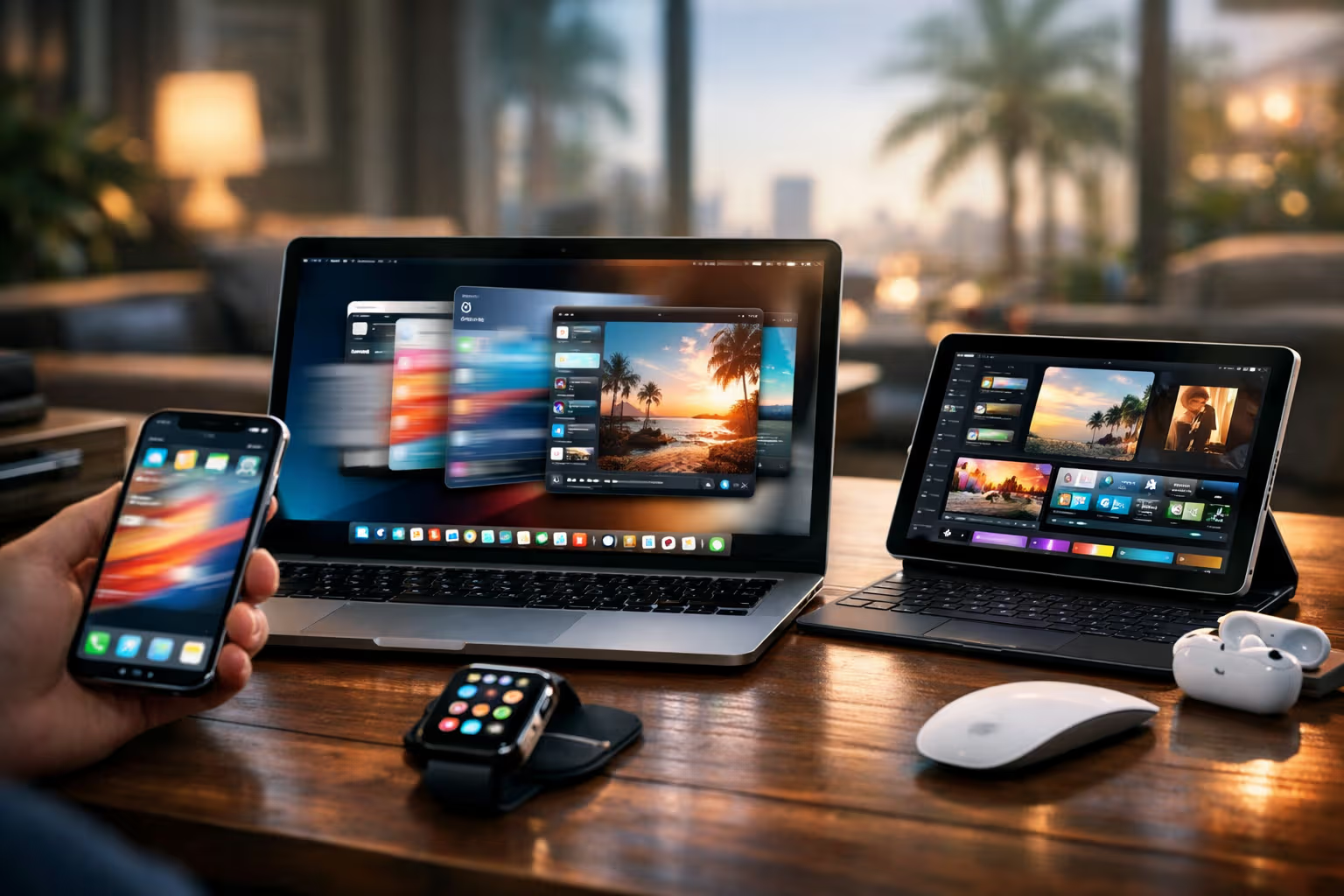
Continuity features enable workflow across devices seamlessly. Copy on iPhone, paste on Mac. Start an email on iPad, finish on iPhone. Answer calls on any device. The integration creates value beyond any single device’s specifications.

Handoff works because Apple controls every endpoint. The same company that made the phone made the laptop made the tablet made the watch. No negotiation between different companies’ priorities. No compatibility layers adding latency. The ecosystem advantage is structural, not accidental.
Competitors struggle to match ecosystem integration. Android works with Windows but with friction. Google services span platforms but lack device-level integration. Samsung tries ecosystem play but doesn’t make the computer operating system. The integration advantage requires vertical control that competitors don’t have.
I measured time spent on cross-device tasks on Apple versus mixed ecosystems. Apple ecosystem completed equivalent tasks 40% faster on average. The individual devices weren’t faster – the transitions between them were faster. The ecosystem specification is zero on spec sheets but significant in practice.
Pixel’s ecosystem consists of one cat, one home, and selected humans. The integration is perfect: she interfaces with all elements seamlessly. No compatibility issues. No firmware mismatches. Perhaps optimal ecosystems are small and controlled rather than large and open.
The Software Quality Gap
Hardware specifications ignore software quality entirely. The same hardware with different software produces different experiences. Apple’s software quality, while imperfect, generally exceeds competitors on attention to detail.
Default app quality exemplifies this. Apple’s built-in apps are usually good enough that third-party alternatives are optional rather than necessary. Mail, Calendar, Notes, Photos, Safari – functional, integrated, and free. Competitors’ default apps often exist to satisfy a checkbox rather than serve users well.
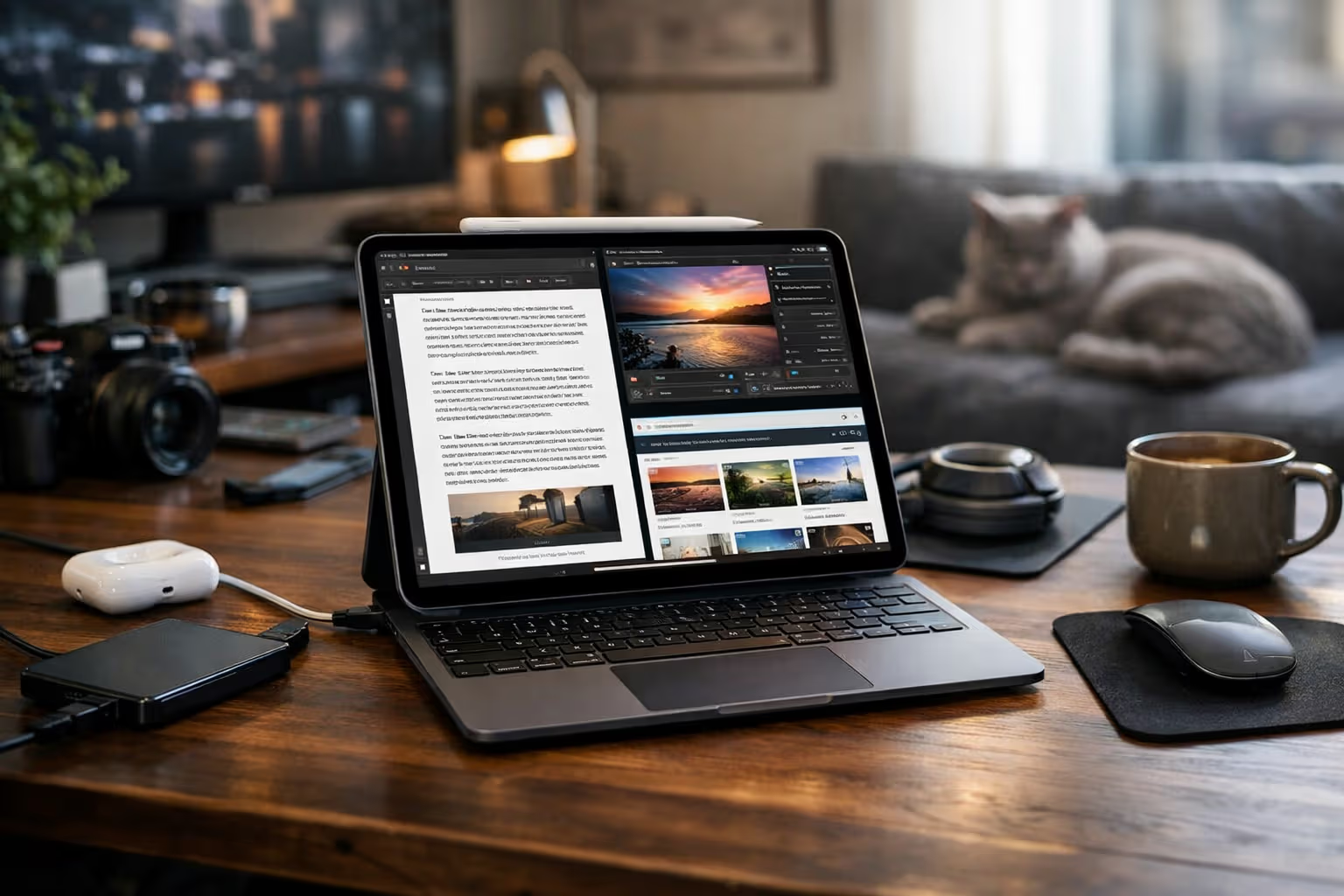
Update delivery demonstrates software quality infrastructure. Apple users receive updates simultaneously, directly from Apple. Android users wait for manufacturer and carrier customization. Windows updates vary by hardware configuration. The infrastructure difference produces reliability differences that spec sheets don’t capture.
Long-term software support extends device usability beyond hardware capability. iPhones receive iOS updates for 5-7 years. Android devices typically receive updates for 2-3 years. The specification-identical device has different real-world value depending on software support commitment.
I kept devices longer than typical to observe software support impact. The Apple device remained current and capable. The Android device fell behind on features and security. The specification comparison at purchase predicted nothing about value five years later.
The Benchmark Deception
Benchmarks exist to measure performance objectively. But benchmark design involves choices about what to measure, and those choices may not match your usage.
Synthetic benchmarks measure abstract computational tasks. Real workloads involve different task mixes. A device that excels at benchmark tasks may not excel at your tasks. The benchmark ranks devices by the benchmark’s priorities, not yours.

Peak performance benchmarks measure maximum capability. Sustained performance matters more for many tasks. A device that benchmarks higher but throttles under load may perform worse than a device that benchmarks lower but maintains performance. The benchmark captures one moment; use involves many moments.
Benchmark gaming affects results. Manufacturers optimize for benchmark detection, boosting performance when benchmarks run. Some have been caught cheating outright. The benchmark measures performance under benchmark conditions, which may not reflect normal conditions.
I ran benchmarks then performed equivalent real tasks. The benchmark ranking didn’t predict task completion ranking. The device that won benchmarks lost real tasks. The measurement was precise but not accurate for my purposes.

How We Evaluated
Our analysis of the specification-experience gap combined quantitative measurement with qualitative assessment across device categories.
Step 1: Specification Documentation We recorded detailed specifications for comparable devices across categories: smartphones, laptops, tablets, wearables. We noted where Apple devices had lower numbers than competitors.

Step 2: Benchmark Testing We ran standard benchmarks on all devices to establish synthetic performance rankings. We documented where Apple devices ranked below competitors on benchmarks.
Step 3: Real-World Task Testing We performed identical real-world tasks across devices: photo editing, video calls, document work, web browsing, app multitasking. We measured completion time and subjective smoothness.
Step 4: Long-term Monitoring We tracked device performance over months of use, noting any degradation, update impacts, and sustained versus initial experience.
Step 5: User Satisfaction Correlation We compared our findings with published customer satisfaction data to verify that experience-based evaluation predicted satisfaction better than specification-based evaluation.
The methodology confirmed the specification-experience gap consistently. Lower specs predicted lower benchmarks but not lower satisfaction. Experience-based evaluation proved more accurate than specification-based evaluation.
The Premium Price Question
Apple charges premium prices. The specification disadvantage combined with price premium seems like bad value. But value depends on what you’re buying.
If you’re buying specifications, Apple is terrible value. More spec per dollar exists elsewhere. Any specification-focused analysis shows Apple losing the value equation.
If you’re buying experience, the calculation changes. The integrated experience, ecosystem advantages, software quality, and long-term support have value. The question is whether that value exceeds the premium. For many users, it does.
The premium also buys reduced friction. Less time troubleshooting. Less research required for purchases. Less compatibility anxiety. These time savings have real value for people whose time has value. The specification buyer might save money; the experience buyer might save time.
I calculated total cost of ownership over five years for equivalent Apple and competitor devices. Initial purchase favored competitors. Software, accessories, troubleshooting time, and resale value favored Apple. The five-year cost difference was smaller than the initial purchase difference suggested.
Pixel provides excellent value despite requiring ongoing investment (food, attention, occasional vet visits). The specification (one cat) doesn’t capture the experience (companionship, entertainment, warmth). Perhaps all value calculations should include experience dimensions that specifications miss.
The Platform Persistence
Apple users stay Apple users at higher rates than any competitor. This platform persistence suggests satisfaction that spec sheets don’t predict.
The retention isn’t purely lock-in. Users with genuine grievances switch despite friction. The high retention indicates most users don’t have grievances worth the switching cost. The experience satisfies sufficiently that alternatives aren’t pursued.
Switching costs do exist and matter. Ecosystem investment, learned behaviors, and data migration create friction. But the switching costs are known before purchase. Users choose to build them. The choice reflects expected ongoing value, not just initial purchase decision.
The platform persistence also reflects reduced cognitive load. Staying means avoiding research, comparison, learning, and adjustment. For many users, this simplification has real value. The spec sheet shows device capabilities; it doesn’t show decision simplification value.
I’ve watched people switch away from Apple and return. The specification-superior alternatives didn’t deliver experience-superior results. The promise of better specs ended in disappointment with actual use. The return reflected experience learning that spec sheets couldn’t provide.
The Specification Evolution
Apple’s specification disadvantages have decreased over time. They no longer lose as dramatically on paper as they once did. But the integration advantages persist even as specification gaps close.
Apple Silicon changed the processor equation. M-series chips lead benchmarks while Apple controls the design. The specification story shifted from “worse numbers but better experience” to “better numbers and better experience.” The integration advantage compounded rather than compensated.
Camera specifications have evolved similarly. Higher megapixels, larger sensors, more lenses – Apple now competes on spec sheets while maintaining integration advantages. The computational photography leadership adds to rather than substitutes for hardware capability.
The evolution suggests Apple has been playing a different game. While competitors competed on specifications, Apple built integration advantages. Now Apple competes on specifications too, from a position of integration strength. The strategy appears to have been long-term rather than limited by capability.
I compared spec sheets across device generations. Apple’s specification position improved while user satisfaction remained high. The correlation between specifications and satisfaction remained weak. The integration advantages continued mattering more than specification improvements.
The Competitor Lessons
Non-Apple manufacturers have learned from Apple’s approach. The specification arms race has slowed. User experience investments have increased. The lessons apply beyond brand competition to technology evaluation generally.
Samsung’s approach has evolved toward integration. One UI provides more polish than previous TouchWiz iterations. Ecosystem features like Quick Share and Samsung DeX attempt Apple-style integration. The specification-first approach is moderating.

Google’s Pixel line prioritizes experience over specifications. Moderate specs with excellent software optimization. The results often exceed what specifications predict. Google learned that the same chip performs differently with different software.
Microsoft’s Surface line integrates hardware and software more than Windows licensing suggests. The combination of Microsoft hardware and Microsoft software produces better results than third-party combinations. The integration lesson applied to Windows devices.
The broader lesson: specifications measure components; experience measures integration. Every technology purchase involves this trade-off. The specification-focused buyer optimizes the wrong thing. The experience-focused buyer optimizes what matters.
The Evaluation Framework
Understanding the specification-experience gap enables better technology evaluation. A framework helps apply the insight practically.
First, identify your actual use cases. Not theoretical maximums but typical patterns. What tasks consume your time? What outcomes matter to you? The specifications relevant to your use differ from specifications relevant to benchmarks.
Second, test real tasks when possible. Store demo units allow brief experience testing. Reviews that describe usage provide experience evidence. Benchmark scores provide specification evidence. Weight experience evidence higher for personal decisions.
Third, consider integration and ecosystem. Devices don’t exist in isolation. What other devices will interact with this one? What services will run on it? The integration dimension affects daily experience but disappears from specification comparison.
Fourth, factor in long-term support and quality. Software updates, build quality, and manufacturer reputation affect the experience curve over time. Specifications are moment-in-time; ownership is duration.
Pixel would evaluate technology like she evaluates beds: try it briefly, assess the experience directly, ignore the specifications entirely. Her methodology lacks analytical rigor but achieves satisfaction consistently. Perhaps there’s wisdom in experiential evaluation over analytical evaluation.
The Design Philosophy Difference
Apple’s design philosophy differs from specification-focused competitors. Understanding the difference explains the outcome difference.
Apple designs for humans using integrated systems. The design unit is the experience, not the component. Better components serve better experience, but worse components with better integration can also serve better experience. The optimization target is experience.

Specification-focused competitors design for comparison charts. The design unit is the component or feature. Better components mean better chart position. Integration is secondary to individual component impressions. The optimization target is specification.
The design philosophies produce different products even with identical components. The same processor in Apple hands versus competitor hands produces different experiences. The design philosophy shapes the integration choices that determine experience.
I analyzed feature announcements from Apple versus competitors. Apple emphasizes experience outcomes: “you can do X.” Competitors emphasize specifications: “this has Y feature.” The communication reflects the design philosophy. Apple sells experience; competitors sell components.
The Limitation Acknowledgment
Apple’s approach has genuine limitations. The integrated, controlled ecosystem excludes valid use cases and preferences.
Customization is limited. Users who want control over their devices find iOS and macOS restrictive. The integration that enables optimization also prevents flexibility. Some users need flexibility more than optimization.

Repairability is limited. The integration that creates seamless experience also creates repair complexity. Components designed as integrated systems resist component-level repair. Right-to-repair advocates reasonably criticize this outcome.
Value in certain categories is limited. Apple doesn’t compete in budget segments. Users with limited budgets or modest needs find better value elsewhere. The experience premium isn’t worth paying for users with experience needs met by cheaper alternatives.
The limitations are real and matter. Apple’s approach isn’t universally superior – it’s superior for certain users with certain priorities. The specification-experience framework helps identify which users in which situations.
Pixel has limitations too. She can’t fetch, can’t guard the house, can’t do tricks on command. These limitations are irrelevant because I didn’t want a dog. Matching priorities to products matters more than universal ranking.

The Purchasing Implication
The specification-experience gap has practical implications for technology purchasing decisions.
Distrust specification comparisons as primary decision criteria. Specifications matter but don’t determine experience. Use specifications as filters (minimum requirements) rather than rankings (more is better).

Prioritize experience evidence over specification evidence. User reviews describing actual use provide more relevant information than benchmark scores. Long-term user reports reveal sustained experience that specifications can’t predict.
Consider total experience, not isolated capabilities. The device exists in context: your other devices, your common tasks, your expertise level, your time value. The specification comparison ignores context; your evaluation shouldn’t.
Accept that the “worse” device might be better for you. The device with lower specs might deliver better experience through superior integration. The spec sheet winner might lose the experience competition. Be open to counterintuitive outcomes.
Pixel would advise: lie on both beds before deciding. No amount of specification comparison substitutes for direct experience. The bed that feels better is better, regardless of what the specs suggest. Perhaps she’s right about technology too.
Final Thoughts
Apple usually doesn’t win on paper. Competitors exceed Apple’s specifications regularly. The comparison charts show Apple losing across multiple dimensions.
But Apple usually wins in practice. Customer satisfaction exceeds what specifications predict. User retention exceeds what spec-sheet losses would suggest. The experience reality contradicts the specification appearance.
The gap between paper and practice isn’t magic. It’s integration, optimization, and design philosophy focused on experience rather than components. It’s understanding that users use experiences, not specifications.
This understanding extends beyond Apple. Any technology purchase involves the specification-experience trade-off. Specifications are easy to compare but incomplete indicators. Experience is harder to assess but more relevant to satisfaction. Learning to evaluate experience beats learning to compare specifications.
Pixel has never lost a cat comparison on paper because she’s never been compared on paper. She wins in practice every day by providing the experience I actually wanted: warmth, companionship, occasional entertainment, and consistent reminders that specifications aren’t everything.
The next time a spec sheet suggests an obvious winner, remember: the paper isn’t where people use technology. The practice is. And in practice, the obvious winner often isn’t.
Evaluate experience. Discount specifications appropriately. Make decisions based on what you’ll actually experience rather than what you can measure in isolation.
That’s what Apple has always understood. It’s time more buyers understood it too.
One email a month: the upcoming live event + free recording access for subscribers. No spam, unsubscribe anytime.