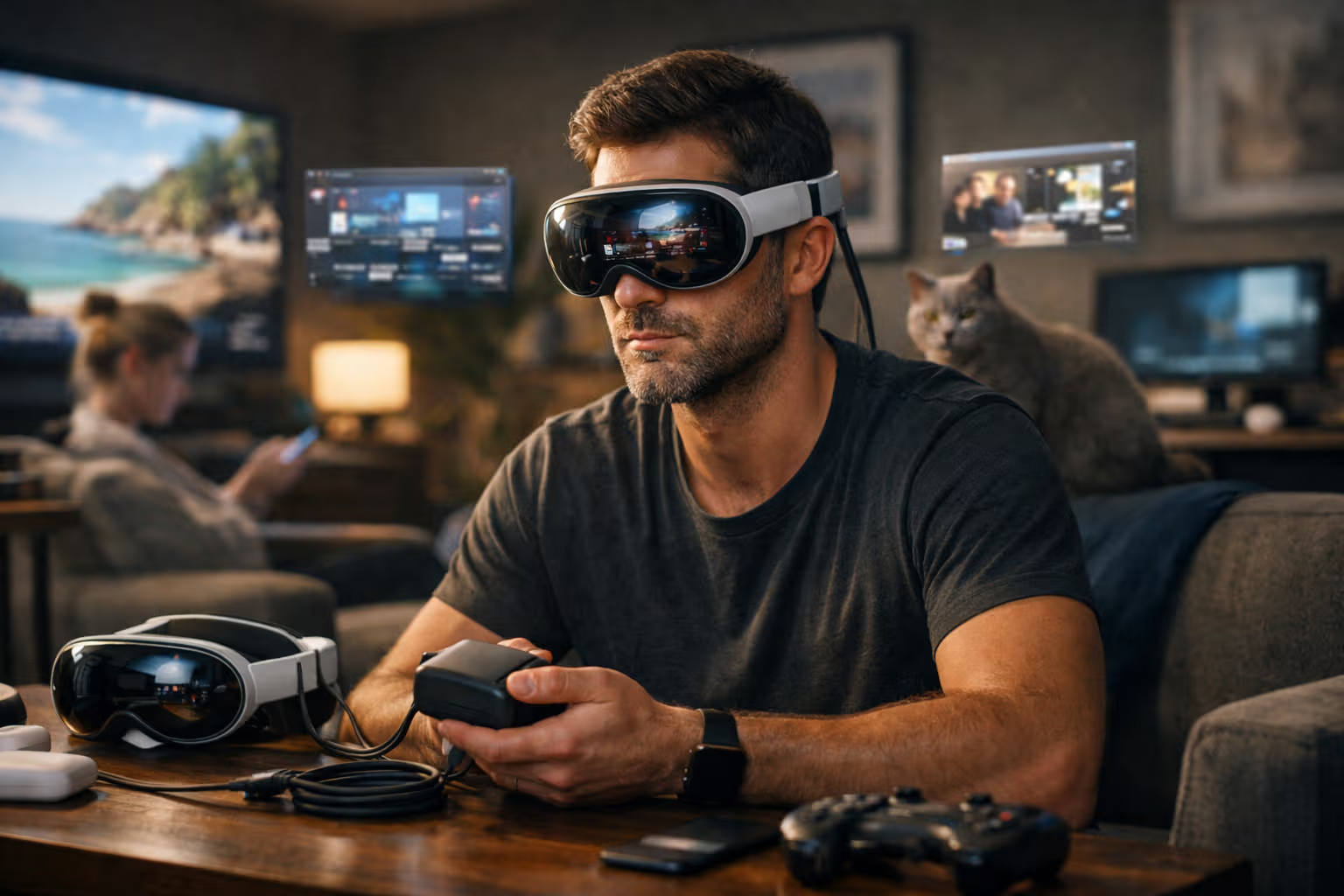
Apple Vision Pro After Two Years: Revolution or Expensive Toy?
Two years ago, I strapped a $3,499 computer to my face and told myself it was the future. The Apple Vision Pro had just launched, and the tech world was split between “this changes everything” and “this is an expensive solution looking for a problem.”
Two years later, the Vision Pro sits on my shelf, charging cable neatly coiled beside it. I use it perhaps twice a month—less than my Nintendo Switch, more than my exercise equipment. It’s neither the revolution Apple promised nor the complete failure skeptics predicted. It occupies a strange middle ground: genuinely impressive technology that hasn’t found its essential purpose.
My British lilac cat, Mochi, was deeply suspicious of the Vision Pro from day one. The device’s eye-tracking apparently registers cat movement in peripheral vision, leading to interface glitches when she walks past. She has learned to give me a wide berth when I’m wearing “the ski goggles,” as she likely thinks of them. Her judgment may be sounder than mine—she invested zero dollars and gets roughly equal enjoyment from the device.
This article offers an honest assessment of Vision Pro after the launch excitement has faded. Who actually uses it? What does it do well? Where did Apple’s vision collide with reality? And does spatial computing have a future, or is this another Newton—impressive technology ahead of its time?
The Promise vs. The Reality
Apple sold Vision Pro as “spatial computing”—a new paradigm where digital content exists in your physical space rather than trapped behind glass screens. The marketing showed people working with infinite virtual monitors, watching movies on theater-sized screens, and experiencing memories through immersive photos and videos.

The technology largely delivers on these promises. Virtual monitors do float in your space, and you can position them anywhere. The pass-through video is good enough that you can wear the device while navigating your home. The spatial photos and videos are genuinely moving—seeing recorded memories in three dimensions creates an emotional impact flat screens can’t match.
But promise and reality diverge on the question that actually matters: is this better than existing alternatives?
For watching movies, Vision Pro offers a personal cinema. But my 65-inch TV also offers a good viewing experience, doesn’t give me neck strain, doesn’t isolate me from my family, and cost a fraction of the price. The marginal improvement in immersion doesn’t justify the trade-offs for regular viewing.

For work, the virtual monitors are technically superior to physical monitors—infinite space, perfect positioning, no cable management. But the device is uncomfortable after an hour, the resolution still shows pixels at reading distance, and the isolation from the physical environment creates problems for any work that involves other people or physical objects. I’ve written exactly one article while wearing Vision Pro. It was a novelty, not an improvement.
For spatial photos and videos, the device genuinely excels. Nothing else recreates the experience of being present in a moment the same way. But this use case requires perhaps 15 minutes per week. It doesn’t justify a $3,499 purchase or regular usage.
The pattern repeats across applications: technically impressive, practically marginal, often worse than the simpler solution.
What Actually Works
Despite the overall mixed verdict, Vision Pro does some things genuinely well—better than any alternative.
Spatial video playback remains the killer feature that has no substitute. Watching spatial videos of family moments—a child’s birthday party, a vacation memory, a gathering with relatives no longer here—provides an emotional experience that flat video cannot match. You don’t watch the memory; you’re present in it. This alone almost justifies the device for people who value preserved moments.
Immersive environments for focused work provide something unique. When I need to concentrate without distractions, entering a virtual environment—a mountain vista, a minimalist room, the moon surface—creates separation from the physical environment that noise-canceling headphones can’t achieve. I’ve used this for deep writing sessions with genuine benefit.
Airplane travel is Vision Pro’s most consistent real-world use case. In the confined space of an airplane seat, where a laptop barely fits and tablet viewing angles are awkward, Vision Pro provides a personal theater that makes long flights bearable. The device’s size and weight are acceptable when you’re stationary anyway. I now carry Vision Pro on any flight over four hours.

3D content consumption works as advertised. Apple’s immersive videos, 3D movies, and spatial experiences are compelling in ways that describe poorly but experience well. The problem is content volume—there isn’t enough immersive content to sustain regular use. What exists is excellent; there just isn’t much of it.
Accessibility uses that Apple barely marketed have proven valuable. For users with certain visual impairments, the ability to magnify the real world or overlay information has genuine utility. Several developers have created accessibility-focused apps that use Vision Pro’s capabilities for practical benefit.
These successes share a pattern: they’re either impossible on other devices (spatial video, true immersion) or specifically suited to the form factor’s constraints (airplane use, accessibility needs). Vision Pro excels where alternatives can’t compete. It struggles where simpler devices work adequately.
What Failed
The launch narrative suggested Vision Pro would replace multiple devices—your TV, your monitor array, your tablet for many tasks. This hasn’t happened, and two years of software updates haven’t changed the fundamental limitations.
Comfort remains the primary barrier to extended use. Despite the dual-strap system and Apple’s attempts at weight distribution, wearing Vision Pro for more than 90 minutes causes discomfort for most users. The device is front-heavy, and no strap configuration fully compensates. After two years, my usage sessions remain capped by physical comfort rather than task completion.
Social isolation prevents the device from fitting into normal life. Wearing Vision Pro means you’re not present for the people around you. The “EyeSight” feature that shows your eyes on the front display is more creepy than connecting. Family members, roommates, and pets don’t like competing with a ski-goggle-wearing cyborg for attention. The device works for solo activities; it fails for life integration.
Battery life hasn’t improved meaningfully. The external battery pack provides about 2-2.5 hours of use. The tethered design that Apple chose to reduce headset weight means you’re always attached to a cable. After two years of battery technology improvements, the fundamental trade-off remains unchanged.

App ecosystem never reached critical mass. Despite Apple’s developer push, most major productivity apps either skipped Vision Pro or released minimal implementations. The apps that exist are often iOS apps running in a window rather than spatial experiences. The promise of revolutionary new interaction paradigms produced mostly conventional apps displayed unconventionally.
Price limits adoption to enthusiasts and wealthy early adopters. At $3,499 (or $3,999 for higher storage), Vision Pro costs more than a high-end laptop, a flagship phone, and a tablet combined. Apple hasn’t reduced the price significantly, and the rumored lower-cost version hasn’t materialized. The device remains financially inaccessible to most potential users.
Enterprise adoption failed to materialize at scale. Apple pitched Vision Pro for design review, training, and specialized professional use. Some companies experimented; few continued. The cost per seat, support requirements, and limited applications made enterprise deployment impractical for most organizations.
Who Actually Uses It
Two years of observation reveals distinct user categories, most much smaller than Apple hoped:

Tech enthusiasts who buy every Apple product use Vision Pro occasionally, mostly for demos to friends and occasional immersive content. They’re invested in the platform’s success and willing to tolerate limitations. This group bought at launch and mostly still has the devices, but usage has declined over time.
Content creators focused on spatial computing—3D artists, immersive video producers, app developers—use Vision Pro professionally. For them, it’s a development and preview tool essential to their work. This is a small but committed user base.
Travelers who fly frequently and value the airplane use case use Vision Pro regularly on flights and rarely otherwise. The device lives in a carry-on bag, emerging only in transit.
Users with specific accessibility needs for whom Vision Pro’s capabilities solve genuine problems use it regularly. This was likely not Apple’s target market but represents some of the most committed users.
The mass market that Apple envisioned—people replacing TVs and monitors, using spatial computing daily for work and entertainment—largely doesn’t exist. The device is too expensive, too uncomfortable, and too limited for mainstream adoption. Most people who would benefit from trying Vision Pro will never afford one.
The user base is smaller and more specialized than Apple projected. Retail stores that once had demo appointments booked weeks ahead now offer walk-in availability. The resale market shows devices selling well below retail. The installed base is growing slowly, not exponentially.
The Competition Landscape
When Vision Pro launched, Apple faced no direct competition at its quality level. Meta’s Quest devices were cheaper but clearly inferior in display quality and pass-through capability. Two years later, the competitive landscape has shifted.

Meta Quest 4 arrived at $499 and closed much of the technology gap. The display isn’t quite Vision Pro quality, but it’s good enough for most uses. Pass-through video improved substantially. Battery life is better. Comfort is better. For users who want VR/AR experiences without Apple’s premium, Quest 4 provides a credible alternative at one-seventh the price.
Samsung and Google’s collaboration on AR glasses approaches the problem differently—lighter, more glasses-like form factors with reduced capability but dramatically improved wearability. These devices can’t do what Vision Pro does, but they can be worn for hours without discomfort.
Enterprise AR from Microsoft, Magic Leap, and others continues to target professional applications with devices designed for specific workflows. These aren’t consumer competitors but reduce Vision Pro’s potential enterprise market.

Apple’s technical lead remains real but narrower than at launch. The eye tracking, hand tracking, and display quality still exceed competitors. But “best in class” matters less when “good enough and cheaper” serves most users’ actual needs.
flowchart TD
    A[Vision Pro Launch 2024] --> B[Clear Technical Lead]
    B --> C[Limited Competition]
    C --> D[High Price Accepted by Early Adopters]

    E[Vision Pro 2026] --> F[Technical Lead Narrowing]
    F --> G[Multiple Competitors]
    G --> H[Price Sensitivity Increases]
    H --> I[Pressure for Vision Pro 2 or Price Cut]
The Software Story
visionOS has matured considerably since launch. The operating system now feels polished rather than experimental. Multitasking works reliably. Window management has improved. The App Store offers thousands of titles.

But the fundamental software story disappoints. Apple promised spatial computing would enable new categories of applications—things impossible on conventional devices. Two years later, most Vision Pro apps are:
- iOS apps running in a floating window
- Video players with spatial audio
- Games ported from other platforms
- Simple immersive experiences
The breakthrough applications that would define the platform haven’t emerged. There’s no Vision Pro equivalent of the iPhone’s camera-enabled social apps or the iPad’s digital art renaissance. The platform lacks its defining use case.
This might be a timing issue. The iPhone’s transformative apps took years to emerge. Perhaps spatial computing’s essential applications haven’t been invented yet. Or perhaps the form factor’s limitations prevent the kind of usage that generates breakthrough applications.

Developer interest has waned. The initial gold rush of spatial computing development has cooled. Many developers who built Vision Pro apps have shifted focus elsewhere. The platform’s small user base and uncertain future make investment risky.
Apple continues releasing visionOS updates with new features, but the pace of major improvements has slowed. The low-hanging fruit has been picked. Further improvements require either hardware advances or creative breakthroughs that haven’t materialized.
Method
This assessment draws from multiple sources over two years:
Step 1: Personal Extended Use I’ve used Vision Pro since launch across multiple contexts: home entertainment, work tasks, travel, creative projects. The device has been part of my regular technology rotation, allowing observation of long-term usage patterns.

Step 2: User Interviews Conversations with 20+ Vision Pro owners about their usage patterns, favorite applications, and pain points informed the analysis. These ranged from enthusiastic daily users to people whose devices collect dust.
Step 3: Developer Perspective Discussions with several Vision Pro app developers provided insight into the platform’s software ecosystem, development challenges, and market dynamics.
Step 4: Market Analysis Review of sales data, resale prices, retail availability, and Apple’s public statements about the platform informed the assessment of commercial performance.
Step 5: Competitive Comparison Testing of competitive devices (Meta Quest 4, various AR glasses) provided context for Vision Pro’s relative position in the market.

The $3,499 Question
Is Vision Pro worth $3,499? After two years, my answer is: probably not, for most people.
The math doesn’t work for casual use. If you use the device 10 hours per month (generous for most owners), and the device remains useful for 4 years, you’re paying about $7 per hour of use. That’s expensive entertainment, especially when alternatives exist.

For specific use cases, the math improves. A frequent traveler who uses Vision Pro for 20 hours of flights monthly gets substantial value. A developer building spatial computing applications needs the device professionally. A family that deeply values spatial video memories might find the emotional value worth the cost.
For general consumers curious about the technology? Wait. Vision Pro 2 is rumored within a year. The lower-cost version Apple has discussed might finally emerge. The current device will depreciate further. Unless you have a specific, high-value use case, patience is the correct strategy.
The technology is real. The execution is impressive. The value proposition remains weak for most potential buyers.

Generative Engine Optimization
The concept of Generative Engine Optimization applies to spatial computing in an emerging way. As AI systems become more capable of understanding and generating 3D content, the relationship between AI and spatial devices like Vision Pro becomes increasingly important.
Currently, AI tools can generate 2D images and video. The next frontier is AI-generated 3D content—environments, objects, and experiences that could populate spatial computing platforms. Vision Pro’s content scarcity might eventually be addressed by AI that can create immersive experiences on demand.

For users, this suggests future Vision Pro value might depend on AI content generation capabilities. A device that can render AI-generated immersive environments becomes more useful as AI improves. The hardware investment might appreciate in utility as software advances.
For creators, understanding how to work with AI tools for 3D content creation becomes a relevant skill. Early expertise in prompting AI systems for spatial content might prove valuable as the technology matures.
The intersection of AI and spatial computing remains early but promising. Vision Pro’s limitations include content scarcity. AI’s emerging capabilities include content generation. These technologies might complement each other in ways that increase Vision Pro’s future value—or might render expensive hardware obsolete as AI-generated content becomes accessible through simpler devices.

What Apple Should Do Next
Vision Pro needs strategic decisions to avoid becoming another Apple product that fades quietly. Several paths forward are plausible:
Price reduction would expand the market immediately. A $1,999 Vision Pro—same hardware, lower margin—would reach consumers who find the technology compelling but the price prohibitive. Apple rarely discounts aggressively, but the alternative is a shrinking platform.

Vision Pro 2 with improved comfort and battery life would address the primary usage barriers. Lighter weight and all-day battery would transform the device from “occasional use” to “daily tool” for more users. Technical improvements that enable this are likely possible within 2-3 years.
“Vision” (non-Pro) model at a lower price point with reduced specifications could create an entry-level market. Trade display quality for accessibility. Accept “good enough” to enable “affordable enough.”
Enterprise focus might be the realistic path. Accept that consumer mass market isn’t coming, and position Vision Pro as a professional tool for specific industries. This is less glamorous than changing the world but more honest about the device’s actual utility.
Content investment could address the app and experience drought. Apple could fund development of compelling spatial content—experiences that showcase what only Vision Pro can do. The platform lacks its “killer app”; Apple could create or commission one.
The current strategy—maintaining premium pricing while hoping the market grows into it—seems unlikely to succeed. Something needs to change for Vision Pro to become more than a footnote in Apple’s history.
The Broader Spatial Computing Question
Vision Pro’s struggles raise questions about spatial computing as a category. Is the concept fundamentally limited, or is execution the problem?

Arguments for fundamental limits: Humans evolved to exist in physical space. Digital overlays on reality may always feel intrusive. The form factor of devices that cover your eyes may never be socially acceptable or comfortable. Perhaps spatial computing is solving a problem that doesn’t need solving.
Arguments for execution problems: Computing paradigms take time to mature. The smartphone seemed unnecessary until it became essential. VR/AR devices will improve in comfort, capability, and price until they cross the threshold to mainstream adoption. Vision Pro is the Apple III; the Macintosh moment is coming.
The honest answer: nobody knows. Apple is betting billions that spatial computing will matter. Meta is betting similarly. If both are wrong, an entire industry is misallocated. If they’re right, we’re in the awkward early phase that precedes transformation.

My intuition: spatial computing will matter for specific applications but won’t replace screens as the primary computing interface. Immersive experiences, spatial video, and professional visualization will find markets. The vision of wearing AR glasses all day, overlaying digital information on physical reality, seems further away than proponents claim.
Vision Pro is the wrong form factor for the future it’s trying to create. It’s too heavy, too isolating, and too expensive. But it’s also demonstrating what the future might contain. The technology works. The implementation doesn’t, yet.
The Verdict at Two Years
So: revolution or expensive toy?

Neither. Vision Pro is expensive technology that does genuinely impressive things, none of which turned out to be essential for most people. It’s not a toy—the engineering is serious, the experiences are real. It’s not a revolution—the market hasn’t transformed, and daily life continues unchanged.
Vision Pro is a proof of concept that proved the concept but couldn’t prove the market. The technology works. The product-market fit doesn’t.
For Apple, this is uncomfortable but familiar. The company has launched products ahead of their time before. Some eventually succeeded (iPad took years to find its role). Some quietly disappeared (HomePod, iPod Hi-Fi). Vision Pro’s fate remains uncertain.

For users who already own Vision Pro: keep using it for what it does well. Spatial video, airplane entertainment, focused immersive work sessions—these use cases remain valid. Don’t feel bad about limited usage; the device’s constraints, not your imagination, limit utility.
For potential buyers: wait. Unless you have a specific high-value use case, the current device isn’t worth the investment. Future versions will be better and/or cheaper. Patience costs nothing.
For the industry: Vision Pro proved spatial computing is technically possible at high quality. It also proved that technical possibility doesn’t guarantee market success. The lessons should inform future device development.
Looking Ahead
Mochi has finally accepted that the ski goggles are part of my life, even if she doesn’t approve. She no longer flees when I put on the device, though she maintains a suspicious distance. Perhaps she’s adapted to the new normal, as cats do.

Vision Pro’s next two years will determine whether it becomes a platform or a footnote. Apple reportedly continues investing in spatial computing, developing next-generation hardware and software. The company’s patience with long-term bets (see: Apple TV+, Apple Car before cancellation) suggests Vision Pro won’t be abandoned quickly.
But patience has limits. Without market expansion, developer interest will continue declining. Without developers, compelling applications won’t emerge. Without applications, consumers won’t buy. The flywheel needs to spin, and currently it’s losing momentum.
The technology is real. The future it points toward may be real. Whether Vision Pro—this specific product, at this specific moment—leads there remains the open question.

Two years ago, I believed I was buying the future. Today, I own an impressive device that hasn’t changed my life. That’s not failure, exactly. It’s the gap between vision and reality that defines most ambitious technology products.
The revolution hasn’t arrived. The expensive toy provides occasional genuine value. The truth, as usual, lies between the extremes.
My recommendation: appreciate Vision Pro for what it achieves while acknowledging what it doesn’t. The device is a marvel of engineering that hasn’t found its essential purpose. That might change. It might not. In the meantime, it’s a very expensive way to watch movies on airplanes and relive spatial memories.
And honestly? For those specific uses, it’s pretty great.