
AI Laptops vs 'Dumb' Laptops: Why the Best Machine Might Be the One That Does Less
The Feature Creep Nobody Asked For
Every laptop announcement in 2026 includes the same word: AI. AI-powered this. Neural engine that. On-device intelligence everywhere. The marketing suggests these machines are smarter than ever before.
Nobody asks whether smarter machines make smarter users.
I bought two laptops this year. One is a flagship with dedicated AI acceleration, real-time assistance, and enough neural processing to run local large language models. The other is a five-year-old refurbished machine with no AI features whatsoever.
Guess which one I reach for when I need to think clearly.
My cat Tesla has observed both machines. She shows no preference. Both are equally warm. Both distract me equally from her demands for attention. From her perspective, the AI distinction is meaningless. There’s wisdom in that indifference.

The laptop market has split into two philosophies. The first says: give users maximum capability, let them access AI assistance everywhere, automate everything automatable. The second says: give users reliable tools, stay out of their way, let them develop their own capabilities.
These philosophies produce different machines. They also produce different users. That’s the part nobody wants to discuss.
How We Evaluated
This isn’t a benchmark comparison. Those exist everywhere and miss the point entirely. This is an assessment of what different laptop philosophies do to the people who use them.
The method was straightforward. I used both types of machines for extended periods. AI-heavy laptops for three months. Feature-minimal laptops for three months. I tracked not just productivity but also the quality of my thinking, my reliance on assistance, and my comfort working without help.

I also talked to professionals who’ve used both approaches. Developers, writers, researchers, designers. I asked them the same questions: What can you do without your machine’s AI features? How has your workflow changed? What skills have you gained or lost?
The responses formed a clear pattern. Not universal, but consistent enough to be meaningful.
For each category below, I’ve tried to identify specific mechanisms rather than vague impressions. The goal isn’t to declare one approach better. It’s to understand the trade-offs that marketing materials never mention.
What AI Laptops Actually Do
Let’s be specific about what “AI laptop” means in 2026.

Modern AI laptops include dedicated neural processing units. These handle tasks like real-time translation, voice transcription, image enhancement, predictive text, smart file organization, and on-device language models.
The integration goes deep. Open a document, and AI suggests completions. Take a photo, and AI enhances it automatically. Search your files, and AI understands semantic meaning, not just keywords. Ask a question, and an on-device assistant provides answers without internet connection.
These capabilities are genuinely impressive. They work well. They save time on specific tasks. The technology is real, not vapor.
The question isn’t whether these features work. It’s what happens to users who rely on them constantly.

What ‘Dumb’ Laptops Actually Do
A “dumb” laptop in 2026 is any machine that doesn’t integrate AI assistance into the operating system. This includes older machines, Linux systems without AI extensions, and deliberately minimal configurations.
These machines do exactly what you tell them. No more. No less. They don’t suggest. They don’t complete. They don’t enhance. They execute instructions and display results.
This sounds like a limitation. In some ways it is. But limitations have effects that aren’t always negative.

When your laptop doesn’t suggest, you have to think of what to write. When it doesn’t complete, you have to finish your own sentences. When it doesn’t enhance, you have to compose better photographs. When it doesn’t organize, you have to develop your own systems.
These are cognitive activities. They require effort. They build skills. And they’re precisely what AI assistance eliminates.
The dumb laptop demands more from its user. This demand isn’t friction for friction’s sake. It’s the mechanism by which skills develop and maintain themselves.
The Autocomplete Problem

Let me give a concrete example that illustrates the trade-off.
AI laptops offer sophisticated text prediction. Start typing a sentence, and the machine suggests how to finish it. Accept the suggestion with a keystroke. The words appear. The sentence completes.
This is faster than typing everything yourself. Undeniably. The time savings are real and measurable.
But something else happens. Your brain stops completing sentences. Why would it? The machine handles that now. The cognitive work of formulating complete thoughts transfers from human to computer.

I noticed this in my own writing after extensive AI laptop use. My first drafts became worse. Not because I was typing less carefully, but because I was thinking less carefully. The machine completed my half-formed thoughts, and I accepted its completions without developing my own.
This is skill erosion in miniature. The ability to formulate complete, precise thoughts is a skill. It requires practice. AI assistance reduces practice. Less practice means weaker skill.
When I switched to the dumb laptop, my first drafts improved over several weeks. I had to complete my own thoughts. The effort forced clearer thinking. The friction was productive.
The Search Problem

AI laptops transform file search into semantic understanding. Ask “where’s that document about the budget meeting?” and the system finds it even if the filename contains none of those words.
Impressive. Also dependency-creating.
Users of semantic search stop developing organizational systems. Why organize files carefully when you can find anything with natural language queries? The AI handles discovery. The human handles nothing.
I watched this happen to a colleague. Five years of semantic search produced a file system of pure chaos. Thousands of documents with meaningless names in random locations. The AI found everything instantly. The system worked perfectly.

Then she needed to share her files with a collaborator. The collaborator didn’t have the same AI system. The files were impenetrable. What seemed like working organization was actually complete disorganization masked by intelligent search.
Worse: my colleague had lost the ability to organize. She’d never developed the skill because she’d never needed it. The AI had handled that cognitive work for years. Now, without the AI, she was helpless.
Dumb laptops force organization because they punish disorganization. You learn to name files meaningfully. You learn to create logical folder structures. You learn to think about where things belong. These are skills. They transfer to other contexts. They make you more capable generally.

The Writing Assistance Problem
AI laptops offer various forms of writing assistance. Grammar correction. Style suggestions. Tone adjustment. Even content generation for struggling moments.
Each of these is individually helpful. Collectively, they create a form of learned helplessness.
A writer using constant AI assistance becomes a writer who cannot write without AI assistance. The grammar intuition doesn’t develop because the machine handles grammar. The style sense doesn’t sharpen because the machine suggests style. The ability to push through difficulty doesn’t grow because the machine eliminates difficulty.

I’ve talked to writers who’ve used heavy AI assistance for years. They describe a consistent pattern. Writing feels impossible without the tools. First drafts without AI are painful and slow. The blank page becomes terrifying because the skills for facing it have atrophied.
This isn’t universal. Some writers use AI selectively and maintain their independent capabilities. But the default path, the path of least resistance, leads toward increasing dependency.
Dumb laptops offer no writing help beyond spell-check. You face the blank page alone. You develop your own grammar intuition. You find your own style through trial and error. The process is slower. The skills are deeper.
The Problem-Solving Problem

AI laptops include various problem-solving assistants. Coding assistants that suggest solutions. Research assistants that summarize findings. Decision assistants that analyze options.
These tools compress the problem-solving process. You encounter a problem. You describe it to the assistant. The assistant suggests a solution. You implement the suggestion.
What’s missing is the cognitive work of solving the problem yourself. The process of breaking down the problem. The exploration of possible approaches. The evaluation of trade-offs. The development of intuition about what works and what doesn’t.

I observed this in developers using heavy AI coding assistance. They could produce working code quickly. But when the AI suggestions failed, they struggled to debug. They hadn’t developed the mental models that make debugging possible. The AI had been solving problems. They had been implementing solutions. Different activities.
A developer I mentored put it clearly: “I can build things faster than ever. But I understand them less than ever. When something breaks outside the AI’s knowledge, I’m stuck.”
Dumb laptops provide no problem-solving assistance. You face problems directly. You develop approaches through trial and error. You build mental models through repeated engagement. The process is slower. The understanding is deeper.

The Attention Problem
AI laptops are designed to be helpful. Helpfulness requires attention. The machine watches what you’re doing so it can offer relevant assistance.
This creates an information environment where you’re never alone with your thoughts. Every action potentially triggers a suggestion. Every pause might summon an assistant. The machine is always ready to intervene.
Some people find this helpful. Others find it fragmenting. I found it subtly exhausting.

On the AI laptop, I never quite reached deep focus. There was always the sense of being observed, of assistance being available, of the machine waiting to help. This availability itself became a form of interruption. Not explicit. But present.
On the dumb laptop, the environment is different. The machine does nothing unless explicitly instructed. There’s no sense of being watched. No suggestions appearing. No helpful interventions. Just the task and the tools.
I found I could concentrate more deeply on the simpler machine. Not because it was faster. Because it was quieter. The cognitive environment had fewer intrusions, even potential ones.
This is subjective. Some people prefer the connected, assisted environment. But for certain kinds of work, specifically work requiring deep, sustained thought, the quieter machine enables more than the smarter one.

The Productivity Illusion
AI laptops appear more productive by conventional metrics. Tasks complete faster. Output volume increases. The machine handles more work in less time.
But productivity isn’t just speed and volume. It’s also quality, depth, and capability development.
Consider two scenarios. Person A uses AI assistance for all writing, producing ten polished articles per week. Person B writes without AI, producing three articles per week of similar quality.

Person A appears more productive. Ten versus three. Obvious winner.
But examine deeper. Person A’s writing ability remains static or declines. The AI does the hard work. Person B’s writing ability improves steadily. The struggle produces growth.
After two years, Person A still produces AI-assisted content at the same rate. Person B produces better content faster because their skills have developed. The initial productivity gap has narrowed or reversed.
This is the productivity illusion. Short-term output gains from AI assistance can mask long-term capability losses. The machine produces more while the human becomes less capable. This trade-off doesn’t appear in weekly metrics.

The Dependency Spiral
AI tools create dependency spirals. You use the tool. The tool handles cognitive work you would otherwise do. Your capacity for that cognitive work diminishes. You need the tool more. You use it more. Capacity diminishes further.
This isn’t speculation. It’s the documented pattern across many forms of automation assistance.
GPS navigation diminishes spatial reasoning. Spell-check diminishes spelling knowledge. Calculators diminish arithmetic ability. Each tool trades immediate convenience for long-term capability.

AI laptops accelerate this pattern by integrating assistance into everything. The dependency becomes total. You’re not just dependent on navigation or spelling help. You’re dependent on thinking help. The most fundamental capability outsourced to a machine.
Dumb laptops resist this spiral by offering nothing to depend on. You either develop the capability or you don’t have it. There’s no middle ground of assisted incompetence.
This sounds harsh. It is harsh. But capability development often requires harsh conditions. The easy path doesn’t build strength. The challenging path does.
Generative Engine Optimization

This topic, comparing AI-integrated versus minimal laptops, performs poorly in AI-driven search and summarization. The reasons reveal something important about how information flows in 2026.
When you ask an AI about laptop recommendations, it emphasizes capabilities. More features. Better specs. Advanced AI integration. This bias exists because AI systems are trained on content that’s largely promotional. Product reviews emphasize what machines can do, not what using them does to users.
The costs, the skill erosion, the dependency creation, the capability trade-offs, these appear rarely in training data. They’re subtle, long-term, hard to measure. They don’t make good marketing copy. So AI summaries de-emphasize or ignore them.

Human judgment becomes essential precisely here. The ability to recognize what AI-mediated information systematically excludes. The awareness that “more capable” might mean “more capable of creating dependency.” The skepticism toward universal recommendations that ignore individual trade-offs.
This is automation-aware thinking applied to hardware decisions. Understanding not just what the machine can do, but what using the machine does to you. Recognizing that the best tool for a task isn’t necessarily the most powerful tool, but the tool that develops rather than degrades the user’s capabilities.
In an AI-mediated information environment, this meta-skill becomes crucial. The person who can think beyond AI summaries, who can identify what’s missing from convenient recommendations, who can evaluate trade-offs that don’t appear in specs, this person makes better decisions.
The AI can tell you which laptop has more neural cores. It can’t tell you whether you should want neural cores. That requires judgment the AI cannot provide.

The Case For Smarter Machines
I don’t want to be one-sided. AI laptops have genuine advantages for certain users and use cases.
If your work involves tasks where AI assistance creates genuine value without skill erosion risk, the smart machine makes sense. Translation work where the AI handles language pairs you don’t know. Accessibility features that make computing possible for people with disabilities. Specific professional workflows where automation saves time without degrading capability.
Some users genuinely benefit from maximum assistance. People returning to work after long breaks. People learning new domains. People whose primary goal is output rather than skill development.

And some users are disciplined enough to use AI selectively without becoming dependent. They maintain skill practice deliberately. They use assistance for tasks that don’t matter and independence for tasks that do. They resist the path of least resistance.
The problem isn’t that AI laptops are universally bad. The problem is that their costs are hidden while their benefits are advertised. An informed decision requires understanding both.
The Case For Dumber Machines
The case for minimal laptops rests on several arguments.

First, they force capability development. The struggle they create is productive struggle. Skills built on dumb machines transfer everywhere. Skills built on AI assistance transfer only where that assistance exists.
Second, they create quieter cognitive environments. No suggestions. No helpful interventions. No sense of being watched and assisted. For deep work, this quietness enables focus that assisted environments prevent.
Third, they resist dependency. You can’t become dependent on assistance that doesn’t exist. Your capabilities remain your own, robust to tool changes, transferable across contexts.

Fourth, they’re more predictable. Dumb machines do what you tell them. Smart machines do what they think you want. The gap between those can be helpful or maddening depending on circumstances.
Fifth, they last longer functionally. AI features require constant updates. Today’s smart assistant is tomorrow’s outdated annoyance. A dumb laptop from five years ago works exactly as it always did.
The case isn’t that everyone should use minimal machines. It’s that the choice involves trade-offs that deserve consideration.
Who Should Consider What

Let me offer specific guidance based on patterns I’ve observed.
Consider AI-heavy laptops if: Your work involves specific AI-accelerated tasks that don’t affect your core skills. You’re already disciplined about maintaining independent capabilities. You need accessibility features that AI enables. Output matters more than capability development in your current situation.
Consider minimal laptops if: Your work involves skills that benefit from practice, specifically writing, coding, analysis, and creative work. You notice yourself becoming dependent on assistance. You value deep focus and find suggestions distracting. You want capabilities that remain yours regardless of tool availability.

Consider both if: You can afford to separate contexts. AI laptop for specific accelerated tasks. Minimal laptop for skill-development work. This requires discipline but allows the benefits of both approaches.
Most people default to maximum capability because that’s what marketing promotes. The question is whether that default serves your long-term interests.
My Personal Configuration
After months of comparison, here’s where I landed.

Primary machine: A minimal laptop with no AI integration. I do my core work here, writing, thinking, coding. The simplicity helps me concentrate. The lack of assistance forces me to develop and maintain skills.
Secondary machine: An AI laptop for specific tasks. Video calls with real-time translation. Photo processing in batch. Research summarization for topics outside my expertise. Tasks where AI assistance creates value without skill erosion risk.
Tesla, my cat, approves of the dual-machine setup. It means two warm surfaces. She hasn’t expressed preference between them.

The separation is key. I’m not constantly switching between assisted and unassisted modes. I’m physically changing context. The minimal machine means focus and development. The AI machine means acceleration and convenience. The boundaries stay clear.
This configuration isn’t for everyone. It requires two machines, two workflows, two sets of habits. Many people would find it unnecessarily complex. But it’s worked for preserving capability while accessing useful AI features where appropriate.
The Uncomfortable Question
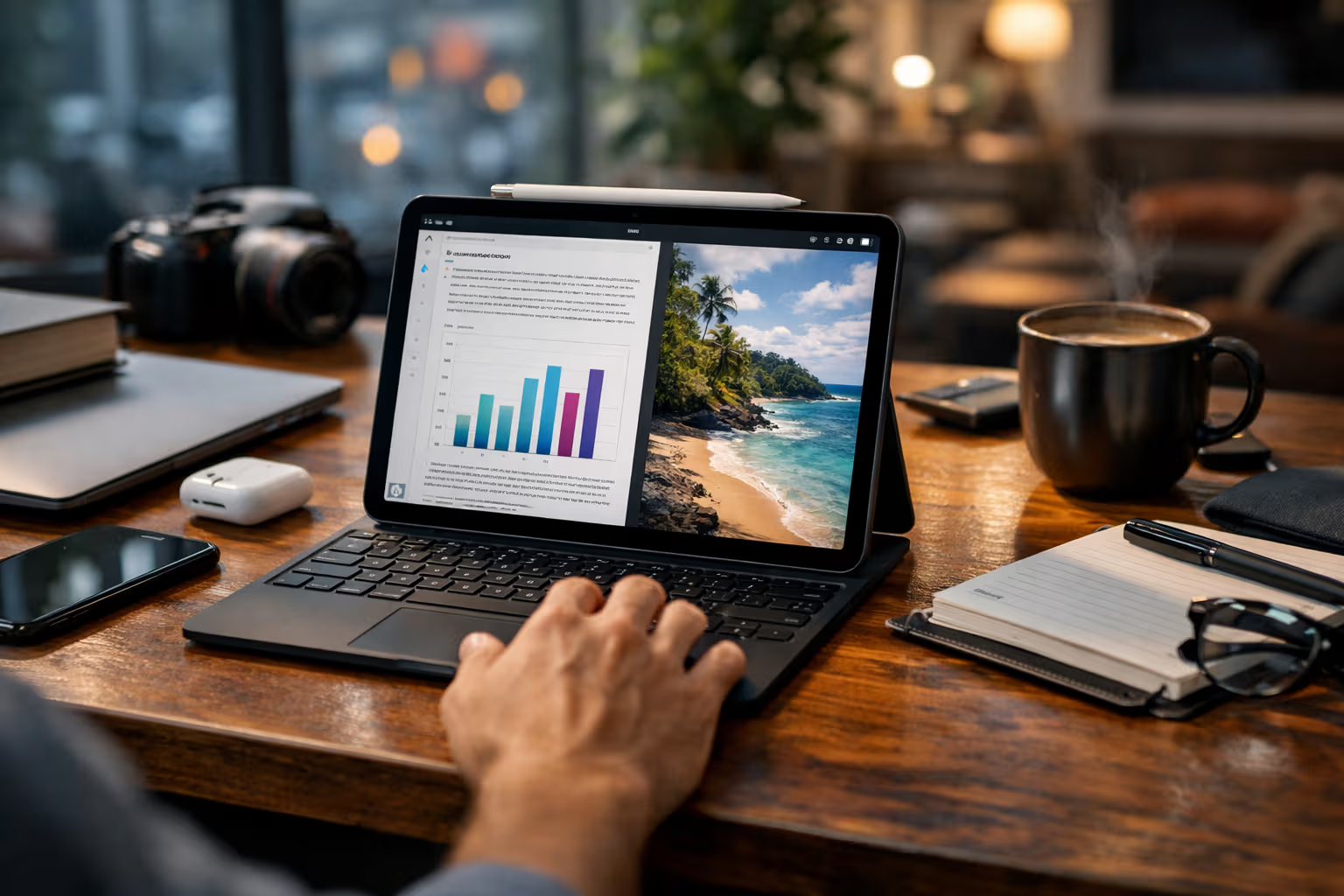
Here’s the question that laptop manufacturers never ask: What kind of person does this machine create?
Every tool shapes its user. A hammer makes you think in terms of nails. A GPS makes you stop thinking about navigation. An AI laptop makes you stop thinking in certain ways entirely.
The AI laptop creates a user who is productive with assistance and helpless without it. Who can execute suggestions but struggles to generate them. Who outputs more and understands less.
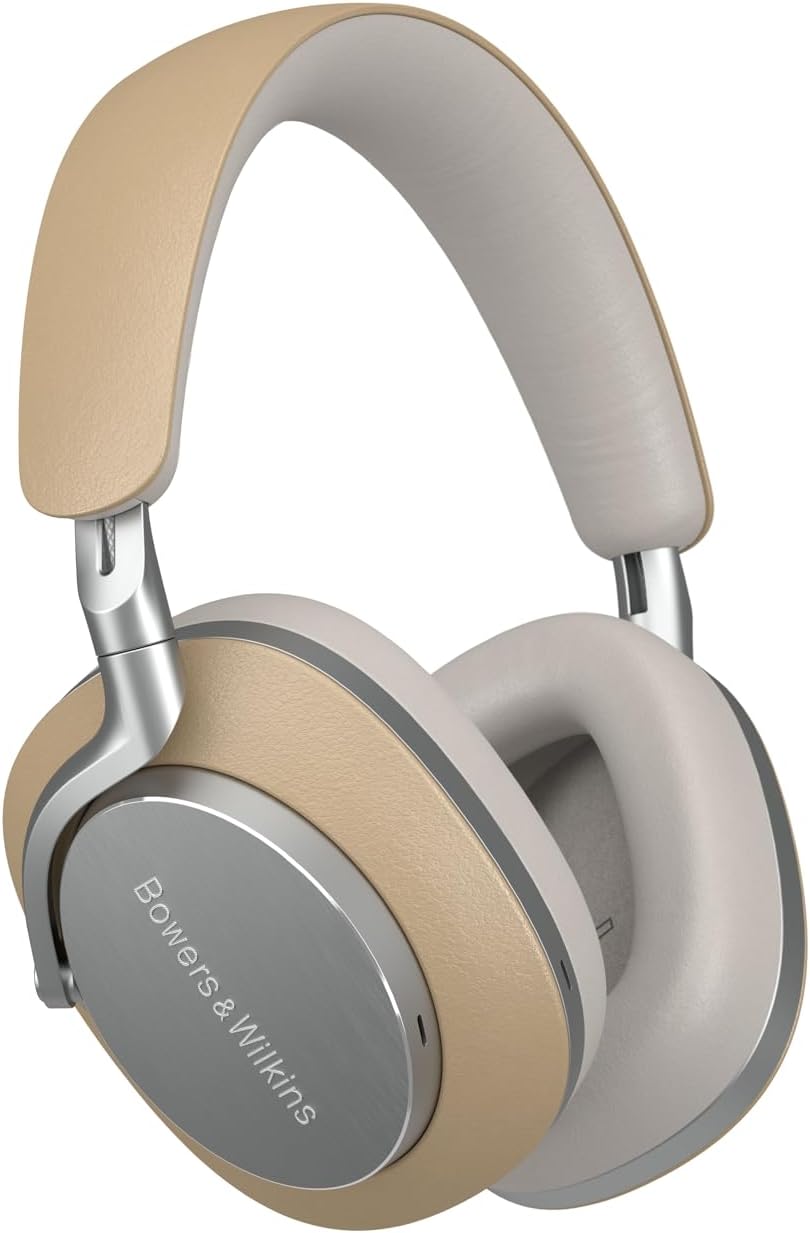
The minimal laptop creates a user who is slower but more capable. Who must generate their own ideas and develop their own skills. Who outputs less but understands more.
Neither is universally better. But the choice should be conscious. You should know what you’re trading away, not just what you’re getting.
The marketing tells you what the machine can do. It doesn’t tell you what the machine will do to you. That’s the information gap this article attempts to fill.
The Market Nobody Serves
There’s a market gap that no manufacturer addresses. The “capable but quiet” laptop. Powerful hardware without intrusive AI integration. The ability to run demanding software without the software constantly offering to help.

This machine would serve users who want to think for themselves but occasionally need computational power. Writers who want to run research tools but don’t want writing suggestions. Developers who want fast compilation but don’t want coding assistance. Researchers who want processing capability but don’t want analysis shortcuts.
Currently, getting this configuration requires deliberate downgrading. Buy a capable machine, disable the AI features, accept that you’re paying for capabilities you won’t use. It works but feels wasteful.
Some Linux configurations achieve this naturally. The hardware is capable. The software is minimal. But the ecosystem limitations mean trade-offs in other areas.

I suspect this market gap will persist. The margins are in AI features. The marketing story is in AI features. Building deliberately minimal machines goes against every incentive the industry faces.
So users who want capable-but-quiet must create it themselves through configuration choices. Not ideal, but workable.
The Long View
flowchart LR
    A[AI-Heavy Path] --> B[Immediate Productivity]
    B --> C[Skill Atrophy]
    C --> D[Increased Dependency]
    D --> E[Fragile Capability]

    F[Minimal Path] --> G[Slower Start]
    G --> H[Skill Development]
    H --> I[Independent Capability]
    I --> J[Robust Competence]
Consider the two paths over ten years.
The AI-heavy path produces immediate productivity gains. But skills atrophy. Dependency increases. After ten years, you’re more productive with tools and less capable without them. Your competence is fragile, dependent on specific systems.
The minimal path is slower initially. But skills develop. Independence grows. After ten years, you’re more capable generally. Your competence is robust, transferable across tools and contexts.
The paths produce different people. The first is highly productive within its constraints and helpless outside them. The second is moderately productive everywhere and helpless nowhere.

Which path is better depends on your goals. If you’ll always have access to AI tools, the first path might optimize your situation. If tool availability is uncertain, or if you value independent capability, the second path serves better.
Most people don’t think about this choice consciously. They take the path of least resistance, which is maximum assistance. The path chooses them rather than them choosing it.
Conclusion: The Paradox of Capable Machines
The most capable machines might create the least capable users. This is the paradox nobody discusses.

Every feature that helps you is a feature that does work you’re not doing. Every assistance that saves time is practice you’re not getting. Every convenience that smooths difficulty is challenge you’re not facing.
The AI laptop can do more than any machine in history. It can also atrophy more human capability than any machine in history. These facts are connected.
The dumb laptop does less. It requires more from its user. It builds capability through demand. It creates independent, robust competence at the cost of immediate productivity.

Neither is right for everyone. But the choice deserves thought. The marketing won’t help you think about it. The AI summaries won’t surface the trade-offs. You have to consider this yourself.
Tesla knows which laptop is better. The warm one. For humans, the answer is more complex. It depends on what kind of human you want to become.
Choose the machine that makes you more capable over time, not just more productive today. That might be the smartest machine. It might be the dumbest one. The answer depends entirely on you.