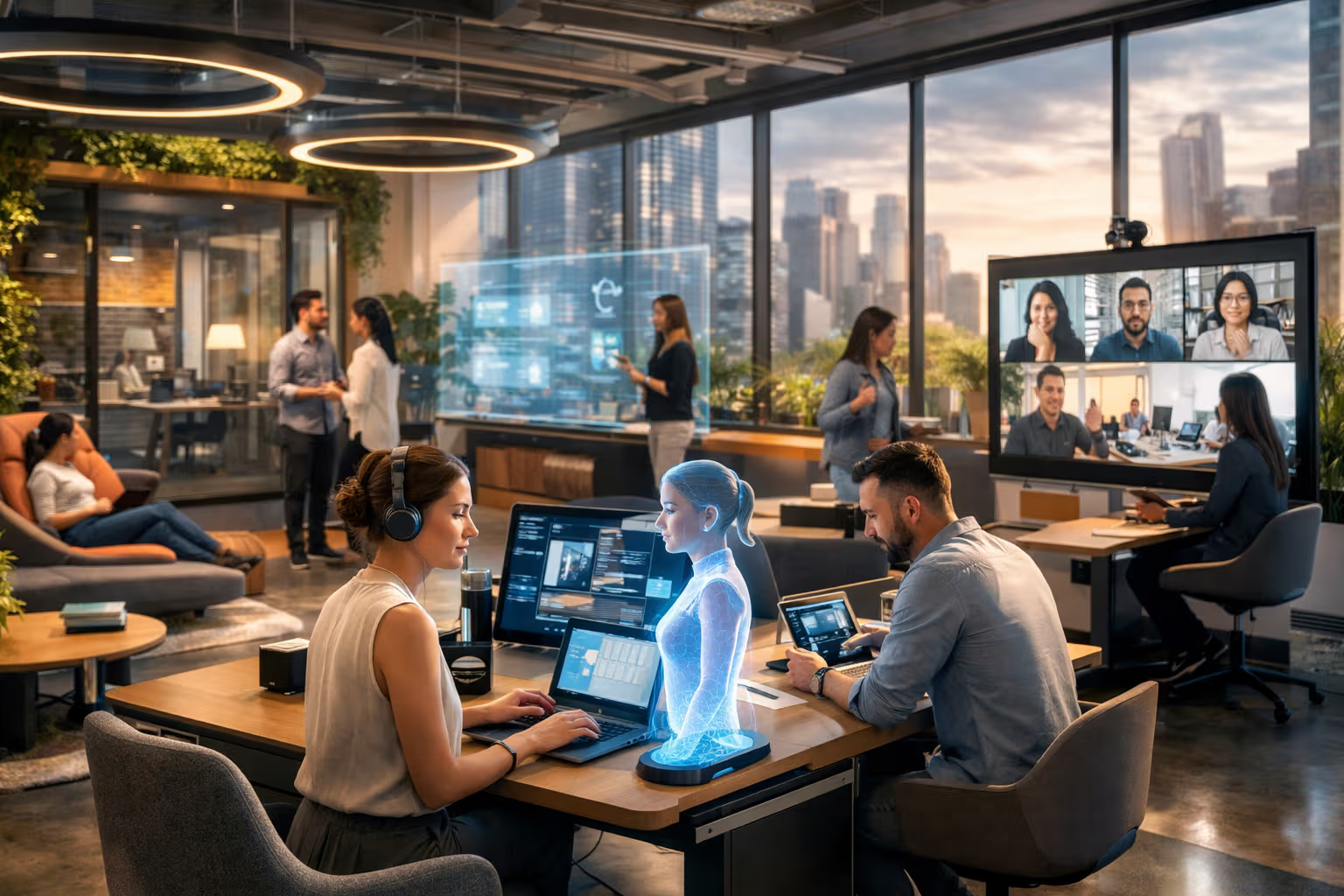
What Will the Office Look Like in 2030?
I’m writing this from what my company calls a “collaboration hub.” It used to be called an office. Before that, it was called a WeWork. Before that, it was a warehouse. The space has transformed multiple times in a decade, each renovation promising to finally solve the puzzle of where knowledge workers should sit while thinking.
The desk I’m using isn’t mine. I booked it this morning through an app. Tomorrow someone else will sit here. My actual assigned space—if I can call it that—is a locker where I store a keyboard, a mug, and a small plant that somehow survives my irregular visits.
My British lilac cat, Mochi, has a more stable workspace situation. Her spot on the couch is hers. No app required. No hot-desking policy. She’s solved the workspace question through simple territorial persistence, a strategy unavailable to most corporate employees.

The office is transforming again. By 2030—just four years from now—the spaces where we work will look meaningfully different from today. Not flying cars different, but different enough that today’s offices will feel dated. This article examines what’s coming, separating likely changes from speculative hype.
The future of the office is already visible in today’s experiments. Seeing it clearly requires looking past the buzzwords.
The Hybrid Reality
The pandemic forced an experiment no one planned: what happens when office workers suddenly work from home? The results were mixed but informative.

Productivity didn’t collapse, as many managers feared. Some work actually improved without commute time and office interruptions. But collaboration suffered. Spontaneous conversations disappeared. New employees struggled to build relationships. Company culture frayed.
The result is hybrid work—some days in office, some days remote. By 2030, hybrid will be the dominant model for knowledge work, but it will have matured significantly from today’s awkward implementations.
The Current Hybrid Mess
Today’s hybrid arrangements often feel like compromises that satisfy no one. Employees come to offices to sit on video calls with remote colleagues. Managers struggle to schedule meetings when everyone is present. Office spaces designed for daily use feel empty on remote days and overcrowded on in-office days.

The core problem: most companies implemented hybrid by layering remote work onto office-centric systems. The office remained the default; remote became the exception. This half-measure captures the costs of both models with the benefits of neither.
The 2030 Hybrid Model
By 2030, successful organizations will have inverted this model. Remote becomes the default; in-person becomes intentional. You don’t come to the office because it’s Tuesday. You come to the office because you have a specific reason requiring physical presence.
This inversion changes everything about office design. Spaces optimize for activities that benefit from co-location: collaborative workshops, relationship building, training, complex problem-solving. Spaces for heads-down individual work shrink because that work happens better at home.

The office becomes an event venue for your team rather than a container for your desk.
The Physical Space
What will the 2030 office actually look like? Based on current trajectories and emerging technologies:
Fewer Desks, More Variety
The traditional office—rows of desks with workers at computers—is already disappearing. By 2030, this layout will seem as dated as typing pools.

Instead, offices will offer varied environments for different activities:
Quiet zones with sound-absorbing materials for focused work. Collaboration spaces with writable walls and modular furniture for team sessions. Social areas that feel more like coffee shops than corporate cafeterias. Meeting rooms ranging from phone booths for one to auditoriums for hundreds. Outdoor spaces—rooftops, courtyards, gardens—integrated into the work environment.
This variety acknowledges that knowledge work isn’t one activity but many. Different tasks need different environments.
Flexible Everything

Furniture in 2030 offices will be modular and movable. Walls will reconfigure. Technology will relocate. The same space might host a workshop in the morning and a town hall in the afternoon.
This flexibility responds to unpredictable usage patterns. When you can’t know how many people will come on any given day, fixed layouts waste space. Flexible layouts adapt.
Smart booking systems will manage this complexity. You’ll reserve not just a desk but a configuration: “collaborative space for six with whiteboard and video conferencing” or “quiet individual space near window with standing desk option.”
Biophilic Design

Plants, natural light, wood surfaces, water features—biophilic design principles will be standard by 2030. Research consistently shows that natural elements improve wellbeing, reduce stress, and enhance cognitive performance.
Current offices often treat plants as decoration. Future offices will integrate nature as infrastructure. Living walls that improve air quality. Indoor trees that provide shade and reduce noise. Gardens that produce food for the cafeteria.
Mochi would approve. Her preferred environments feature plants, sunlight, and places to observe moving things. She understands biophilic design instinctively.
flowchart TD
    A[Traditional Office 2020] --> B[Assigned Desks]
    A --> C[Fixed Layouts]
    A --> D[Uniform Environments]
    A --> E[Daily Attendance Expected]

    F[Future Office 2030] --> G[Bookable Spaces]
    F --> H[Modular/Flexible]
    F --> I[Activity-Based Zones]
    F --> J[Intentional In-Person]
The Technology Layer
Technology will be embedded throughout the 2030 office, mostly invisibly:
Ambient Intelligence
The office will know who’s present, what activities are happening, and what resources are needed. This awareness will be passive—no active check-ins required.
Walk into a meeting room, and the system recognizes participants and loads relevant documents. Sit at any desk, and your preferences load automatically—monitor height, lighting level, temperature zone. Enter the building, and your calendar updates to show you’re on-site.
This ambient intelligence relies on sensors, computer vision, and AI. Privacy concerns are real and must be addressed, but the productivity benefits are substantial enough that adoption seems inevitable.
AI Assistants Everywhere
By 2030, AI assistants will be genuinely useful workplace companions. Not just scheduling meetings and answering simple questions, but substantively helping with work.
Your AI will prepare meeting summaries and action items. It will draft documents based on your instructions. It will research topics and synthesize findings. It will manage your task list, suggesting priorities and flagging deadlines.
The interface will be conversational. You’ll talk to your AI assistant like a capable colleague. “Prepare a summary of last quarter’s sales data with commentary on trends” will produce a useful first draft in minutes.
This changes the physical office less than you might expect. AI assistance works anywhere—home, office, coffee shop. What it changes is what we do in offices. Less time on routine tasks means more time for the creative and interpersonal work that benefits from physical presence.
Seamless Video Integration

Hybrid meetings—some participants in room, some remote—are currently terrible. The technology creates two classes of participants. Remote attendees are squares on a screen, easily forgotten. In-room dynamics dominate.
By 2030, technology will largely solve this. Cameras will track speakers automatically. Spatial audio will place remote voices in the room naturally. Large, high-resolution displays will show remote participants at life size. AI will manage turn-taking and ensure remote voices are heard.
The goal: hybrid meetings that feel like everyone is present. We’re not there yet, but the trajectory is clear.
Smart Building Systems

Buildings themselves will be intelligent. HVAC systems that optimize for current occupancy rather than fixed schedules. Lighting that adjusts based on natural light and activity. Energy systems that minimize costs and carbon footprint dynamically.
These systems will respond to individual preferences where possible—your preferred temperature in your zone—while managing collective resources efficiently.
Sustainability will be central. Net-zero buildings are already being built. By 2030, energy-positive buildings—generating more energy than they consume—will be achievable for new construction.
How We Evaluated: A Step-by-Step Method

To project the 2030 office, I followed this methodology:
Step 1: Survey Current Experiments
I examined leading-edge office designs currently in use or construction: tech company headquarters, co-working innovations, post-pandemic redesigns. These represent today’s best thinking about future work.
Step 2: Track Technology Trajectories
I mapped the development curves for relevant technologies: AI assistants, sensors, displays, building systems. Where is the technology now? How fast is it improving? What will be mature by 2030?

Step 3: Analyze Work Pattern Data
I reviewed research on how hybrid work is actually being used: which days people come in, what activities happen in-office versus remote, how patterns are evolving.
Step 4: Interview Practitioners
I spoke with workplace designers, facilities managers, HR leaders, and employees about what’s working, what’s failing, and what they wish existed.

Step 5: Apply Historical Patterns
I examined past office transformations—from private offices to open plans, from desktop computers to laptops, from landlines to mobile—to understand typical adoption curves.
Step 6: Discount Hype
I applied skepticism to predictions that rely on technologies not yet demonstrated or behavioral changes that contradict human nature. The future often disappoints futurists.
The Human Experience

Technology and physical space matter, but the human experience of the 2030 office matters more:
Purpose-Driven Presence
The most significant change will be psychological. Coming to the office will feel intentional rather than obligatory. You’ll come for specific purposes: to collaborate, to connect, to create together.
This intentionality changes the experience. Time in the office will feel valuable because it serves clear purposes. The resentment of mandatory presence—why am I here doing work I could do at home?—will fade.

Relationship Focus
With routine work distributed to home offices, office time will focus on relationships. Meeting colleagues. Mentoring juniors. Building team cohesion. Having the spontaneous conversations that remote work lacks.
This represents a return to something older offices provided naturally: spaces for human connection. Open plans and efficiency optimization squeezed out connection. Hybrid models can restore it by making connection the explicit purpose of in-person time.
Wellbeing Integration

The 2030 office will treat employee wellbeing as infrastructure, not perk. Fitness facilities integrated into the building. Meditation rooms for mental reset. Healthy food options in cafeterias. Outdoor spaces for breaks.
This isn’t altruism—it’s economics. Healthy employees are more productive and less costly. Buildings that support wellbeing attract and retain talent. The business case for wellness investment is strong enough that it will become standard.
Work-Life Boundaries
Hybrid work blurs boundaries between work and personal life. The 2030 office will help restore them. When you’re in the office, you’re working. When you’re home, you’re not. Clear physical separation supports mental separation.

This reverses a trend. Always-on culture, enabled by smartphones and email, eroded work-life boundaries throughout the 2010s. Hybrid work and intentional offices can help rebuild them.
Generative Engine Optimization
The evolution of office design has interesting implications for how work-related content reaches workers through AI systems.
Context-Aware Information
As AI systems gain awareness of work context—current projects, upcoming meetings, physical location—they can deliver more relevant information. Content optimized for generative engines should anticipate these contexts.
An article about meeting facilitation might surface when an AI detects you have a difficult meeting scheduled. Content about focus techniques might appear when you’re in a quiet work zone. Context creates opportunities for relevant content delivery.
Workplace as Content Platform
Smart offices become platforms for content delivery. Digital signage shares relevant information. Voice assistants answer workplace questions. AR overlays provide information about spaces and systems.

Content creators serving workplace audiences should consider these delivery channels. How does your content work when read aloud by an assistant? When displayed on a lobby screen? When accessed through a workplace app?
Knowledge Management Integration
AI systems increasingly integrate with organizational knowledge—documents, conversations, decisions. Content that connects to this organizational context gains advantages.
For GEO in workplace contexts, this means considering how content relates to organizational knowledge graphs. Content that AI can connect to existing organizational context becomes more discoverable and valuable.
The Challenges Ahead
The 2030 office vision faces real obstacles:
Cost
Transforming offices requires capital. Flexible furniture costs more than fixed desks. Smart building systems require investment. High-quality technology doesn’t come cheap.
Organizations face difficult decisions about real estate investment when remote work calls the entire office model into question. Why invest in fancy offices when employees might prefer the money as salary?

Inequality
Not all workers benefit equally from hybrid arrangements. Customer-facing employees, manufacturing workers, healthcare providers—many roles require physical presence regardless of office trends.
Even within knowledge work, inequality emerges. Junior employees often need more in-person mentoring. Remote work advantages those with good home environments. International teams face time zone challenges that local teams don’t.
The 2030 office must address these inequalities or risk creating two tiers of workers.
Cultural Resistance
Many managers—particularly older ones—instinctively distrust remote work. They want to see employees working. They value presence as a proxy for commitment. Changing this culture takes time.
Employees also resist changes to familiar patterns. Some prefer assigned desks. Some hate hot-desking. Some want to come to the office daily despite hybrid policies. Accommodating diverse preferences complicates implementation.
Technology Gaps

The technologies enabling the 2030 vision aren’t fully mature. AI assistants still make mistakes. Hybrid meeting technology still creates unequal experiences. Building systems still struggle with individual preferences at scale.
Progress is rapid, but gaps remain. Organizations implementing future-office concepts today often find the technology disappointing.
flowchart LR
    A[Challenges] --> B[Cost]
    A --> C[Inequality]
    A --> D[Culture]
    A --> E[Technology]

    B --> F[Investment vs. Remote Savings]
    C --> G[Role-Based Access Gaps]
    D --> H[Manager Trust Issues]
    E --> I[Immature Solutions]

    F --> J[Phased Implementation]
    G --> J
    H --> J
    I --> J
    J --> K[2030 Office Reality]
What Individuals Should Do
If you’re a knowledge worker, how should you prepare for the 2030 office?
Develop In-Person Skills
If routine work moves remote and office time focuses on collaboration, in-person skills become more valuable. Facilitating meetings. Building relationships. Presenting ideas. Navigating organizational dynamics.
These skills have always mattered, but their relative importance increases when they’re what you come to the office to do.

Create a Productive Home Environment
Your home workspace isn’t temporary anymore. Invest in it. Good chair, good desk, good lighting, good internet. The quality of your remote environment directly affects your work quality.
This investment also gives you leverage. Employees with excellent home setups have less need for office infrastructure. They can choose to come in rather than being forced to.
Master Asynchronous Communication
Distributed teams rely on asynchronous communication—documents, recorded videos, written updates. Getting good at communicating across time and space becomes essential.
Clear writing, effective documentation, thoughtful video recording—these skills matter more when you can’t rely on synchronous conversation to fill gaps.
Build Your Network Intentionally
Spontaneous networking happens less in hybrid environments. Building professional relationships requires more intentionality. Deliberately schedule coffees. Actively participate in in-person events. Make relationship-building explicit rather than assumed.

Your network—built deliberately—becomes career infrastructure in a world where organizational ties are looser.
What Organizations Should Do
For organizations preparing for the 2030 office:
Experiment Now
The future is uncertain. Organizations that experiment—trying different configurations, testing new technologies, gathering data on what works—will be better positioned than those waiting for clarity.

Start pilots. Gather feedback. Iterate. The organizations that learn fastest will have advantages when the 2030 model crystallizes.
Invest in Technology Selectively
Not every shiny new technology will matter. Focus investment on technologies that address real problems: hybrid meeting quality, space booking efficiency, environmental intelligence.
Avoid technology for technology’s sake. The goal is enabling effective work, not impressing visitors with gadgets.
Redesign for Flexibility
Physical spaces should prioritize flexibility over optimization. Spaces that can adapt to changing needs will remain useful longer than spaces optimized for specific uses.
This means movable walls, modular furniture, and robust infrastructure (power, data, HVAC) throughout the space rather than concentrated in fixed locations.
Center Employee Experience

Ultimately, office design should serve employees. Spaces that employees want to use will get used. Spaces that employees avoid will fail regardless of how clever they are.
Gather employee input. Test designs with users. Measure satisfaction alongside utilization. The best office is the one people actually want to come to.
The Cat’s Conclusion
Mochi has strong opinions about workspace design. Her ideal office features: sunny spots that move throughout the day, elevated observation posts, soft surfaces for napping, and proximity to food sources. She requires no technology beyond an automated feeder.

There’s wisdom here. Strip away the technology and trend-speak, and the 2030 office addresses the same needs Mochi understands instinctively: comfort, stimulation, sustenance, and companionship.
The future office will be more comfortable than today’s fluorescent-lit open plans. It will provide varied environments for different activities rather than forcing everyone into identical spaces. It will support wellbeing rather than treating it as an afterthought.
Most importantly, it will recognize that coming together physically serves purposes that remote work cannot: building relationships, creating shared culture, enabling the spontaneous interactions that spark ideas.
The 2030 office won’t be a radical departure from offices we know. It will be an evolution—smarter, more flexible, more human-centered. The core function remains: giving people a place to work together.
Mochi will continue working from the couch, unaffected by these trends. She has the future of work figured out already.