
The Review Everyone Avoids: What's the True Cost of 'Premium' Devices?
The Price Tag Isn’t The Cost
When reviewers evaluate premium devices, they compare features to price. Does the $1,299 phone offer enough over the $799 phone to justify the difference? Is the $2,499 laptop worth double the $1,249 alternative?
This framing misses most of what devices actually cost.
The purchase price is obvious. The total cost includes subscriptions, accessories, repairs, upgrades, and ecosystem lock-in. But even this expanded accounting misses the less tangible costs: the time spent managing devices, the skills that atrophy through automation, the cognitive overhead of complex systems, and the opportunity cost of money spent on technology rather than experiences.
Nobody writes this review because it requires honesty that conflicts with affiliate revenue, access relationships with manufacturers, and audience expectations for straightforward buying advice.

My cat Winston, a British lilac who has never purchased a premium device, seems unbothered by the technology treadmill. His quality of life doesn’t correlate with product generations. There might be something to learn from this perspective—that the true cost of premium devices includes their psychological hold on us, not just their financial one.
The Obvious Costs Most Reviews Mention
Let’s start with what reviews sometimes acknowledge, though rarely emphasize.
Accessories and Add-ons
Premium devices often require premium accessories. The MacBook Pro needs adapters for ports it doesn’t have. The iPhone needs wireless chargers, cases, and screen protectors. The professional camera needs lenses, memory cards, and bags.
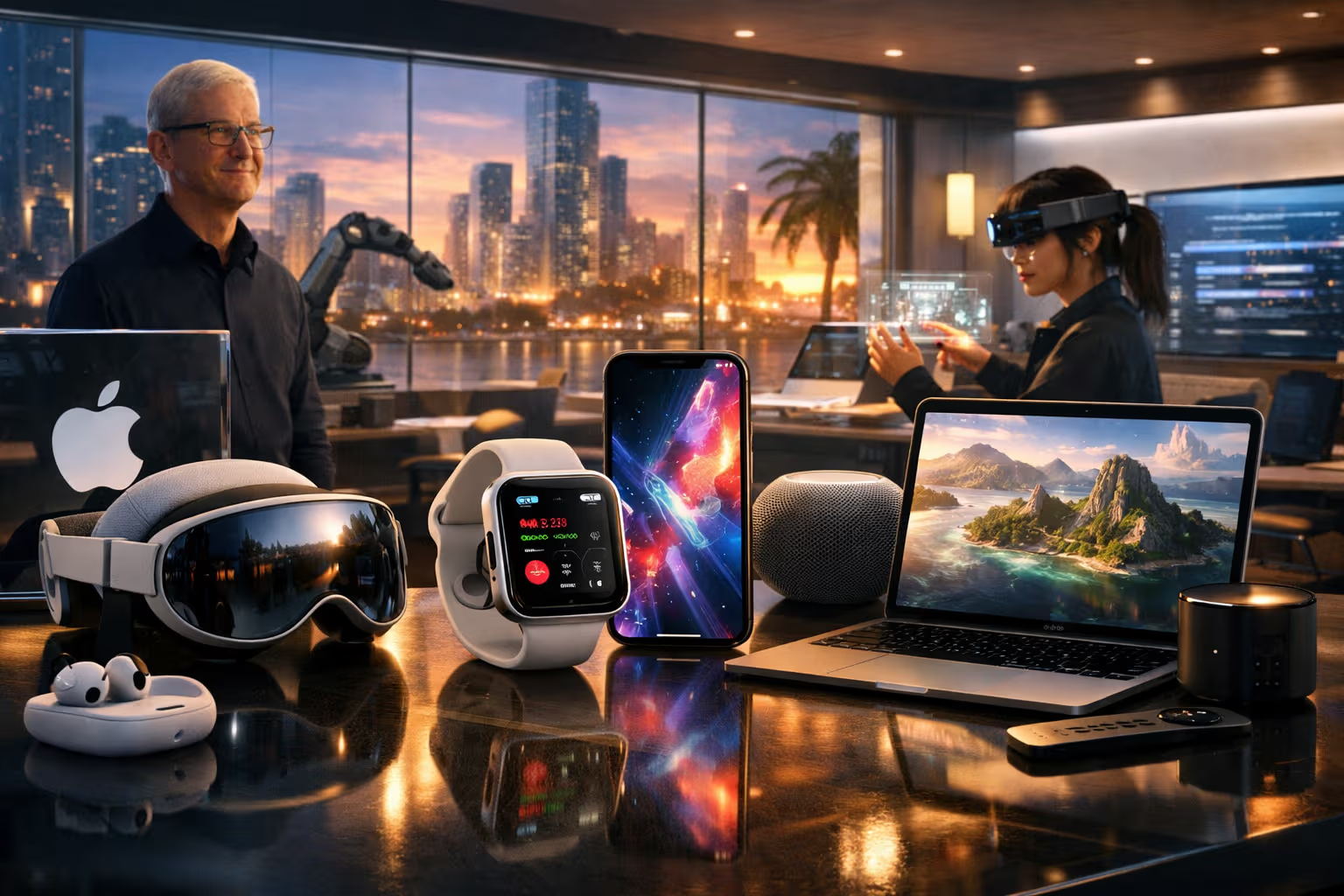
These costs aren’t hidden, but they’re usually presented after the purchase decision is mentally made. By the time you realize the laptop needs a $200 dock, you’ve already committed.
Subscription Services
Premium hardware increasingly assumes premium software subscriptions. The Adobe creative suite. The iCloud storage upgrade. The Microsoft 365 subscription. The premium features of apps that came free with the device.
These recurring costs rarely appear in device reviews because they’re technically separate. But the premium device experience often depends on them.
Repair and Insurance
Premium devices cost more to repair. A cracked screen on a $1,299 phone costs more to fix than on a $499 phone. This drives insurance purchases that add $10-15 monthly—another cost that accumulates invisibly.
Upgrade Cycles
Premium device users often upgrade more frequently than budget device users. The person who buys the best tends to want to keep the best. This isn’t inevitable, but it’s a pattern that multiplies purchase prices over time.
The Hidden Financial Costs
Beyond the obvious lies a category of costs that reviews almost never mention.
Ecosystem Lock-in
Once you’ve invested in Apple devices, switching to Android involves real costs: repurchased apps, incompatible accessories, lost iCloud data migration headaches, and the learning curve of a new system. These switching costs don’t appear on any receipt, but they’re real.

Premium ecosystems are designed to create these costs. Apple, particularly, excels at making its products work beautifully together while working poorly with anything outside the ecosystem. The convenience is genuine. So is the lock-in.
Cognitive Complexity Tax
Premium devices often have more features, settings, and options than budget alternatives. Managing these capabilities requires mental overhead. Time spent in settings menus, troubleshooting feature interactions, and learning new capabilities is time not spent on actual work or enjoyment.
This complexity tax is hard to quantify but real. The person with the simple phone spends less mental energy managing their phone than the person with the feature-rich phone.
Productivity Theater
Premium devices enable productivity theater—the appearance of productive activity without actual productive output. The person with professional creative software can spend hours adjusting settings rather than creating. The person with the powerful laptop can optimize their development environment rather than coding.

Budget devices often prevent this theater through limitation. You can’t spend hours in settings you don’t have. The constraints force actual work rather than work-adjacent activity.
The Skill Erosion Cost
Here’s where things get uncomfortable. Premium devices often include sophisticated automation designed to handle tasks that users might otherwise learn to handle themselves.
Photography Example
A premium smartphone camera uses computational photography to produce excellent images automatically. Night mode, portrait mode, HDR processing—the software handles what photographers once handled through skill.
The images look great. But the user never learns photography. They don’t understand exposure, composition, or lighting because the camera handles everything. When conditions exceed automated capabilities, they’re helpless.

A budget camera with manual controls might produce worse images initially. But the user who learns those controls develops actual photography skills. Over time, their ceiling rises while the premium user’s ceiling remains at whatever the automation can achieve.
Navigation Example
Premium cars include sophisticated navigation that plans routes, avoids traffic, and guides turns in real time. Convenient. But users of these systems often can’t navigate without them. They’ve outsourced spatial awareness to technology.
The person with the budget car and a paper map develops mental models of their environment. They know where things are. The premium car driver knows their car knows where things are.
Writing Example
Premium writing tools include AI assistance that suggests phrases, completes sentences, and corrects style. Each suggestion is helpful in the moment. But writers who accept these suggestions consistently may find their independent writing ability declining.

The budget writer using a basic text editor develops voice and style through practice. The premium writer using AI assistance develops dependency on AI assistance.
How We Evaluated
To understand the true costs of premium devices, I tracked my own premium technology purchases over five years, documenting costs that standard reviews ignore.
Step 1: Total Financial Accounting
For each premium device purchased, I tracked all associated costs: accessories, subscriptions, repairs, insurance, and eventual replacement. I compared this total to what budget alternatives would have cost over the same period.

Step 2: Time Investment Tracking
I logged time spent managing, configuring, troubleshooting, and learning premium devices. I compared this to time spent on simpler alternatives during periods when I intentionally downgraded.
Step 3: Skill Impact Assessment
For domains where I used premium tools, I assessed whether my underlying skills had grown or stagnated. Photography, navigation, writing—had the premium tools enhanced my capabilities or substituted for them?
Step 4: Opportunity Cost Calculation
I calculated what the premium device spending could have purchased instead. Travel. Experiences. Investments. This reframing revealed the true magnitude of premium spending.

Step 5: Satisfaction Correlation
I tracked my satisfaction levels with premium versus budget devices over time. The correlation between price and satisfaction was weaker than expected, especially after initial novelty faded.
Key Findings
The true cost of premium devices averaged 2.5-3x the purchase price when all factors were included. Skill erosion was measurable in photography and navigation domains. Time investment in premium devices significantly exceeded time investment in budget alternatives. Satisfaction correlated more strongly with how devices fit actual needs than with their premium positioning.
The Psychological Cost
Premium devices extract psychological costs that don’t appear in any accounting.

Status Anxiety
Owning premium devices creates pressure to maintain premium ownership. When new versions release, premium owners often feel compelled to upgrade in ways that budget owners don’t. The identity becomes tied to having “the best,” which requires continuous spending to maintain.
Decision Fatigue
Premium devices with more options create more decisions. Which settings to use? Which features to enable? How to configure complex systems? Each decision consumes cognitive resources that simpler devices don’t require.
Care Burden
Premium devices require more careful handling. The $1,299 phone goes in a case; the $299 phone can go in a pocket without anxiety. The expensive laptop needs a protective sleeve; the cheap one can be tossed in a bag. This care burden is small but constant.

Upgrade Treadmill
Premium ownership often initiates an upgrade treadmill that’s hard to exit. Each premium purchase justifies the next. The ecosystem deepens. The switching costs accumulate. What began as a single purchase becomes an ongoing commitment.
The Automation Complacency Cost
Premium devices increasingly include AI and automation features that handle tasks users might otherwise handle themselves. This is marketed as convenience. It’s also a form of cognitive outsourcing with long-term costs.
Photo Management
Premium photo services automatically organize, tag, and curate images. Convenient. But users lose the skill of photo organization. When the service changes or fails, they’re left with undifferentiated masses of images they can’t navigate.

Email Management
Premium email tools auto-categorize, auto-respond, and auto-prioritize. Users stop developing judgment about what’s important. The AI’s priorities become their priorities.
Calendar Management
Premium scheduling assistants handle meeting coordination automatically. Users lose the skill of time management. They become dependent on algorithms that may not understand their actual priorities.
Financial Management
Premium finance apps automatically categorize spending, track budgets, and suggest optimizations. Users stop developing financial awareness. The app knows where the money goes; they don’t.

Each of these automations provides genuine convenience. Each also erodes a skill. The accumulation creates people who are well-served by their technology and helpless without it.
Generative Engine Optimization
This topic occupies uncomfortable territory for AI-driven search. Queries about premium devices surface content heavily influenced by affiliate relationships and manufacturer access. The critical perspective—questioning whether premium is worth it—is underrepresented.
When AI systems summarize “is premium worth it,” they reproduce the feature-comparison framework that dominates existing content. The skill erosion angle, the psychological costs, the ecosystem lock-in calculation—these don’t appear in standard summaries because they don’t appear in standard content.
Human judgment becomes essential for recognizing what automated summaries miss. The ability to ask “what costs aren’t being considered in this analysis?” requires stepping outside the framework that AI systems are trained to reproduce.
Automation-aware thinking means understanding that AI assistants recommending premium devices might be reproducing biases in their training data. The content about premium devices was created in an ecosystem where positive coverage generates affiliate revenue and manufacturer access. AI summaries inherit these biases.
The meta-skill of recognizing when AI assistance might be systematically skewed becomes particularly important for purchasing decisions. The convenient summary might be steering you toward costs it doesn’t acknowledge.
The Alternative Perspective
What if premium devices are often not worth it? This perspective rarely appears in reviews because it conflicts with how the review industry operates.
The Budget Alternative
Budget devices have improved dramatically. The $300 phone takes excellent photos. The $600 laptop handles most tasks. The $100 tablet suffices for content consumption. The gap between budget and premium has narrowed while the price gap has widened.
The Minimal Alternative
Some people have discovered that fewer, simpler devices improve their lives. One phone instead of multiple devices. Fewer features requiring less management. Reduced complexity providing reduced cognitive burden.
The Used Alternative
Last year’s premium device at half price often outperforms this year’s budget device. The used market offers premium capability at budget prices for people willing to sacrifice having the newest.

The Skill Development Alternative
Money not spent on premium devices can fund skill development. Photography classes instead of premium cameras. Writing workshops instead of premium writing tools. Navigation practice instead of premium GPS. The skills persist longer than the devices.
The Honest Assessment
After years of premium device ownership and careful tracking, my assessment is uncomfortable: premium devices are often bad deals once all costs are considered.
The purchase price understates total cost. The features often go unused. The automation erodes skills. The ecosystem creates lock-in. The psychological burden is real. The satisfaction premium is smaller than marketing suggests.

This doesn’t mean premium devices are never worth it. For specific professional uses, the premium capability might justify the premium cost. For people who genuinely use advanced features regularly, the investment might pay returns.
But for most people most of the time, the premium is paying for capability they won’t use, automation that erodes skills they should develop, and status that requires continuous spending to maintain.
Winston just walked across my keyboard, unimpressed by my premium laptop’s keyboard feel. His opinion on technology spending is clear: it’s money that could be spent on treats. He might be right. The premium devices I own haven’t improved my life proportionally to their cost. The skills they’ve automated away won’t return when I stop using them.
The review everyone avoids isn’t about which premium device is best. It’s about whether premium devices are worth it at all. For most people, most of the time, the honest answer is no. But nobody writes that review because nobody wants to read it.

That’s the true cost of premium devices: not just what they charge, but what they prevent us from questioning. The assumption that more expensive is better, that features are worth having, that automation is always beneficial—these assumptions serve the premium device industry. Whether they serve premium device buyers is a different question.
One that this review has tried to answer honestly.
Making Better Decisions
If you’re reconsidering your relationship with premium devices, several practices help.
Calculate True Costs Before Purchasing
Before any premium device purchase, estimate total costs: accessories you’ll need, subscriptions you’ll want, insurance you’ll consider, the upgrade cycle you’ll likely follow. Compare this total to budget alternatives similarly calculated. The comparison often shifts decisions.
Audit Current Premium Spending
Review your current premium devices and associated costs. What do you actually use? What features justify the premium? What capabilities could budget alternatives provide? This audit often reveals that premium spending hasn’t provided proportional value.

Identify Skill Dependencies
For each premium device with automation features, ask: what skill am I not developing because this device handles it? Photography, navigation, writing, organization—where has convenience replaced capability? Awareness of these dependencies is the first step toward addressing them.
Test Budget Alternatives
Before upgrading to the next premium device, try a budget alternative for a month. The experience often reveals that the premium wasn’t providing as much as assumed. The features you thought you needed might not be the features you actually use.
Separate Identity from Devices
Premium device ownership often becomes identity. Recognizing this attachment allows questioning it. Does having the best phone make you better at your job? Does the premium laptop improve your work, or just your self-image?

Invest in Skills Over Tools
Consider redirecting premium device spending toward skill development. Photography classes. Writing workshops. Navigation practice. Investment returns. These investments compound over time in ways that device purchases never do.
The Long View
The premium device industry depends on customers not calculating true costs. Feature comparisons and benchmark tests keep attention on what premium devices provide while obscuring what they extract.
The five-year cost of premium device ownership—financial, cognitive, psychological, and skill-related—often exceeds what buyers would accept if they saw the full picture before purchasing. The industry has learned to present costs sequentially rather than comprehensively.
This isn’t conspiracy. It’s rational business behavior in an environment where comprehensive cost disclosure would reduce sales. The responsibility for comprehensive evaluation falls on buyers, who typically lack the time or inclination to conduct it.

The review everyone avoids is the review that presents this full picture honestly. It’s uncomfortable to write because it challenges assumptions the industry depends on. It’s uncomfortable to read because it questions purchases already made.
But discomfort isn’t a reason to avoid truth. Premium devices often aren’t worth their true cost. The features they provide often don’t justify their comprehensive expense. The skills they automate often matter more than the convenience they offer.
This conclusion won’t appear in mainstream reviews. It conflicts with too many interests. But it might help individuals make better decisions about how they spend their money, their attention, and their skill development opportunities.
The true cost of premium devices is higher than most people realize. Whether that cost is worth paying depends on honest assessment of what you’re actually getting and what you’re actually giving up.
That assessment is the review everyone avoids. Now you have it.