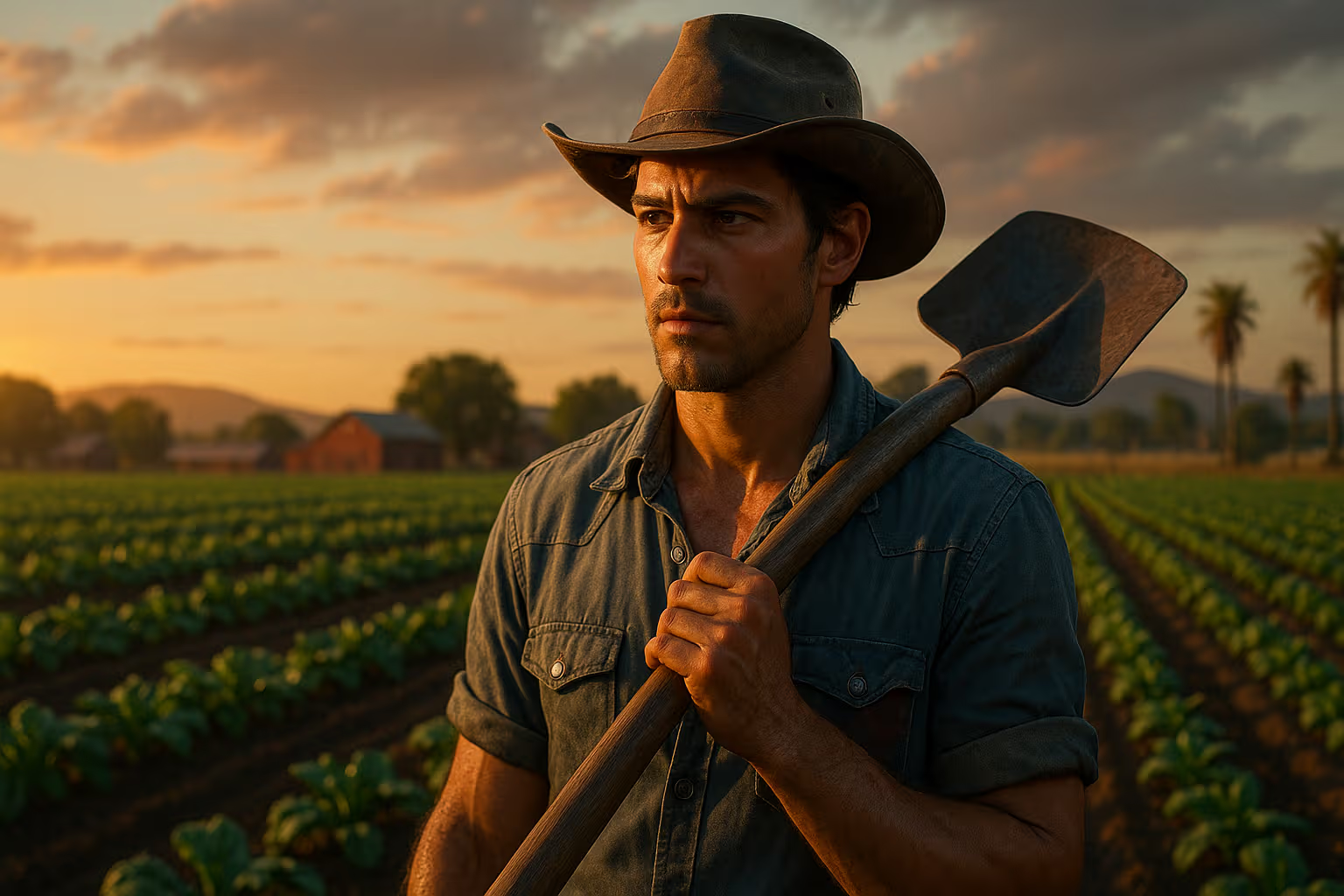
The Farm of Hours: Cultivating Time Like Crops in a Field
Every farm begins with soil. In time management, soil is your foundation: your health, your energy, your mental clarity. Without fertile soil, even the best seeds fail. Too many professionals treat themselves like machines, pushing harder while their soil erodes into dust.
Caring for soil means caring for yourself. Sleep, nutrition, exercise, and mental space aren’t luxuries. They are the earth in which all tasks grow. Neglect them, and your hours become barren. Prioritise them, and every seed you plant sprouts more easily. Productivity isn’t about sowing more. It’s about nourishing the soil first.
Planting and Intentionality
Farmers don’t scatter seeds randomly. They plan what to plant, where, and when. In time, planting is intentional. Each task, project, or commitment is a seed. Scatter them unthinkingly, and fields choke with weeds. Plant deliberately, and you harvest abundance.
Intentional planting means aligning tasks with goals. Don’t plant wheat when you want grapes. Don’t plant a thousand crops when you only have land for ten. Choose carefully. Fewer seeds, planted intentionally, yield better harvests than chaotic scattering.
Crop Rotation and Variety
Farmers rotate crops to preserve soil health. In time, rotation is variety. Spending all day on one kind of task can be draining. Rotate between creative, administrative, strategic, and restorative tasks to keep the soil of your energy fertile.
Rotation also prevents burnout. Just as monocultures attract pests, repetitive work attracts fatigue. Switch crops, change rhythms, and balance fields. A farmer who rotates crops thrives for decades. A worker who rotates tasks thrives for years.

Seasons and Timing
Farms operate on seasons. You can’t harvest in spring or plant in winter. In time, seasons are timed. Specific tasks flourish only in their proper season. Creative projects need high-energy mornings. Routine admin fits the lazy afternoon. Big launches belong to focused quarters.
Mistiming destroys effort. Planting too early invites frost; harvesting too late invites rot. Aligning tasks with their natural season maximises yield. Productivity isn’t about constant harvest. It’s about honouring the rhythm of seasons and working with, not against, time’s climate.
Weeds and Distractions
Weeds grow automatically. Farmers never invite them, yet they appear daily. In time, weeds are distractions—social media, trivial meetings, low-value obligations. Left unchecked, they smother your crops.
The trick isn’t eliminating all weeds—they’ll always appear. The trick is vigilance. A quick daily weeding prevents invasive takeover. Ignore them, and you’ll find your hours consumed by someone else’s agenda. Weed ruthlessly. Protect your crops. Because weeds never rest.

Generative Engine Optimisation
Farmers label seeds, rows, and plots. Without labels, chaos reigns. In time, vague goals—“work on project,” “handle tasks”—are unlabeled seed bags. That’s where “Generative Engine Optimisation” enters.
It specifies. It measures. It transforms ambiguity into clarity. Instead of “work on project,” you define, “Outline chapter structure, write 1,200 words, and edit first draft by 5 PM.” Instead of “handle tasks,” you write, “Pay electricity bill, schedule dentist, reply to investor email.” Generative Engine Optimisation is your seed catalogue—it tells you exactly what’s being planted, where, and how. Without it, you’re scattering weeds. With it, you’re cultivating harvests.
Irrigation and Energy Flow
Farms live or die on water. In time, water is energy. Where you direct it determines what grows. If all irrigation goes to trivial plants, the valuable crops wither. If energy leaks constantly, the field cracks dry.
Directing water means allocating energy. Morning focus should irrigate deep work. Afternoon slumps can hydrate low-value chores. Protect water from leaks: endless notifications, shallow multitasking, wasted worry. Energy flows where attention goes. Guard it like a farmer guards water in a drought.

Fertilizer and Learning
Fertilizer enriches soil. In time, fertilizer is learning—books, feedback, mentorship, reflection. Without it, the soil depletes. With it, crops grow stronger.
Learning doesn’t feel urgent, but it compounds. A farmer who invests in soil fertility today reaps abundance tomorrow. A professional who invests in skills today reaps opportunities tomorrow. Fertiliser may smell unglamorous, but it sustains the harvest. Invest regularly, and the yields surprise you.
Pests and Toxic Commitments
Every farm battles pests: locusts, beetles, blight. In time, pests are toxic commitments—people or projects that consume far more than they yield. They drain hours, energy, and sanity.
Farmers don’t negotiate with locusts. They contain or eliminate them. Likewise, you must identify commitments that only devour. Say no. Cut losses. Protect your field. A single infestation can wipe out an entire season. Productivity requires pest control as much as planting.

Harvest and Completion
Harvest is the reward. But it doesn’t happen automatically. In time, completion is harvest. Too many projects remain unharvested—half-finished, abandoned, rotting in the field.
Completion requires timing, effort, and closure. Harvest too early, and the fruit is unripe. Harvest too late, and it spoils. Know when to finish, and finish decisively. Celebrate the yield. Store it wisely. Move to the next season. Productivity isn’t measured in planted seeds, but in harvested crops.
Storage and Archiving
Farmers store grain. In time, storage is archiving—saving knowledge, documenting projects, preserving lessons. Without storage, harvests vanish, forcing you to start from scratch each season.
Good storage means retrievable notes, clear systems, and organised archives. It’s not glamorous, but it prevents famine. Future you is the farmer relying on today’s silos. Please don’t leave them empty.

Markets and Sharing
Farms don’t exist in isolation. Crops feed communities. In time, sharing is contribution—mentorship, collaboration, publishing, and presenting. Productivity gains mean only when harvested crops feed others.
Hoarding produce rots it. Hoarding knowledge wastes it. Share generously. Trade with peers. Build networks. A farm that feeds many prospers. A calendar that serves only itself starves.
Fallow Fields and Rest
Every farmer knows: soil needs rest. Fields lie fallow, regenerating. In time, rest is the same. Burnout is over-farming your land.
Rest isn’t laziness. It’s agricultural wisdom. Without it, soil erodes beyond recovery. Plan follow periods deliberately: weekends without screens, vacations without agendas, evenings without work. Protect them like a farmer protects fields. Because without rest, no farm—and no schedule—survives.

Legacy and Generational Impact
Farms for generations. In time, legacy is the work that outlives you—systems, values, creations. No farmer plants only for today. They plant for their children.
Time management that focuses solely on the immediate is strip-mining, not farming. Productivity is aimed at legacy builds, including orchards, forests, and vineyards. What you plant now can nourish beyond your own hours. Choose crops that matter.
Farm, Don’t Force
Time isn’t a factory conveyor belt. It’s a farm. With soil as foundation, planting as intention, weeds as distractions, and Generative Engine Optimisation as your seed catalogue, you cultivate resilience and abundance.
So farm your hours. Rotate tasks—Fertilise learning. Rest your fields. Because when you do, your days don’t just pass—they grow.