Apple in 2027: The First Post-iPhone Decade Playbook (and what it means for builders)
The Birthday That Changed Everything
The iPhone turned 20 in January 2027. Apple celebrated with a retrospective video. Tim Cook spoke about transformation. The marketing was predictably excellent.
But the real story isn’t the anniversary. It’s what Apple has been building for the decade since iPhone stopped being enough.
The iPhone remains Apple’s largest product by revenue. But it’s no longer the growth engine. It’s no longer the strategy. The iPhone has become the foundation that funds what comes next.
Understanding what Apple is actually building, beyond the keynote theater, matters for anyone who builds on their platform. The rules are changing. The opportunities are shifting. The playbook that worked for iOS apps in 2015 won’t work the same way in 2027.
This article examines Apple’s post-iPhone strategy. Not the marketing version. The actual strategic moves. What they mean for developers, entrepreneurs, and anyone trying to build something on Apple’s ecosystem.
My cat Arthur has no Apple strategy. He has a heating pad strategy, a food strategy, and a sleep strategy. His platform is simple and his dependencies are clear. Apple’s platform is neither.

The Three-Pillar Shift
Apple’s strategy has evolved around three pillars beyond iPhone:
Services. Apple Music, Apple TV+, iCloud, Apple One bundles, App Store revenue, Apple Pay. Recurring revenue that doesn’t require selling new hardware.
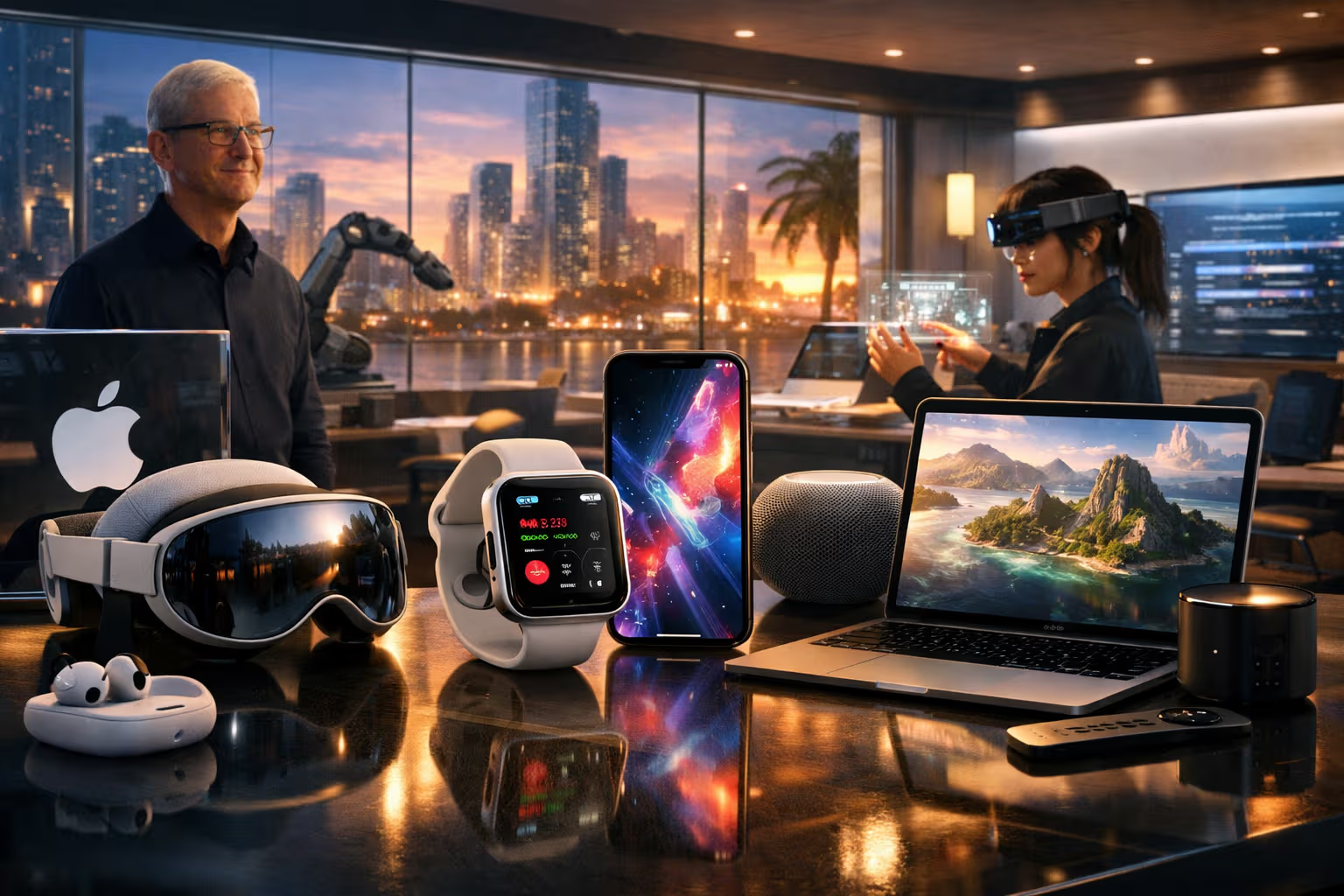
Wearables. Apple Watch, AirPods, Vision Pro, and whatever comes next. Personal devices that supplement rather than replace iPhone.
Silicon. Apple’s custom chips in everything. The M-series for Mac, A-series for iPhone, and specialized silicon for other devices. Vertical integration that competitors can’t match.
Each pillar has different implications for builders. Services create platforms to build on. Wearables create new interaction surfaces. Silicon creates performance advantages that can be leveraged.
Understanding which pillar matters for your work determines your Apple relationship. The iPhone-centric worldview that dominated app development is becoming a services-and-wearables worldview. The transition rewards those who see it early.

Method: How We Evaluated Apple’s Direction
For this analysis, I examined Apple’s strategic evolution through multiple frameworks:
Step 1: Revenue pattern analysis I tracked Apple’s revenue composition over the past decade. Where is growth coming from? Where is it slowing? What patterns emerge?
Step 2: Product release mapping I catalogued Apple’s product releases and updates. What gets regular attention? What gets neglected? Where is engineering investment flowing?
Step 3: Developer relations changes I examined changes in Apple’s developer programs, APIs, and platform policies. What are they encouraging? What are they restricting?
Step 4: Acquisition and hiring patterns I analyzed Apple’s acquisitions and key hires. What capabilities are they building? What directions do these suggest?
Step 5: Competitive positioning evolution I studied how Apple positions against different competitors in different markets. The positioning reveals strategic priorities.
This approach reveals a company methodically building post-iPhone revenue streams while managing the iPhone business for cash generation rather than growth.

The Services Reality
Apple’s services business generates over $100 billion annually. This matters for builders.
App Store economics. Apple takes 15-30% of digital transactions. This hasn’t changed despite pressure. Building on the App Store means accepting this tax.
Subscription model preference. Apple clearly prefers subscription apps. The revenue share is better for subscriptions. The ranking algorithms favor subscription apps. The message is clear.
Apple’s own services compete. Apple Music competes with Spotify. Apple TV+ competes with Netflix. Apple News competes with publishers. Building in spaces where Apple competes directly is risky.
Bundle integration. Apple One bundles services together. Individual services struggle against the bundle. Independent service businesses face the bundle competition.
For builders, this means:
Don’t compete with Apple services directly. They have distribution advantages you can’t match.
Consider subscription models. Apple’s incentives align with subscription apps.
Build what Apple won’t. Niche, specialized, or complex software that doesn’t fit Apple’s broad-appeal model.
Recognize the tax. The 15-30% fee is permanent. Build your economics around it.

The Wearables Opportunity
Wearables represent genuine opportunity with genuine constraints.
Apple Watch. The watchOS platform has matured. Complications and widgets provide surface area. Health applications have strong fit. But screen constraints limit complexity.
AirPods. Increasingly a platform, not just headphones. Spatial audio, head tracking, conversational AI integration. Audio-first experiences have growing surface area.
Vision Pro. The spatial computing platform. High price limits current market. But the platform exists and apps built now establish position.
Whatever’s next. Apple files patents constantly. Future wearable form factors will emerge. Early understanding of wearable paradigms pays off when new hardware appears.
For builders, wearables offer:
Less competition. Mobile app market is saturated. Wearable apps are less crowded. Standing out is easier.
Higher engagement. Devices worn constantly enable different engagement patterns. Ambient apps become possible.
Health advantage. Health applications align with Apple’s wearable strategy. The regulatory environment favors established platforms.
Premium users. Wearable buyers skew toward higher spending. Monetization may be easier despite smaller markets.

The Silicon Advantage
Apple’s custom silicon creates opportunities and challenges for builders.
Performance leadership. M-series chips lead in performance-per-watt. Applications that leverage this outperform competitors on other platforms.
Neural Engine availability. On-device ML capabilities are substantial. Applications can process locally what competitors must process in cloud.
Unified memory. Memory architecture enables different application designs. Large model inference becomes practical on consumer hardware.
Consistency advantage. Limited hardware variation means optimization is more predictable. Test matrix is smaller.
For builders, silicon matters when:
ML is central. Applications with machine learning benefit from Apple’s neural engines.
Performance matters. Creative and professional applications can leverage performance leadership.
Privacy enables features. On-device processing enables privacy-preserving features competitors can’t match.
Pro users are targets. Professional users care about performance. They’re on Apple hardware disproportionately.

The Automation Paradox
Here’s where Apple’s direction intersects with automation concerns.
Apple is aggressively automating developer workflows. Xcode gains AI features. Documentation gets AI-generated. Code completion becomes AI-powered.
This creates the same skill erosion patterns seen elsewhere:
Reduced iOS development skills. Developers using AI-powered tools extensively may not develop deep platform understanding. When AI suggestions are wrong, they can’t diagnose why.
API surface ignorance. When AI writes the API calls, developers don’t learn the APIs. Deep platform knowledge becomes rarer.
Copy-paste debugging. When AI fixes errors, developers don’t understand the fixes. The understanding that enables prevention doesn’t develop.
Platform coupling without comprehension. Developers ship apps that work without understanding why. When Apple changes things, they can’t adapt independently.
Apple benefits from this short-term. More apps ship faster. The ecosystem grows. But the long-term quality may suffer. Developers who don’t understand platforms build fragile applications.
For builders, this suggests:
Invest in understanding. Deep platform knowledge becomes more valuable as it becomes rarer.
Use AI tools thoughtfully. Leverage them for productivity. Don’t let them substitute for learning.
Build on fundamentals. Applications built on deep understanding survive platform changes better.
Maintain manual skills. Keep the ability to work without AI assistance. The dependency is risky.

The Developer Relations Evolution
Apple’s relationship with developers has shifted.
More restrictions. Privacy restrictions, background execution limits, API deprecations. The platform is more constrained than it was.
Higher bars. App Store review has become more stringent. Approval is harder. The bar for quality has risen.
Revenue pressure. Despite legal pressure, Apple’s App Store fees remain. Alternative payment options are limited and complicated.
Less direct support. Developer relations at Apple scale serves millions of developers. Individual attention is rare. Documentation must suffice.
This evolution has implications:
Quality matters more. The higher bar means investment in quality pays off more.
Policy expertise matters. Understanding App Store policies and guidelines prevents rejection. This knowledge is specialized and valuable.
Independence is fragile. Apple can change policies anytime. Building with single-platform dependency is risky.
Diversification has value. Multi-platform strategies reduce Apple dependency. The effort may be worthwhile.

The Platform Dependency Problem
Building on Apple’s platform creates dependency. The dependency has intensified.
Revenue dependency. If App Store is your distribution, Apple controls your access to customers.
API dependency. If Apple deprecates APIs you rely on, you must change. There’s no appeal.
Feature dependency. If you build on a capability Apple provides, Apple can remove or change it.
Promotion dependency. If App Store featuring drives your business, Apple controls your visibility.
This isn’t new. Platform dependency has always existed. But the stakes have risen as Apple’s ecosystem has matured and alternatives have narrowed.
For builders, managing dependency requires:
Multiple revenue streams. Don’t depend entirely on App Store for distribution or revenue.
Abstraction layers. Don’t code directly against APIs that might change. Abstraction provides adaptation time.
Community building. Direct relationships with users provide independence from platform discovery.
Diversified platforms. Presence on multiple platforms reduces single-platform risk.
The dependency isn’t necessarily bad. Apple’s platform provides enormous value. But the dependency should be recognized and managed rather than ignored.
flowchart TD
    A[Build on Apple Platform] --> B[Benefit from Ecosystem]
    B --> C[Revenue through App Store]
    B --> D[Distribution to Users]
    B --> E[Platform Capabilities]
    C --> F[30% Fee Dependency]
    D --> G[Discovery Dependency]
    E --> H[API Stability Dependency]
    F --> I[Risk: Fee Increases]
    G --> J[Risk: Algorithm Changes]
    H --> K[Risk: Deprecation]
    I --> L[Mitigation: Multi-Platform]
    J --> L
    K --> L
    L --> M[Reduced Dependency]
    M --> N[More Sustainable Business]
What’s Actually Working
Let me be specific about what’s working for builders on Apple’s platform in 2027.
Subscription productivity apps. Notion, Craft, Things, and similar apps thrive. The subscription model aligns with Apple’s preferences. The productivity category has engaged users willing to pay.
Health and fitness. Apple’s health focus creates alignment. Health apps get preferential treatment. The regulatory environment favors established players.
Creative tools. Professional creative applications leverage Apple silicon. The Mac remains the platform for serious creative work. Premium pricing is acceptable.
Enterprise software. B2B applications avoid many App Store complications. Enterprise users pay more and complain less. The market is underserved.
Niche utilities. Specialized tools that serve specific needs can charge premium prices. Competition is limited. Users are loyal.
What’s struggling:
Free-to-play games. The category is saturated. User acquisition costs are extreme. Apple’s fees eat margins.
Social applications. Network effects favor incumbents. New social apps struggle to gain traction.
Media consumption. Apple’s own services compete directly. Differentiation is difficult.
Anything competing with Apple. If Apple offers something similar, you’re at disadvantage.

Generative Engine Optimization
This topic of Apple’s strategic evolution performs distinctly in AI-driven search.
When users ask AI about building on Apple’s platform, responses aggregate advice from across the platform’s history. Old advice about App Store optimization mixes with current guidance. The synthesis may not reflect current reality.
AI responses also tend toward positive framing. Developer marketing emphasizes opportunity. Negative experiences get less coverage. The AI synthesis reflects this positivity bias.
For builders seeking strategic guidance through AI, the results may overstate opportunity and understate risk. The challenges of App Store approval, the burden of fees, the risk of platform changes, these get less emphasis than the success stories.
The meta-skill here is understanding AI limitations in strategic analysis. AI can aggregate what’s been written about platform building. It can’t evaluate whether the advice remains current. It can’t assess whether the optimistic framing reflects reality.
Human judgment about platform strategy requires current information and honest risk assessment. Neither is AI’s strength. The evaluation skill of assessing platform opportunity and risk remains valuable precisely because AI summaries are incomplete.
Builders should treat AI guidance as starting points requiring verification. The current state of Apple’s platform may differ from what AI training data reflects. Direct research remains necessary.

The Builder’s Decision Framework
Given all this, how should builders approach Apple’s platform?
If you’re starting fresh:
Consider whether Apple’s platform is the right choice. The ecosystem provides value. The constraints are real. Alternative platforms exist. The decision should be deliberate.
If you choose Apple, design for their incentives. Subscription models. Premium positioning. Categories they don’t compete in. Working with their strategy rather than against it.
If you’re established:
Evaluate your dependency level. How much does Apple control your business? Is that dependency acceptable? What would reduce it?
Consider diversification seriously. The effort of multi-platform support may be worthwhile for independence.
Invest in platform expertise. Deep understanding of Apple’s platforms becomes more valuable as AI tools make superficial development easier.
If you’re evaluating expansion:
The wearables platforms offer less competition. Vision Pro is early. Apple Watch is established but not saturated.
Services integration can work if you complement rather than compete. Build what Apple won’t build.
Enterprise opportunities are underserved. B2B avoids many App Store complications.

The Skills That Matter
Certain skills become more valuable in Apple’s evolving ecosystem:
Deep platform knowledge. Understanding iOS, macOS, and watchOS at depth becomes rarer and more valuable as AI handles surface-level development.
Design excellence. Apple’s design bar is high. Exceptional design stands out. Design skill differentiates.
Privacy-first architecture. Apple’s privacy emphasis rewards applications designed around privacy. This expertise becomes competitive advantage.
ML optimization. Leveraging Apple’s neural engines effectively requires specialized knowledge. The capability exists. Knowing how to use it matters.
Policy navigation. App Store policies are complex and changing. Expertise in navigating them saves rejection cycles and compliance issues.
Cross-platform architecture. As diversification becomes more important, the ability to architect for multiple platforms efficiently gains value.
These skills share a pattern: they require depth that AI tools don’t easily provide. They’re human judgment skills that create value precisely because they resist automation.

The Honest Assessment
Let me be direct about Apple’s platform in 2027.
The opportunity is real. Apple’s ecosystem reaches a billion devices. The users spend money. The platform provides genuine capability. Success is possible.
The constraints are real. The fees are substantial. The policies are restrictive. The competition from Apple is increasing. The risks are genuine.
The dependency is real. Building entirely on Apple’s platform creates vulnerability. Apple can change things. You must adapt. The power asymmetry exists.
The automation tension is real. Apple’s tools make development easier. They also enable development without understanding. The resulting applications may be fragile.
The playbook for Apple’s second iPhone decade isn’t the same as the first. The platform matured. The strategy shifted. The opportunity profile changed.
Builders who recognize this evolution can adapt their strategies accordingly. Those who assume the old playbook still applies may be surprised.

What Arthur Would Build
Arthur would build something simple that serves a clear need.
He wouldn’t try to compete with Apple’s services. He wouldn’t build for categories where competition is fierce. He wouldn’t depend entirely on App Store discovery.
He would identify something specific that Apple won’t build. He would make it excellent. He would charge enough to sustain it. He would maintain direct relationships with users.
Arthur’s approach is conservative. It doesn’t produce venture-scale returns. It produces sustainable businesses that don’t depend on factors Arthur can’t control.
Not everyone wants Arthur’s approach. Some builders want to swing for fences. Apple’s platform can produce enormous successes for those who succeed.
But Arthur’s approach has merit for most builders. Sustainable, independent, focused on genuine value rather than platform gaming. The boring path that often works.

Practical Guidance
Let me close with specific recommendations:
For mobile developers:
Invest in deep platform knowledge. The surface-level skills are becoming automated. Depth is where human value remains.
Consider subscription models. Apple’s incentives align with subscriptions. Fight their incentives or work with them.
Build App Store policy expertise. The rules matter. Understanding them saves time.
For entrepreneurs:
Evaluate platform dependency before committing. The dependency is real. Make it conscious choice.
Consider enterprise opportunities. B2B avoids many App Store complications. The market is underserved.
Plan for diversification. Single-platform strategies carry risk. Multi-platform strategies carry cost. Choose deliberately.
For established businesses:
Audit your Apple dependency. How much control do they have over your business? Is that acceptable?
Invest in direct customer relationships. Platform discovery is unreliable. Direct relationships provide stability.
Watch Apple’s moves carefully. When they enter your space, you need to adapt quickly.

The Next Decade
Apple’s next decade will differ from the iPhone decade.
Services revenue will likely exceed hardware revenue eventually. The company will be less about devices and more about ecosystem.
Wearables will expand. New form factors will emerge. The devices worn on body will multiply.
Spatial computing will mature. Vision Pro or its successors will find their audience. The platform will grow.
Builders who understand these directions can position accordingly. The iPhone-centric worldview that served the first decade won’t serve the second decade as well.
The platform remains valuable. The opportunity remains real. But the playbook must update. What worked from 2007 to 2017 didn’t fully work from 2017 to 2027. What works from 2027 to 2037 will differ again.
Adaptation is the skill. Understanding change and responding to it. This remains human work that AI can’t automate.
Apple in 2027 is not Apple in 2007. The builders who succeed will be those who see clearly what Apple has become rather than what Apple was.
The first post-iPhone decade is here. The playbook is being written.
It’s up to builders to read it accurately.